Category: At Risk

  • British Columbia Wildfires Force Thousands to Flee

    British Columbia Wildfires Force Thousands to Flee


    VICTORIA, British Columbia, Canada, August 7, 2017 (ENS) – Hot and dry, the interior of British Columbia is ablaze with wildfires that have driven tens of thousands of residents from their homes and filled the skies over the province with smoke.

    There are 125 wildfires burning across the province, and Chief fire information officer Kevin Skrepnek said officials are anticipating thunderstorms with lightning and little rain. With no relief in sight in the weather forecast, B.C.’s wildfire emergency is expected to continue over the next few weeks.

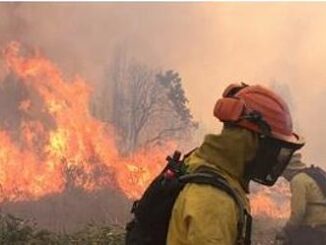
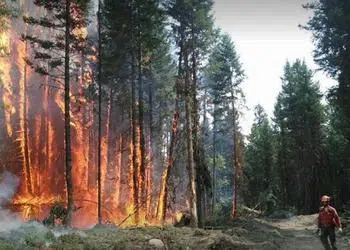
    fire
    This photo was taken by a crew member fighting one of the numerous aggressive wildfires in the Cariboo Fire Centre, July 2017. (Photo courtesy BC Wildfire Service)

    To ensure that adequate resources are available to continue in the fight, more international personnel are on the way.

    Over the next week, more than 400 firefighting staff from New Zealand, Australia, Mexico and the United States will join the over 3,800 personnel currently working throughout the province to respond to the ongoing wildfires.

    This will be a mix of specialized support staff, including incident management teams, and highly trained and experienced wildland firefighting crews.

    They will join over 3,150 personnel from British Columbia as well as over 630 other out-of-province personnel who have been working tirelessly to protect the province’s communities and infrastructure.

    These firefighters are trained to the standards of the Canadian Interagency Forest Fire Centre. The cost of bringing in the international personnel will be covered by the Province of British Columbia.

    The hot, dry weather conditions have caused a high-to-extreme fire danger rating throughout B.C. Firefighting crews are on standby in all six of B.C.’s fire centers in preparation for an anticipated increase in fire starts over the next few days due to unsettled weather in the forecast that may bring lightning.

    map
    Current wildfire map of British Columbia, August 7, 2017 (Map courtesy BC Wildfire Service)

    BC Parks, in co-ordination with the BC Wildfire Service and Recreation Sites and Trails BC, closed backcountry access to some areas of Wells Gray Provincial Park, effective Saturday, August 5, to help protect public safety.

    Members of the public will still have access to most of the major day-use sites in the highway corridor through the park, plus campgrounds and marine campsites. All other areas of the park are now closed to public access indefinitely.

    This partial closure is being implemented to reduce the number of people in the park, since locating and safely evacuating the numerous users who visit the park each day would be extremely difficult in an emergency situation, officials say.

    Supervised, commercially guided groups will continue to have access to the park unless conditions deteriorate further.

    This year to date, the Canadian Interagency Forest Fire Centre reports that 886 fires have consumed 591,227 hectares across the province.

    The extreme wildfire situation is testing British Columbia’s new provincial government, alliance of the New Democratic Party and the Green Party headed by Premier John Horgan, which took office on July 18.

    Premier Horgan has pledged his ongoing support for the people and communities affected by wildfires. “When we face difficult times, people and communities come together to help each other. Our government is stepping up our support of the people affected by the devastating wildfires in the B.C. Interior,” he said.

    Doug Donaldson, Minister of Forests, Lands, Natural Resource Operations and Rural Development, said, “Given the unprecedented nature of the B.C. wildfires, we appreciate the assistance our international partners are able to provide.”

    The Province has extended the state of emergency to ensure a coordinated response to the wildfires, and has committed to provide ongoing direct financial support to evacuees.

    The current one-time $600-per-household funding will be renewed every 14 days on an ongoing basis until evacuees return home.

    Andrew Weaver, leader of the B.C. Green Party, said, “Sadly, as the effects of climate change take hold, events like the wildfires displacing so many British Columbians are becoming increasingly common. 2016 was the warmest year on record, and 2015 and 2014 were the second and third warmest. Science is clear that as global temperatures rise, the incidence of extreme weather events is increasing.”

    “The most important thing right now is ensuring that the communities affected by the fires have all the resources they need. Moving forward, the B.C. Green caucus will champion policies that will mitigate the risks of a changing climate to ensure that British Columbians and their homes are protected,” Weaver said.

    Poor air quality is persisting across the southern half of British Columbia, causing an increase in the number of people seeking medical help.

    Dr. Bonnie Henry, a deputy provincial health officer, told reporters Saturday that there has been a recent rise in emergency calls and hospital visits with people suffering from respiratory and other health conditions related to the smoke and heat, particularly in the Metro Vancouver area.

    “Depending on the day and the time of day, the increase can be from 20 percent to 50 percent more than we’ve seen in the past 10 years in the same area,” Henry said.

    Although a brutal heat wave across the west coast of B.C. and the western United States ended Saturday, Environment Canada has not lifted an air-quality advisory from eastern Vancouver Island to the Alberta border and as far north as Prince George. Metro Vancouver is also maintaining its air-quality advisory.

    “A strong, co-ordinated response to the wildfires is our highest priority,” said Premier Horgan. “To the evacuees, emergency responders, firefighters and volunteers: British Columbians stand with you every step of the way.”

    Copyright Environment News Service (ENS) 2017. All rights reserved.


  • ‘Exceptional Global Warmth’ Triggers Wildfires, Floods

    ‘Exceptional Global Warmth’ Triggers Wildfires, Floods


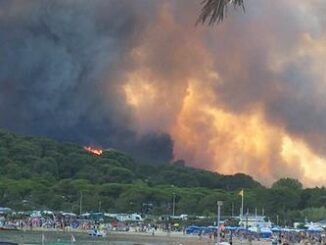
    GENEVA, Switzerland, July 26, 2017 (ENS) – Wildfires in southeastern France forced the evacuation of 10,000 people overnight, French officials have confirmed.

    Overall, more than 4,000 firefighters and troops supported by water bombers have been trying to extinguish the flames since Monday. Hundreds of firefighters have been deployed to battle the fires near Bormes-les-Mimosas, in the country’s Provence-Alpes-Côte d’Azur region.

    fire
    Wildfire blazes in the hills above a beach in southern France. July 26, 2017 (Photo courtesy WMO)

    Roughly 4,000 hectares of land have burned along the Mediterranean coast, in the mountainous interior and on the island of Corsica. One of the worst fires is consuming forests in an area near the popular resort of Saint-Tropez. In Corsica, hundreds of homes have been evacuated.

    On Tuesday, before the evacuation, France had asked its EU neighbours for more help to fight the fires, activating the EU’s Civil Protection Mechanism.

    Christos Stylianides, European commissioner for humanitarian aid and crisis management, said, “The EU stands in full solidarity with France. In an immediate response, the European Commission has helped mobilise a Canadair aircraft from Italy through our Civil Protection Mechanism.”

    “Earlier this month, France helped Italy fighting forest fires and now Italy is showing its support to France. This is EU solidarity at its best,” said Stylianides. “Our thoughts are with all those affected and the brave first responders working in difficult conditions.”

    Twelve firefighters have been injured and 15 police officers have been affected by smoke inhalation, officials say.

    During June and July, climatic conditions around the world have been extreme, with fires, floods and drought making life difficult for people and wildlife in many countries.

    In the United States, the state of Montana is ablaze. Montana Governor Steve Bullock signed an executive order Sunday declaring a fire emergency in the state.

    The largest area burning in the state is the Lodgepole Complex – three fires that have burned 226,000 acres (91,460 hectares) and destroyed about a dozen homes in northeastern Montana. The fire has consumed ranch land and hay supplies.

    In fact, fires have been devouring forests across the western United States.

    The Snowstorm Fire in Nevada began on July 13. It has burned 60,000 acres (24,280 hectares) and is just 13 percent contained. The Detwiler Fire in California began on July 15. It now covers 79,400 acres 32,132 hectares) and is 65 percent contained.

    The heat is making travel by air in the United States difficult and, in some cases, impossible. In Arizona, from June 17-27, Phoenix International Airport had 11 straight days with temperatures of at least 110°F (43°C), with one day hitting 48.3°C (119°F). The heat caused multiple canceled flights. The hotter the air, the less dense it is, which means less lift for airplanes as they take off. In order to take off, the planes would have needed a longer runway, which is not available in Phoenix.

    In fact, the entire world is heating up. June 2017 extended the spell of “exceptional global warmth” that has lasted since mid-2015, according to the World Meteorological Organization, which compiles data from its 191 member states and territories.

    Average surface air temperatures this June were the second hottest on record, after June 2016, finds the latest analysis from the European Union’s Copernicus Climate Change Service.

    In addition to high temperatures, extreme weather affected many parts of the world in June and July.

    Rescue services and troops in New Zealand’s South Island worked around the clock over the weekend to help those affected by a severe storm that released floods and forced the evacuation of hundreds of homes.

    A state of emergency was declared in the South Island cities of Christchurch, Otago, Timaru and Dunedin after some areas were hit with more than 200 millimetres (7.8 inches) of rain in 24 hours.

    The New Zealand Meteorological Service says all of July has been marked by severe weather events, caused by low pressure systems from the Tasman Sea.

    But in neighboring Australia, it was the second driest June on record, with rainfall 62 percent below average for the continent as a whole, according to the Australian Bureau of Meteorology.

    In Indonesia, drought is drying the crops as they stand in the fields.

    Yet, across southern Asia heavy rains have been making life miserable for residents. This week in Bangladesh, rain has flooded the capital, Dhaka. On July 5, nearly 900,000 Bangladesh residents were affected by floods.

    Tuesday, in India’s western states of Gujarat and Rajasthan, four people lost their lives and 25,000 have been evacuated due to heavy rains and floods, 33 percent heavier overall than last year, officials said.

    Chinese weather authorities report torrential rainfall in the annual monsoon season across China for extended periods in June and early July, causing economic losses and transport disruption. Heavy rains caused cancellation of more than 600 flights at Beijing airport alone on July 6.

    The rainfall was one of the contributing factors to a deadly landslide with many casualties on June 24 in Maoxian County, Sichuan.

    Since June 22, floodwaters have inundated cities in Hunan Province, forcing more than 311,000 people to evacuate, damaging crops and destroying more than 6,300 houses, according to the China Meteorological Administration.

    In southern Japan, tropical storm Nanmadol on July 6 caused local governments to issue evacuation orders to nearly 60,000 residents, according to the Japan Meteorological Agency.

    Much of South America and Africa have been warmer than average during this two month period, according to the Copernicus Climate Change Service.

    The World Meteorological Organization reports the Middle East is broiling. The Iranian city of Ahwaz recorded a temperature of 53.7°Celsius (128.66° Fahrenheit) on June 29 as part of a heatwave with temperatures in excess of 50°C across the region, including Iraq and Kuwait.

    An even higher temperature of about 54°C (129.2°F) scorched the city of Turbat, southwestern Pakistan, in late May.

    But this week in Turkey, it’s too much water, not too much heat. Istanbul traffic came to a standstill as severe storms inundated the city, flooding the streets.

    Temperatures were much above average, and high in absolute terms, over Morocco and northern Algeria in June and July. Forest fires are burning across northern Algeria, consuming an estimated 1,000 hectares.

    Southern and central Europe was very much warmer than the 1981-2010 average in June, especially over the Iberian Peninsula, where Portugal experienced devastating wildfires.

    The Deutscher Wetterdienst said July 7, “A period with significantly above-normal temperatures and heat waves, at least for the next week, is expected for most parts of the eastern Mediterranean – from Italy, Balkans to Caucasus and Middle East.”

    Conversely, says the WMO, temperatures have been well below average over the northeast of Europe. The contrast between southwest and northeast continues a pattern that was present in April and May.

    In Russia, June 2017 is called Junabre, meaning June plus November, because of the cold weather in the European parts of the country. June was the coldest month in the past 14 years for Moscow.

    The UK should be bracing for record rainfall, says Bob Ward, policy and communications director at the Grantham Research Institute on Climate Change and the Environment at the London School of Economics and Political Science.

    The UK’s two wettest winters on record occurred in 2013-14 and 2015-16, flooding many parts of the country. As a result, the National Flood Resilience Review was begun, but it needs expansion to include surface water flooding, says Ward.

    Commenting on the publication Monday of the paper, High risk of unprecedented UK rainfall in the current climate, in the journal “Nature Communications,” Ward said, “I hope that the Environment Secretary, Michael Gove, will carefully read this important Met Office analysis because it highlights the risk of extreme rainfall that could cause flooding.”

    Copyright Environment News Service (ENS) 2017. All rights reserved.


  • Nuclear Disarmament Treaty Adopted Without Nuclear States

    Nuclear Disarmament Treaty Adopted Without Nuclear States


    NEW YORK, New York, July 7, 2017 (ENS) – Despite the absence of all nine nuclear-weapons states, countries meeting at a United Nations conference in New York Friday adopted the Treaty on the Prohibition of Nuclear Weapons, the first multilateral legally-binding agreement for nuclear disarmament to have been negotiated in 20 years.

    U.S. nuclear weapons test at the Nevada Test Site, 1953 (Photo by U.S. Government)

    “The treaty represents an important step and contribution towards the common aspirations of a world without nuclear weapons,” the spokesperson for UN Secretary-General António Guterres said following its adoption.

    “The Secretary-General hopes that this new treaty will promote inclusive dialogue and renewed international cooperation aimed at achieving the long overdue objective of nuclear disarmament,” said spokesperson Stéphane Dujarric.

    The treaty was adopted by a vote of 122 in favor to one against (Netherlands), with one abstention (Singapore).

    It prohibits a full range of nuclear-weapon-related activities, such as undertaking to develop, test, produce, manufacture, acquire, possess or stockpile nuclear weapons or other nuclear explosive devices, as well as the use or threat of use of these weapons.

    “We feel emotional because we are responding to the hopes and dreams of the present and future generations,” said Ambassador Elayne Whyte Gómez of Costa Rica, who serves as the president of the conference that negotiated the treaty in response to a mandate given by the UN General Assembly.

    Whyte Gomez
    Elayne Whyte Gómez, of Costa Rica, President of the United Nations conference to negotiate a legally-binding treaty to prohibit nuclear weapons, briefs journalists as the conference concludes, July 7, 2017 (Photo by Eskinder Debebe courtesy UN)

    She told a news conference at UN Headquarters that with the treaty the world is “one step closer” to a total elimination of nuclear weapons.

    The treaty will be open for signature to all countries at UN Headquarters in New York on September 20, 2017, and enter into force 90 days after it has been ratified by at least 50 countries.

    However, a number of countries stayed out of the negotiations, including the United States, Russia and other nuclear-weapon States, as well as many of their allies.

    North Korea did not join the talks either.

    In a joint press statement issued today, the delegations of the United States, United Kingdom and France said they “have not taken part in the negotiation of the treaty… and do not intend to sign, ratify or ever become party to it.”

    “This initiative clearly disregards the realities of the international security environment,” they stated. “Accession to the ban treaty is incompatible with the policy of nuclear deterrence, which has been essential to keeping the peace in Europe and North Asia for over 70 years.”

    In response to questions on the joint statement, Whyte Gómez said that when the Treaty on the Non-Proliferation of Nuclear Weapons, NPT, was adopted decades ago, it did not enjoy a large number of accessions.

    Opened for signature in 1968, the Non-Proliferation Treaty entered into force in 1970. Then in 1995, the treaty was extended indefinitely. A total of 191 States have joined the treaty, including the five nuclear-weapon states that are the permanent members of the UN Security Council – China, France, Russia, the United Kingdom and the United States.

    In the beginning, it was unimaginable that those States would be parties to the NPT, she said. “But the world changes and the circumstances change.”

    She said that survivors of nuclear bombs, the hibakusha, have been the driving force in the creation of the nuclear weapons prohibition treaty. The experiences they have been sharing “touch the human soul,” she said, adding that the negotiations were a “combination of reason and heart.”

    Copyright Environment News Service (ENS) 2017. All rights reserved.


  • Struggling U.S. National Parks Flooded With Visitors

    Struggling U.S. National Parks Flooded With Visitors


    WASHINGTON, DC, July 3, 2017 (ENS) – U.S. national parks are experiencing some of the heaviest traffic of the year this Independence Day weekend, as millions of visitors stream into the country’s 59 parks to explore the 52.2 million acres they cover. But the President Donald Trump’s budget request to Congress would cut $378 million from the National Park Service and eliminate some 1,200 park employees, without addressing the $12.5 billion maintenance backlog.

    Interior Secretary Ryan Zinke defends these cuts and plans to privatize the National Park campgrounds. Conservation groups worry that his plan is to sell off public lands to the highest bidder, despite his declaration to Congress at his confirmation hearing that he is “absolutely against transfer or sale of public land.”

    park
    Sunrise at Haleakala Nationa Park, Maui, Hawaii (Photo courtesy National Park Foundation)

    The Trump administration is cutting back on environmental protections across the board, and natural resource agencies are cutting employees and removing scientists from their payrolls.

    Zinke heads a department that manages one-fifth of the land in the United States, about 500 million surface acres and much more underground, so his department can tread heavily upon the environment.

    The Department of the Interior is responsible for nine bureaus, including: the National Park Service, the Bureau of Land Management, Ocean Energy Management, the Fish and Wildlife Service, the U.S. Geological Survey, and the Bureau of Indian Affairs.

    If Congress approves President Donald Trump’s budget request, the Interior Department would lose 4,000 full-time positions.
    In testimony before the Senate Energy and Natural Resources committee June 20, Interior Secretary Ryan Zinke announced plans to cut at least 4,000 jobs at the department he oversees. Jobs across all areas of the agency would be affected.

    Zinke told the lawmakers, “The 2018 budget reduces lower priority programs $1.6 billion below 2017 and supports 59,968
    full time equivalents. This represents an estimated reduction of roughly 4,000 full time equivalent staff from 2017.”

    “To accomplish this, the department will rely on a combination of attrition, reassignments, and separation incentives,” Zinke said, indicating that the loss of 4,000 jobs is just the beginning.

    “Actual attrition rates and acceptance of separation incentives will determine the need for further action to reduce staffing,” the secretary said.

    An already thinning Bureau of Land Management is warned to get ready for further staff cutbacks, with possible buyouts if Trump targets are not met, according to agency documents posted June 21 by Public Employees for Environmental Responsibility, PEER, an association of employees in natural resource agencies.

    BLM staff are being directed to focus on Trump priorities of energy production, border security and job creation.

    In a June 16th all-hands email, BLM Acting Director Michael Nedd told employees that the agency is preparing to aim for “1,000 fewer full-time equivalent employees across the Nation.”

    If this quota could not be reached through “normal attrition” then BLM could “seek authority from the Office of Personnel Management to offer early retirement and voluntary separation incentives later this year,” according to Nedd.

    Despite being the smallest federal land agency, BLM has the largest jurisdiction, managing 245 million acres of land and 700 million acres of mineral estate.

    While demands on it have grown, the agency workforce has declined by more than a fifth since 2010. The loss of an additional 1,000 positions would shrink it by nearly a third since 2010.

    Yellowstone
    Lower Falls, Yellowstone National Park, Wyoming, 2013 (Photo by Jerry and Pat Donaho)

    Ranking Member of the U.S. Senate Energy and Natural Resources Committee Maria Cantwell, a Washington Democrat, questioned the Interior Secretary on the president’s Fiscal Year 2018 budget request.

    Cantwell raised concerns over budget cuts that will limit access to public lands, threaten conservation efforts, and abdicate commitments to tribes.

    During Secretary Zinke’s confirmation in hearing he stated that providing frontline professionals with the tools and resources they need was one of his top priorities.

    Cantwell questioned how a proposed $378 million cut to the National Park Service budget would accomplish that priority.

    “Just one year after the National Park Centennial, this budget would cut almost $400 million from the Park Service budget. It would result in cutting more than 1,000 full-time employees,” said Senator Cantwell. “And according to the Department’s own math, “nearly 90 percent of parks would reduce their current staffing levels, leading to the reduction of services to the public.”

    Zinke told lawmakers that one of his first priorities would be to fix the crumbling infrastructure at parks under the National Park Service. He said President Trump’s ambitious infrastructure spending plans should “prioritize the estimated $12.5 billion in backlog of maintenance and repair” at hundreds of national parks such as Yosemite National Park,

    Cantwell asked Secretary Zinke how the Trump administration justifies proposed cuts to funding for programs that could save lives, while increasing funding and using taxpayer dollars for giveaways to the oil and gas industry.

    “The administration’s war on science is also on full display. The U.S. Geological Survey would be cut by 15 percent, $163 million. We’re talking about water and climate science; we’re also talking about USGS work on natural hazards, including a number of earthquake and volcano early warning systems vital to the public,” said Cantwell.

    Cantwell warned that the Federal Land and Water Conservation Fund appropriations would also see devastating cuts. “Secretary Zinke’s proposal also uses a budget gimmick to try to obscure the fact it’s cutting the Land and Water Conservation Program by 85 percent, $61 million down from $400 million. This is our nation’s most successful land conservation program, which 85 Senators voted to make permanent just last year,” said Cantwell.

    Cantwell said, “Mr. Secretary, I find the budget so focused on the oil and natural gas aspect of revenue that I think you are neglecting the fact that the outdoor economy generates $887 billion dollars a year, $65 billion in federal revenue, $59 billion in state and local revenue, so that’s $124 billion dollars to the government. So that versus the $2 billion you’re talking about or $18 billion depending on price fluctuations for oil and gas. I want to make sure we are putting pedal to the metal as it relates to the outdoor economy and the opportunities — that is what is going to generate a lot more revenue for us as a government.”

    But in January, the Republican-controlled House of Representatives made it easier for the government to sell or give away national parks, national forests, and other public lands.

    The new rule, written by House Natural Resources Committee Chairman Rob Bishop, a Utah Republican, establishes that any legislation to dispose of public lands and natural resources would cost taxpayers zero dollars. This means that public lands have no value and paves the way for Congress to get sell off public lands at the expense of the American taxpayer.

    Copyright Environment News Service (ENS) 2017. All rights reserved.


  • Up to Four Major Atlantic Hurricanes Forecast for 2017

    Up to Four Major Atlantic Hurricanes Forecast for 2017


    COLLEGE PARK, Maryland, June 10, 2017 (ENS) – The Atlantic Ocean and Caribbean Sea could experience another above-normal hurricane season this year, according to forecasters at NOAA’s Climate Prediction Center in College Park.

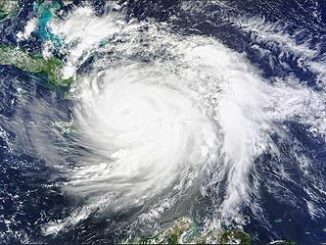
    Last year produced five storms that touched land, including Matthew, one of the deadliest Atlantic hurricanes on record. Matthew caused $10 billion in damage and killed 34 people in the United States and 551 in the Caribbean.

    hurricane
    On October 4, 2016, Hurricane Matthew made landfall on southwestern Haiti as a category-4 storm—the strongest storm to hit the Caribbean nation in more than 50 years. (NASA Earth Observatory image by Joshua Stevens)

    For the upcoming Atlantic hurricane season, which runs from June 1 through November 30, forecasters predict a 45 percent chance of an above-normal season, a 35 percent chance of a near-normal season, and only a 20 percent chance of a below-normal season.

    Forecasters predict a 70 percent likelihood of 11 to 17 named storms (winds of 39 mph or higher), of which five to nine could become hurricanes (winds of 74 mph or higher), including two to four major hurricanes (Category 3, 4 or 5; winds of 111 mph or higher).

    An average season produces 12 named storms of which six become hurricanes, including three major hurricanes.

    These numbers include Tropical Storm Arlene, a rare pre-season storm that formed over the eastern Atlantic in April.

    The National Oceanic and Atmosphereic Administration, NOAA, is under the leadership of U.S. Secretary of Commerce Wilbur Ross.

    Secretary Ross said that GOES-16, the most advanced weather satellite NOAA has ever developed, will be moved to the GOES-East position at 75 degrees west longitude, after it is declared operational in November.

    Top officials from NOAA announced the long-awaited GOES-16 decision at the 2017 Atlantic Hurricane Season Outlook news conference in College Park late last month.

    “As a Florida resident, I am particularly proud of the important work NOAA does in weather forecasting and hurricane prediction,” said Ross. “These forecasts are important for both public safety and business planning, and are a crucial function of the federal government.”

    “GOES-16’s unmatched detail in observations and other data will improve forecasts, provide considerable benefits to the economy, and help improve public safety,” Ross said. “It will improve forecasters’ situational awareness and lead to more accurate, timely, and reliable watches and warnings.”

    Even before its final positioning, the sophisticated camera on NOAA’s new GOES-16 satellite will give hurricane forecasters a sneak peek at its greater image resolution, sharp detail and rapid-refresh rate.

    One of the powerful instruments aboard GOES-16, the lightning mapper, will allow forecasters to see lightning strikes that build within tropical cyclones – a possible signal of strengthening, NOAA says.

    The combination of two high-resolution hurricane models will improve forecast guidance for the National Hurricane Center this season. The upgraded Hurricane Weather Research Forecast model adds better representation of storms at higher vertical resolution, and has advanced data assimilation and improved physics.

    With these upgrades, the model can improve intensity forecasts by as much as 10 percent and track forecasts by as much as seven percent.

    NOAA’s Environmental Modeling Center also is replacing the Geophysical Fluid Dynamics Laboratory Hurricane Model with a new hurricane model called HMON, for Hurricanes in a Multi-Scale Ocean-Coupled Non-Hydrostatic, which has superior track and intensity forecast skill.

    “The outlook reflects our expectation of a weak or non-existent El Nino, near- or above-average sea-surface temperatures across the tropical Atlantic Ocean and Caribbean Sea, and average or weaker-than-average vertical wind shear in that same region,” said Dr. Gerry Bell, lead seasonal hurricane forecaster with NOAA’s Climate Prediction Center.

    Strong El Ninos and wind shear typically suppress development of Atlantic hurricanes, so the prediction for weak conditions points to more hurricane activity this year.

    Also, warmer sea surface temperatures tend to fuel hurricanes as they move across the ocean. However, the climate models are showing considerable uncertainty, which is reflected in the comparable probabilities for an above-normal and near-normal season.

    “NOAA’s broad range of expertise and resources support the nation with strong science and service before, during and after each storm to protect lives and property and enhance the national economy as we continue building a Weather-Ready Nation,” said Ben Friedman, acting NOAA administrator. “From our expert modelers to our dedicated forecasters and brave crews of our hurricane hunters, we’ll be here to warn the nation every step of the way this hurricane season.”

    The 2016 season was the most active since 2012, with 15 named storms, including 7 hurricanes and 4 major hurricanes.

    NOAA will update this outlook in early August, just prior to the peak of the season.

    “Regardless of how many storms develop this year, it only takes one to disrupt our lives,” said Acting FEMA Administrator Robert J. Fenton, Jr. “Get ready now with these easy, low-cost steps that will leave you better prepared and will make all the difference.

    “Have a family discussion about what you will do, where you will go and how you will communicate with each other when a storm threatens. Know your evacuation route; tune into your local news or download the FEMA app to get alerts, and finally, listen to local authorities as a storm approaches.”

    Copyright Environment News Service (ENS) 2017. All rights reserved.


  • Trump’s 2018 Budget Would ‘Devastate’ Environment

    Trump’s 2018 Budget Would ‘Devastate’ Environment


    WASHINGTON, DC, May 24, 2017 (ENS) – President Donald Trump’s proposed fiscal year 2018 budget request to Congress, released in detail Tuesday, has Americans who care about the environment and public health up in arms. The proposal would impose massive cuts on health, environmental and safety net programs and gut federal research in the energy, climate science and medical fields.

    “President Trump’s proposed budget cuts, if enacted, devastate state and local governmental air pollution control agencies. In short, these cuts will result in more people dying prematurely and getting sick unnecessarily,” warns Bill Becker, executive director of the National Association of Clean Air Agencies, which represents member agencies in 45 states.

    air pollution
    Setting sun over Los Angeles, California illuminates the polluted air, October 21, 2016 (Photo by Paucal)

    Trump’s budget request demands deep cuts in the U.S. Environmental Protection Agency:

    * – a 31 percent cut in EPA’s overall budget from Fiscal Year 2017 to FY 2018
    * – a 39 percent cut in EPA’s Science and Technology budget
    * – a 35 percent cut in EPA’s overall operating budget

    Trump’s budget eliminates EPA funding for a dozen geographic programs including the Chesapeake Bay, the Great Lakes, Lake Champlain and Lake Ponchartrain, the Gulf of Mexico, South Florida, San Francisco Bay and Puget Sound.

    The president also proposes a 45 percent cut in federal grants to state and local governmental agencies. Included among these cuts is a 30 percent reduction for state and local air quality control agencies to implement the Clean Air Act.

    Becker warns, “These cuts will mean delays in meeting health-based air quality standards, less inspections against noncomplying facilities, decreased monitoring in metropolitan areas, and fewer agency staff to address air quality problems. While the Trump administration has been touting its commitment to ‘cooperative federalism,’ these proposed cuts belie that assertion.”

    See the details at: http://www.4cleanair.org/sites/default/files/Documents/EPA_FY18_Budget.pdf

    The Union of Concerned Scientists, UCS, calls Trump’s proposed 2018 budget “a deeply unjust budget that would disproportionately harm poor and working class Americans.”

    UCS President Ken Kimmell, a former Massachusetts Department of Environmental Protection Commissioner, said, “President Trump’s proposed budget takes a wrecking ball to agencies that protect our health, safety and environment.”

    “His budget would gut the EPA,” said Kimmell, “taking our environmental cops off the beat and allowing those who would seek to pollute to get away with it. I also know from my experience heading a state environmental agency that states have neither the funds nor the staff to pick up the slack when federal enforcement is decimated.”

    “His budget would also stall out U.S. technological innovation and scientific research, and the country’s capabilities to respond to extreme weather and national security threats. This is all while driving up the deficit to pay for massive military budget increases we don’t need,” Kimmell warned.

    On the other hand, the UCS reacted positively to one proposal in the budget request – Trump’s proposal to shut down the mixed-oxide (MOX) fuel project to dispose of excess plutonium from the U.S. nuclear weapons program.

    Several independent reports commissioned by the Energy Department concluded that the cost to complete the MOX program at the Savannah River Site in South Carolina would be much more than initial estimates, and that alternative approaches to disposing of the excess plutonium would be more affordable and less risky.

    The Union of Concerned Scientists has long called for canceling the program because it would make it easier for terrorists to gain access to fissile material that could be used to make a nuclear weapon.

    “The MOX fuel fabrication plant at the Savannah River Site is a money pit,” said UCS Senior Scientist Edwin Lyman. “Cancelling the facility and disposing of our excess plutonium by diluting it and shipping it to a permanent repository [at the Waste Isolation Pilot Project in New Mexico] will save taxpayers tens of billions of dollars, and it will be safer and more secure to boot.”

    From Montana, Chris Saeger, executive director of the nonprofit Western Values Project, objects to the part of Trump’s budget proposal that would slash the Interior Department’s budget by nearly 11 percent, or $1.5 billion.

    “With this budget proposal, the Trump administration is continuing their all-out assault on our nation’s public lands,” said Saeger. “In March, Secretary [Ryan] Zinke said he would fight these cuts, now he is praising the effort, claiming it will eliminate ‘wasteful spending.’ What changed? Once again Secretary Zinke is proving he is all hat and no cattle when it comes to protecting public lands.”

    These deep cuts would come at a time when agencies are already underfunded and struggling to keep up with land maintenance at current budget levels, Saeger pointed out.

    The National Park Service is facing a $12.5 billion deferred maintenance backlog. Also under threat are the U.S. Forest Service’s Payments in Lieu of Taxes, which compensate counties that utilize income from federal lands for essential services.

    While funding is decreasing, demand on our federal public lands and visitation to national parks is at an all-time high. Oil production on federal lands increased between 2006 and 2015. At the same time, our national parks hosted 330 million visitors in 2016, the third record-setting year in a row.

    “These draconian cuts would leave our public lands managers with their hands tied, and would pilfer funding from state and local governments, particularly in the rural west,” Saeger said. “Make no mistake, this budget doesn’t eliminate ‘wasteful spending’ or reduce ‘bloated bureaucracy.’ It guts essential services and places an ever-growing burden on western communities.”

    Jeff Watters of the Ocean Conservancy is equally outraged by Trump’s budget proposal. “The president’s budget has officially placed coastal communities and ocean health on the chopping block, with a nearly $1 billion cut to the National Oceanic and Atmospheric Administration’s (NOAA) budget,” he warned.

    Watters says, “These budget cuts have real world impacts on people’s lives.”

    He points to local fishermen who depend on NOAA’s Sea Grant program for coastal industries in the same way farmers receive support from the United States Department of Agriculture. Elimination of this program would disrupt entire businesses along our coasts and lakes.

    Veterinarians rely on NOAA to conduct vital research to protect whales from ship strikes and ocean toxins, and coastal states, tribes and families count on NOAA’s Regional Coastal Resilience Grants to assess coastal risks and provide storm warnings.

    And it is people’s health that this budget proposal is placing at risk, says Oregon Nurses Association’s Executive Director Susan King, RN, MS, CEN, FAAN.

    “President Trump’s callous budget cuts would eliminate the health care services millions of children, seniors and families rely on and rip apart the safety net generations of Americans have worked to build,” said King. “Combined with the President’s health care repeal bill, this proposal continues stripping essential services from those who need assistance most and leaves us increasingly vulnerable to public health crises.”

    Said King, “A budget that cuts cancer research, chronic disease prevention, health insurance and health promotion leaves all Americans less healthy and less safe.”

    Copyright Environment News Service (ENS) 2017. All rights reserved.


  • Feared Pebble Mine Again Threatens Bristol Bay Salmon

    Feared Pebble Mine Again Threatens Bristol Bay Salmon


    VANCOUVER, British Columbia, Canada, May 12, 2017 (ENS) – The Trump administration has undone President Barack Obama’s protection for Bristol Bay, Alaska, which hosts the world largest sockeye salmon run, by allowing a Canadian mining company to apply for a permit to dig up the world’s largest undeveloped gold and copper deposits.

    Vancouver-based Northern Dynasty Minerals Ltd. announced today that its wholly-owned subsidiary, Alaska-based Pebble Limited Partnership, and the U.S. Environmental Protection Agency have reached a settlement agreement of their longstanding legal dispute over the federal agency’s 2014 regulatory action under the Clean Water Act.

    mine site
    Two of Pebble’s test drilling sites at the location of the proposed mine (Photo courtesy Northern Dynasty)

    EPA Administrator Scott Pruitt has agreed the Pebble Project can proceed into the normal course of permitting under the Clean Water Act and National Environmental Policy Act.

    Pruitt said in a statement that the agreement “will not guarantee or prejudge a particular outcome, but will provide Pebble a fair process for their permit application and help steer EPA away from costly and time-consuming litigation.”

    “We are committed to due process and the rule of law, and regulations that are regular,” said Pruitt. “We understand how much the community cares about this issue, with passionate advocates on all sides … We are committed to listening to all voices as this process unfolds.”

    Local tribes, fishermen and business owners reiterated their long-term opposition to the Pebble Mine at the headwaters of Bristol Bay “due to its threats to Bristol Bay’s salmon fishery and thousands of American jobs,” said the United Tribes of Bristol Bay in a statement.

    The Pebble Mine continues to face widespread opposition, from over 65 percent of Alaskans. Bristol Bay residents overwhelmingly oppose the Pebble Mine with over 80 percent regional opposition, including Bristol Bay Native Corporation, Bristol Bay Native Association (31 tribes), Bristol Bay Economic Development Corporation (17 tribes), United Tribes of Bristol Bay (14 tribes), and Nunamta Aulukestai (14 Alaska Native Village Corporations).

    Bristol Bay is the world’s largest producer of wild sockeye salmon and hosts other salmon species as well. It supports a commercial fishing-based economy valued at over $1.5 billion per year, and supports more than 14,000 full-time and part-time American jobs.

    salmon
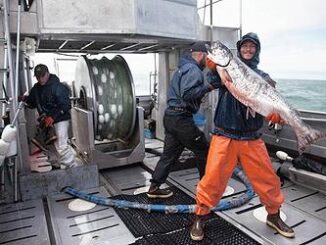
    Fisherman pulls a giant King salmon from the waters of Alaska’s Bristol Bay, July 2013 (Photo by Chris Ford)

    Neverthless, EPA has agreed it will not file the Obama-era Recommended Determination under Section 404(c) of the Clean Water Act until a final Environmental Impact Statement for the Pebble Project has been completed by the U.S. Army Corps of Engineers – so long as that occurs within a period of four years following the settlement agreement and Pebble Limited Partnership files permit applications within 30 months of the settlement agreement.

    EPA has further agreed to initiate a process to propose to withdraw the Proposed Determination it issued under CWA 404(c) in July 2014.

    In return, the Pebble Partnership has agreed to terminate permanently two lawsuits it brought against EPA – an action under the Federal Advisory Committee Act and an action under the Freedom of Information Act.

    “From the outset of this unfortunate saga, we’ve asked for nothing more than fairness and due process under the law – the right to propose a development plan for Pebble and have it assessed against the robust environmental regulations and rigorous permitting requirements enforced in Alaska and the United States,” said Ron Thiessen, president and CEO.

    “Today’s settlement gives us precisely that, the same treatment every developer and investor in a stable, first world country should expect,” he said.

    map
    Map of Alaska showing the proposed Pebble Mine in the headwaters of Bristol Bay (Map courtesy Northern Dynasty)

    Northern Dynasty and the Pebble Partnership expressed their gratitude to EPA Administrator Scott Pruitt and President Donald Trump and members of Congress “for their commitment to the rule of law, and the fair and equal treatment of those who would invest in job-creating industries in America.”

    “The Pebble Partnership will advance a progressive mine plan, including mitigation, to be assessed by objective, expert regulators at the U.S. Army Corps of Engineers and a raft of other federal and state agencies – including EPA,” Thiessen said.

    “Not only are we no longer facing extraordinary development restrictions at Pebble, we will also be assured a fair and predictable permitting review of our proposed development plan. The Corps-led EIS will be prepared by independent, third party experts to ensure that decisions are based on objective science, and that public and stakeholder participation is comprehensive and meaningful,” said Thiessen.

    He said the Pebble Partnership has been advancing planning for a smaller project design at Pebble than previously considered, and one that incorporates “significant environmental safeguards.”

    During the EPA’s peer-reviewed scientific assessment and review of the threats posed by the proposed Pebble Mine to Bristol Bay’s world-class fisheries, more than 1.6 million Americans and 99 percent of all individuals who submitted comments were in favor of up-front protections for the Bristol Bay region.

    Nelli Williams of Trout Unlimited in Anchorage said, “This is an absurd step that risks thousands of American jobs and half the world’s sockeye salmon. Pebble needs to wake up. Nothing has changed the fact that a vast majority of Alaskans don’t want the Pebble Mine in Bristol Bay. Nothing has changed the fact that Pebble would cause irreparable harm.”

    boats
    Bristol Bay commercial fishing vessels, 2007 (Photo by Emma Forsberg)

    “We will be looking to our elected officials and decision makers to ensure they don’t turn their back on the people of Alaska. We have said, and will continue to say, that Pebble is not welcome here. Alaskans aren’t going anywhere, we are in this fight for the long haul,” declared Williams.

    Brian Kraft of Alaska Sportsman’s Lodges said that regardless of the political desires of the Trump administration, the work that EPA has done examining information provided by the mining company should not be discarded.

    “The sport fishing community, which supports a $250 million-a-year economy in the Bristol Bay region, depends upon the continued sustainable health of the region in order to operate our businesses,” Kraft said. “These perfectly functioning rivers sustain life that in turn sustains our businesses.”

    “It will be a busy and exciting year for Pebble and Alaska,” confirmed Pebble Partnership CEO Tom Collier. “Not only will we be rolling out a project that is smaller, with demonstrable environmental protections, we will also be announcing a number of new initiatives to ensure our project is more responsive to the priorities and concerns of Alaskans.”

    “We know the Pebble Project must not only protect the world-class fisheries of Bristol Bay, it must also benefit the people of the region and the state in a meaningful way,” said Collier. “It is our intent to demonstrate how we will meet those goals in the period ahead.”

    Collier said, “Resource investors do not have an expectation that we will always receive development permits or always receive them on the terms we would prefer,” Collier said, “but we do have an expectation of fair treatment under the law, and that science, not politics, should guide permitting decisions.”

    Copyright Environment News Service (ENS) 2017. All rights reserved.


  • Hanford Tunnel Collapses, No Radiation Released

    Hanford Tunnel Collapses, No Radiation Released


    RICHLAND, Washington, May 9, 2017 (ENS) – The U.S. Department of Energy Richland Operations Office declared an emergency at the Hanford Nuclear Reservation at 8:30 this morning after a cave-in of a 20-foot section of a tunnel hundreds of feet long that is used to store contaminated materials.

    A former plutonium  and nuclear weapons production site on the Columbia River in central Washington State, Hanford is the most contaminated nuclear site in the United States and the target of the nation’s largest environmental cleanup.

    tunnel hole
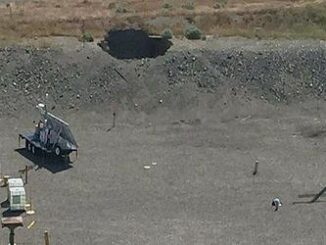
    Hanford activated its emergency center after a tunnel containing contaminated material collapsed. May 9, 2017 (Photo courtesy U.S. Dept. of Energy)

    During a routine surveillance of the tunnel area this morning, a 20-foot-wide hole in the roof of the tunnel was observed,

    The tunnel is located next to the Plutonium Uranium Extraction Facility, a former chemical processing plant also known as PUREX, located in an industrial area near the center of the Hanford Site, in an area known as the 200 East Area.

    No contamination has been detected following the cave-in, and crews continued to survey the area for contamination all day.

    All personnel in the vicinity of the PUREX facility are accounted for and there are no reports of injuries.

    As a precaution, workers in the vicinity of the PUREX facility as well as the Hanford Site north of the southern entrance to the site were told to shelter in-place for a few hours.

    The shelter in place order was lifted in stages from noon to 1:30 pm, and employees were sent home early.

    Workers continue to monitor the area for contamination as a crew prepares to fill the hole created by the cave-in to stabilize the tunnel.

    At and near the area of subsidence crews have deployed a TALON, a remote operated surveying device capable of radiological and industrial hygiene monitoring as well as capturing video footage. The TALON allows crews to safely survey potential areas of contamination from a distance of up to half a mile.

    In the 1950s and 1960s two tunnels were constructed next to the Plutonium Uranium Extraction Plant to hold rail cars that were loaded with contaminated equipment and moved into the tunnels during the Cold War. The tunnels were constructed of wood and concrete and covered with eight feet of soil.

    The approximately 360-foot-long tunnel where the cave-in occurred contains eight rail cars loaded with contaminated equipment. That tunnel feeds into a longer tunnel that extends hundreds more feet and contains 28 rail cars loaded with contaminated equipment.

    The hole opened up in the shorter tunnel near where it joins the longer tunnel. The tunnels were sealed in the mid-1990s and are checked periodically.

    Only personnel essential to minimum safe operations are reporting to work, and non-essential personnel for swing and graveyard shifts were told not to report for work Tuesday night.

    Established in 1943 as part of the Manhattan Project, the site housed B Reactor, the first full-scale plutonium production reactor in the world. Plutonium manufactured at Hanford was used in the first nuclear bomb and in the bomb detonated over Nagasaki, Japan in 1945.

    During the Cold War, the project expanded to include nine nuclear reactors and five large plutonium processing complexes, which produced plutonium for most of the more than 60,000 weapons built for the U.S. nuclear arsenal.

    The weapons production reactors were decommissioned at the end of the Cold War. Decades of manufacturing left behind 53 million gallons (200,000 m3) of high-level radioactive waste stored within 177 storage tanks, an additional 25 million cubic feet (710,000 m3) of solid radioactive waste, and 200 square miles (520 km2) of contaminated groundwater beneath the site.

    Today, Hanford hosts a commercial nuclear power plant, the Columbia Generating Station, and various federal government centers for scientific research and development.

    Copyright Environment News Service (ENS) 2017. All rights reserved.


  • Fire Near Crippled Fukushima Nuclear Plant Extinguished

    Fire Near Crippled Fukushima Nuclear Plant Extinguished


    TOKYO, Japan, May 9, 2017 (ENS) – Firefighters have been battling a wildfire in an area contaminated with radiation near the Fukushima Daiichi nuclear plant that melted down after the 2011 earthquake and tsunami off the northeast coast of Japan.

    The blaze has consumed about 20 hectares (50 acres) of forest on a mountain since it started April 29 in the Tohoku region close to the town of Namie in a no-go zone near the damaged nuclear power plant.

    fire
    Self Defense Force helicopter drops water on a fire on the mountain behind the Fukushima Daiichi nuclear power plant (Screengrab from Kyodo News Video)

    Namie was severely affected by the earthquake and tsunami on March 11, 2011 and the resulting Fukushima Daiichi nuclear disaster. The town was evacuated as it is within the 20 kilometer exclusion zone around the nuclear power plant. On April 1, residents were allowed to return.

    The area still has high radiation levels as a result of the 2011 nuclear accident. But Fukushima’s prefectural government says that to date monitoring posts near the site have shown “no significant change” in radiation levels due to the fire.

    Firefighters and Self-Defense Force members tried to put out the flames using helicopters on Thursday. About 240 personnel in hazmat suits battled the fire on the ground, according to NHK TV.

    Local officials and firefighters say the blaze abated on Monday afternoon due to rainfall.

    The fire near Fukushima Daiichi is just one of many wildfires that have been raging across the Miyagi, Iwate, and Fukushima Prefectures in northeastern Japan, driven by strong westerly winds.

    A fire that broke out Monday in Kamaishi City has burned 400 hectares of forest and was only 300 meters away from houses at one point, the “Asahi Shimbun” newspaper reports.

    City officials issued an evacuation order for nearly 350 residents and set up temporary shelters on Monday. No deaths or injuries have been reported.

    Japanese Self-Defense Forces are using helicopters to help fight the forest fires threatening residential areas. Some of the fires have been doused.

    A blaze in Kurihara, a city in Miyagi Prefecture, was put out around 8:00 pm on May 8, about eight hours after it broke out. The city issued an evacuation order to nearly 400 people.

    Eleven buildings, including homes, were destroyed by the blaze, according to the city’s fire department. Suspecting the Kurihara fire originated from a bonfire, the prefectural police are investigating.

    Another forest fire in Fukushima Prefecture broke out in Aizubange, far from the Fukushima Daiichi nuclear plant. It was brought under control this morning after five Self-Defense Force and prefectural helicopters fought the blaze.

    The Japan Meteorological Agency said low atmospheric pressure in the Tohoku region caused the strong westerly winds. Dry winds are causing widespread dry conditions in the region with humidity of only 30 percent along the Pacific coast.

    The agency has issued a storm warning for the eastern part of Miyagi Prefecture.

    Copyright Environment News Service (ENS) 2017. All rights reserved.


  • Renowned Conservationist Kuki Gallmann Shot in Kenya

    Renowned Conservationist Kuki Gallmann Shot in Kenya


    NAIROBI, Kenya, April 24, 2017 (ENS) – Conservationist and author Kuki Gallmann, 73, was shot and wounded on Sunday morning in Kenya as she was inspecting damage committed by arsonists to her property, an expansive conservation park in Western Laikipia, in Kenya’s Great Rift Valley.

    Invaders burned down a retreat on Gallmann’s Laikipia Nature Conservancy Saturday. A luxury safari lodge on the property was burned down in March by suspected cattle herders, who have been in conflict with area landowners.

    Gallmann
    Kuki Gallmann feeds a bird from her hand at her Laikipia Nature Conservancy. (Photo courtesy Kuki Gallman via Facebook)

    Gallmann was followed in a separate vehicle by a platoon of Kenya Wildlife Service Rangers who are based at her Laikipia Nature Conservancy to provide wildlife surveillance and security.

    After inspecting the damaged property, Gallmann was returning to her home when she was ambushed at a tree laid across the road. She was fired upon by the suspected Pokot herdsmen and sustained bullet wounds to the abdomen.

    The Kenya Wildlife Service Rangers returned fire and were able to rescue her. They brought her home, where first aid was administered. She was airlifted to Nanyuki for additional treatment and then to the Aga Khan Hospital in Nairobi for surgery, according to a statement by Kitili Mbathi, director general of the Kenya Wildlife Service.

    “Gallman is an Honorary Kenya Wildlife Service Warden of long standing and her Conservancy hosts significant wildlife, making it an important wildlife conservation area,” Mbathi said.

    “We would like to commend the courageous and swift action by the KWS Rangers, which was able to save an ardent conservationist,” he said.

    Mbathi condemned “the unprovoked attack by the suspected herders” which he said poses a security threat to residents and wildlife in Laikipia.

    A surge of violence has disrupted Kenya’s drought-ridden Laikipia region as armed herders searching for grazing land have driven tens of thousands of head of cattle onto private properties from dry communal land.

    The Gallmann family owns the 400 square km Laikipia Nature Conservancy and employs 250 Kenyans at lodges and other businesses on the land.

    Decades of protection has turned theproperty into a biodiversity oasis that supports and protects the only pristine forest in the area. The conservation park shelters endangered species such as elephants and cheetah, over 470 species of birds, and rare and endemic plants and insects, in addition to archaeological sites.

    But the property is often attacked. In January 2016, authorities netted about 14 tonnes of rare and imperiled sandalwood with an estimated street value of Sh 30 million cut secretly at night from the Laikipia Nature Conservancy.

    At the time Gallmann said when she was tipped off by members of the public, she informed police. “This is a major breakthrough into the illegal business that has been going on inside my private ranch,” she said. “We are happy to have finally made a breakthrough.”

    Born in Treviso, Italy, the daughter of Italian climber and writer Cino Boccazzi, in 1972 Gallmann moved to Kenya with her husband Paolo and son Emanuele.

    They acquired Ol ari Nyiro, the 98,000 acre cattle ranch in Western Laikipia, which she would transform into a conservation park. Both her husband and son died in accidents within a few years of moving to Kenya.

    Gallmann decided to stay in Kenya and to work toward ecological conservation, becoming a Kenyan citizen. As a living memorial to Paolo and Emanuele, she established the Gallmann Memorial Foundation, which promotes the coexistence of people and nature in Africa and is active in education, biodiversity research, habitat protection, reforestation, community service, peace and reconciliation, poverty alleviation and public health.

    Gallmann has published five books, all global best-sellers. The first, her autobiography “I Dreamed Of Africa,” became a feature film starring Kim Basinger.

    In 2008, after Kenya’s post-election violence, she founded the Laikipia Highlands Games (Sport for Peace) to bring together youth of previously warring tribes across ethnic, tribal and political divides through peaceful but challenging sports competition.

    The Laikipia Highlands Games won for Kenya the 2009 Event of Year World Award by the Peace and Sport Foundation in Monaco.

    In 2010 Gallmann founded Prayers for the Earth, to involve local tribal elders and youth to recapture the traditional respect for the environment on which their livelihood depends, and reconnect to the Earth through traditional worship.

    In 2011, with her daughter Sveva, Gallmann acquired and donated 300 acres for a model community project called “Land of Hope” in Laikipia West, which aims to benefit impoverished communities of the area. It now hosts a vocational centre for women and youth, a nursery school and feeding program, a dispensary, and a high altitude athletics training center.

    Among her honors, Gallmann was named World Ambassador for the Migratory Species by the United Nation Convention for Migratory Species in 2006.

    In 2012, Italy bestowed upon Gallmann the Grosso d’Oro Veneziano International Award for Lifetime Conservation Achievement.

    Copyright Environment News Service (ENS) 2017. All rights reserved.


  • Killer Colombia Mudslide a Climate Change Wakeup Call

    Killer Colombia Mudslide a Climate Change Wakeup Call


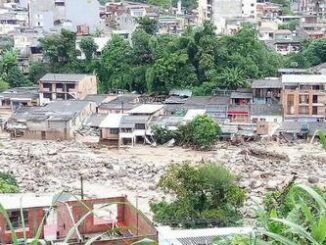
    MOCOA, Colombia, April 4, 2017 (ENS) – Torrential rains caused three rivers to burst their banks in the Colombian city of Mocoa early Saturday morning sending water and debris crashing into homes. The flooding and mudslides have claimed 254 lives and left hundreds of people missing. Thousands scrambled to evacuate, and hundreds of people have been injured.

    Environmental authorities calculate that the rain that fell in a few hours equaled the amount of rainfall during 10 days in this area of ​​the country under normal conditions.

    landslide
    Three rivers overflowed, burying Mocoa, Colombia under water and mud, April 2, 2017 (Photo by OCHA Colombia)

    The Minister of Environment and Sustainable Development Luis Gilberto Murillo, expressed his solidarity with survivors and families of those killed by the avalanche of water and mud. He pledged support for those affected by the overflow of the Mocoa, Mulato and Sancoyaco rivers in Mocoa, the capital of Colombia’s southwestern Putumayo province.

    “We are sorry and we are very sorry for what happened in Mocoa,” said Murillo. “This tragedy has directly affected the National Environmental System.”

    Murillo said the emergency in Mocoa is a new “signal for all Colombians and the world about the need to be aware of the phenomena of climate variability, a call to update plans for adaptation to climate change and implement measures of mitigation, as well as to realize the proper occupation of the territories and the conservation of ecosystems.”

    The minister emphasized that one of the priorities of his portfolio has been prevention and early warning of extreme weather and climate incidents.

    “We have been very active in warning, since August of last year, as we also did last March 6, about the probability of emergencies. Because of increased rainfall, however, we must understand that the magnitude of this natural catastrophe outweighs the odds of any environmental prediction,” he said.

    “Beyond warning, we have given guidance and have been helping local authorities in the country in the formulation of mitigation plans,” said the minister.

    During a flyover of the emergency area in Putumayo on Tuesday, Murillo announced an initiative that will recover environmentally the upper part of the Putumayo River basin.

    He said that thanks to the conservation of a forest, one of Mocoa’s neighborhoods was saved from the deadly avalanche of mud and water.

    Mocoa
    Ruined homes in Mocoa, the capital of Putamayo, Colombia, April 3, 2017 (Photo by OCHA Colombia)

    “In today’s flyby we detected that the neighborhood of El Carmen has a reserve of trees, and that really prevented the avalanche from ravaging it. This confirms that we must have the ecosystems in good condition in order to recover them,” said Murillo.

    In conjunction with the Ministry of Transport, he said, pipelines and hydraulic works will be carried out at critical points in order to be able to reuse rainwater.

    The environment minister also announced an initiative to work on the recovery, restoration and reforestation of the entire upper and middle river basin.

    “We will have a project of environmental axis – Forests of Peace and Life of the Sancoyaco River and Mulato River,” said the minister. “This will be an important urban project, as well as the protection of 4,000 hectares in the rural area.”

    Today officials reconfirmed the critical areas for action and identified a new risk zone. The environmental authorities recommend continued monitoring for possible landslides and potential blockage of the rivers with debris.

    The Institute of Hydrology, Meteorology and Environmental Studies, or IDEAM, has issued a red alert for sudden surges in the upper Putumayo and Caquetá river basin.

    IDEAM is also warning of more landslides in Mocoa and Villagarzón and has issued an orange alert for San Francisco and Santiago in the upper Putumayo.

    According to Luis Alexander Mejía Bustos, director of the Corporation for the Sustainable Development of the South of the Amazon, or Corpoamazonia, the confluence of environmental and geological aspects associated with the Amazonian piedmont landscape complicates the situation.

    “We have that sum of coverage, rocks and bodies of water that cross the city until it ends at the Mocoa River. Now it is necessary to try to locate a new canal that allows to efficiently evacuate the amount of mud, stone and vegetal material that was deposited,” he said.

    Minister Murillo said he will lead a project to generate Colombia’s first technical guidelines for future housing reconstruction projects that must take risk scenarios into account.

    Copyright Environment News Service (ENS) 2017. All rights reserved.


  • Nuclear Nations Boycott Weapons Ban Treaty Talks

    Nuclear Nations Boycott Weapons Ban Treaty Talks


    NEW YORK, New York, March 29, 2017 (ENS) – Nuclear powers, including the United States, Britain and France are among nearly 40 countries boycotting the first UN conference in more than 20 years on a global nuclear weapons ban treaty at the United Nations this week.

    More than 110 other countries are participating, but none of them belong to the group of countries that possess nuclear weapons.

    ambassadors
    Nikki Haley (center), U.S. Ambassador to the United Nations, speaks to journalists on behalf of Member States opposed to the UN conference to negotiate a legally-binding nuclear weapons ban. She is flanked by Alexis Lamek (left), Deputy Permanent Representative of France to the UN; and Matthew Rycroft, Permanent Representative of the United Kingdom. Mar. 27, 2017 (Photo by Mark Garten courtesy UN)

    “There is nothing I want more for my family than a world with no nuclear weapons,” said Ambassador Nikki Haley of the United States outside the UN General Assembly Monday as the talks began inside. “But we have to be realistic. Is there anyone who thinks that North Korea would ban nuclear weapons?”

    “In this day and time we can’t honestly say we can protect our people by allowing bad actors to have them and those of us that are good trying to keep peace and safety not to have them,” Haley said.

    Haley spoke as part of a group of about 20 ambassadors who did not join the negotiations, including South Korea, Turkey and several eastern European countries.

    Russia and China, India and Pakistan also are boycotting the talks.

    According to 2016 estimates, more than 15,000 nuclear warheads remain in global stockpiles.

    Inside, the nuclear weapons ban talks are being led by Austria, Brazil, Ireland, Mexico, South Africa and Sweden, supported by hundreds of nonprofit organizations.

    Kim
    Kim Won-soo, UN High Representative for Disarmament AffairS, addresses the opening the United Nations conference to negotiate a legally-binding instrument to prohibit nuclear weapons, leading towards their total elimination. March 27, 2017 (Photo by Rick Bajornas courtesy UN)

    Kim Won-soo of South Korea, the UN High Representative for Disarmament Affairs, said that creating a world free of nuclear weapons is a common obligation of all States, both nuclear and non-nuclear, and called for their inclusive engagement.

    Speaking on behalf of UN Secretary-General Antonio Guterres, he expressed hope that a legally binding instrument to prohibit nuclear weapons will strengthen the Nuclear Non-Proliferation Treaty and advance the world closer to the total elimination of nuclear weapons.

    Yet Kim acknowledged that “defeatism and dismissiveness” now permeate international deliberations on disarmament, and warned that the public at large seems to be losing interest in the issue.

    Indeed, it is hard to imagine these days a gathering of one million people in the street in support of nuclear disarmament, as the world witnessed in the 1980s, he said.

    “We need to find a new way to inspire and motivate the public in support of disarmament, in the same way that they have been energized to respond to the challenge of climate change, an existential threat facing humanity,” said Kim.

    “The possession of nuclear weapons, which are linked with the threat of their use, is fundamentally incompatible with humanity’s common aspirations for peace and security,” Kim said.

    meeting
    Elayne Whyte Gómez, Permanent Representative of Costa Rica to the UN Office at Geneva and President of the UN conference to negotiate a legally-binding nuclear weapons ban, chairs a meeting of the conference. March 29, 2017 (Photo by Rick Bajornas courtesy UN)

    “Supporters of a legally binding instrument to prohibit nuclear weapons consider that it would be an interim or partial step towards nuclear disarmament because it would not include measures for elimination – matters that would be left for future negotiations,” the UN said in a statement. “Rather, it would be aimed at contributing to the progressive stigmatization of nuclear weapons.”

    The nuclear weapons ban treaty talks opened Monday at UN headquarters and continue through March 31. The conference is scheduled to resume from June 15 to July 7.

    Meanwhile, in Vienna, nuclear safety is being discussed over the next two weeks, where over 900 delegates from around the world are meeting at the headquarters of the International Atomic Energy Agency, IAEA.

    The purpose of this event is to peer review the work carried out by countries to fulfill their obligations under the Convention on Nuclear Safety which came into force in 1996. The convention aims to achieve and maintain a high level of safety at nuclear installations worldwide through enhancing national measures and international cooperation.

    Copyright Environment News Service (ENS) 2017. All rights reserved.


  • Israeli Illegal Pesticides Poison Occupied West Bank

    Israeli Illegal Pesticides Poison Occupied West Bank


    AMMAN, Jordan, February 20, 2017 (ENS) – The illegal trade and the manufacture and use of toxic pesticides in Israeli illegal settlements, result in human rights violations and contribute to the food insecurity in the Occupied West Bank, an international fact-finding mission concludes.

    Pesticide run-off from agricultural operations and hazardous wastes from the manufacture of agrochemicals inside the illegal settlements poison Palestinian farms, livestock, and water sources, the investigators learned.

    Dumping hazardous wastes in Palestinian territory has been documented, including in areas with a high concentration of schools.

    The joint mission, conducted in May 2016, was led by the Arab Group for the Protection of Nature, APN, based in Amman, and the PAN Asia Pacific, PANAP, based in Malaysia, one of five regional centers of the Pesticide Action Network.

    pesticides
    Pesticides found to poison Palestinians’ land and communities. The container on the right is banned endosulfan from Adama, Israel, on the left is banned Dukatalon (paraquat + diquat) from Syngenta, 2016 (Photo by Tanya Lee)

    The investigation reveals the presence of highly hazardous pesticides banned by the Palestinian Authority, but illegally traded into the Occupied Palestinian Territories – pesticides such as endosulfan and Dukatalon, a mix of paraquat and diquat.

    The two reports that came out of the investigation found that 50 percent of pesticides in Palestine are illegal, and that five metric tonnes of banned pesticides have been confiscated since 1995.

    The Palestinian Authority is in no position to dispose of these chemicals safely, and Israel refuses to take them back, investigators found.

    International pesticide specialist Dr. Meriel Watts of PANAP in New Zealand participated in the mission and co-authored the reports with Tanya Lee and Heather Aidy.

    “It is unacceptable that the Palestinian Authority, with one of the tightest pesticide registration and compliance systems, including not allowing pesticides that are banned in their country of origin, is thwarted at every turn by the Israeli authorities who knowingly facilitate the entry of banned highly hazardous pesticides into the Occupied West Bank,” declared Watts.

    Communities near Israel’s industrial settlements in the West Bank have reported contamination of their soil and drinking water, proliferation of disease-carrying mosquitoes, and increased incidence of respiratory and eye diseases, including among children.

    Razan Zuayter, founder and Board Member of the Arab Group for the Protection of Nature, said, “Some of these agrochemical companies have been shut down inside the Green Line for violations of environmental and health regulations, but operate with impunity inside illegal settlements at the expense of the health, livelihood and environment of Palestinians.”

    factory
    Discharge from Geshuri pesticide factory through a Palestinian organic farm. The Israeli-operated Geshuri Industrial Complex in the Tulkarem Governorate contains agrochemical and other chemical manufacturing plants, 2016 (Photo by Meriel Watts)

    “Moreover,” said Zuayter, “the Palestinian Authority does not have access to information on the chemicals manufactured and used inside the illegal settlements.”

    These activities have been found to violate Palestinians’ rights to information, self-determination, water, the highest attainable standard of health and a healthy environment and livelihood.

    “Palestinian officials endeavour to run a process of strict control over pesticide importation and use, with tight control on registration and approved dealers, including frequent audits of shops. However, their efforts are severely undermined by the existing political situation – in particular, the refusal of Israel to allow the Palestinians to enforce Palestinian law, the failure of the Israeli military to allow Palestinians to police their border, and the failure of the Israelis themselves to stop the illegal trade. As a result, there is a very sizeable trade in illegal pesticides into the Occupied West Bank,” states the report entitled, “Pesticides and Agroecology in the Occupied West Bank.”

    The Israeli State and agrochemical corporations have been identified as accountable for their failure to prevent the illegal trade, and for not providing access to just and fair redress and effective remedy, the reports conclude.

    Zuayter objects to the chemical contamination and lack of information as violations of the human rights of Palestinians. “These human rights violations are perpetrated in the context of the Israeli occupation and expansion of the illegal settlements,” she says.

    Zuayter cites Israeli control that prevents the Palestinian Authority from fully enforcing policies to restrict the trade, manufacture and use of around 200 registered active ingredients in the Occupied West Bank, and prevents the Palestinian Authority from responding to the chemical crisis.

    The two reports were launched along with an international online petition outlining recommendations for the international community on February 20, World Social Justice Day 2017.

    PANAP Executive Director Sarojeni Rengam said, “What more perfect timing to launch the reports but on World Social Justice Day, with the urgent need to bridge the accountability gap and hold the Israeli State and agrochemical companies legally liable for their injustice to the Palestinian people.”

    Click on the links below to access the pair of reports:

    Human Rights and Toxic Chemicals in the Occupied West Bank (Palestine)
    Pesticides and Agroecology in the Occupied West Bank

    More information at: #StopPoisoningPalestine, #WorldSocialJusticeDay, and #PesticidesFreeWorld

    Copyright Environment News Service (ENS) 2017. All rights reserved.


  • Fresh Storms Could Reactivate Oroville Dam Crisis

    Fresh Storms Could Reactivate Oroville Dam Crisis


    OROVILLE, California, February 19, 2017 (ENS) – The emergency at California’s Oroville Dam appears to be over for the moment, although during the next few days severe weather is expected to hit the area at the western edge of the Sierra Nevada mountains, as hundreds of thousands of residents return to their homes.

    For California, it has been either too little water or too much. After four years of crippling drought, storms and flooding are now putting Californians at risk.

    About 188,000 residents near Oroville, were ordered to evacuate February 12 after a hole in an emergency spillway in the Oroville Dam threatened to flood the surrounding area as it flowed into the Feather River.

    spillway
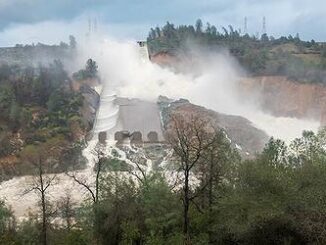
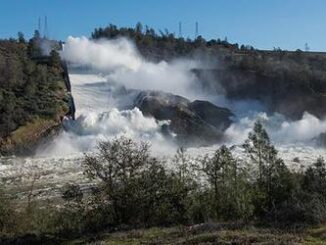
    The Oroville Dam main spillway is flowing at 55,000 cubic feet per second, allowing engineers to get a better look at the damaged spillway, late afternoon, Feb. 18, 2017. (Photo by Florence Low / California Department of Water Resources)

    The state Department of Water Resources says that today flow from the Oroville Dam Flood Control Spillway is expected to remain at 55,000 cubic feet per second and continue to outpace the inflow of water expected from approaching storms.

    “The reduction in flow has allowed assessment teams to view debris buildup and dredge debris piles below the flood control spillway,” the DWR said in a statement.

    Oroville Lake elevations continue trending downward and had fallen to 852 feet, by 4:00 Sunday morning, 48 feet below the emergency spillway.

    As runoff flows into the reservoir, water levels will likely fluctuate but will remain within acceptable and typical levels during times of storm activity, said the DWR.

    Bill Croyle, acting director of the Department of Water Resources, which has responsibility for the Oroville Dam, said dam operators are prepared to increase flows again should the series of storms forecast to pelt the Sierra Nevada watershed with rain and snow over the next week come in stronger than expected.

    DWR continues to work on the area below the spillway, the monoliths, access roads, and eroded areas created by emergency spillway runoff earlier this week.

    DWR continues to monitor the status of the dam, spillways, the Hyatt Power Plant, related structures, and progress of repair activities.

    While most of the 188,000 people who fled their homes near the dam have returned, an evacuation center will remain open at the Silver Dollar Fairgrounds in Chico. All other evacuation centers supported by Butte County will be closed.

    The American Red Cross workers will remain in place in the event that anyone has to evacuate their homes again.

    Local officials stated yesterday that the area remains under an evacuation warning and that residents need to be ready to leave their homes again if the situation changes.

    Governor Jerry Brown won approval for assistance from the Federal Emergency Management Agency, FEMA, which has approved both recent gubernatorial requests for federal assistance – one to support the response to the situation at Oroville Dam and the other to help with the impacts of January storms that caused flooding, mudslides, erosion, power outages and damage to critical infrastructure across California.

    “I want to thank FEMA for moving quickly to approve our requests. This federal aid will get money and resources where it’s needed most,” said the governor.

    On Sunday, February 12, Governor Brown declared a state of emergency to bolster the state’s response to the situation in Oroville and support local evacuations.

    The nonprofit South Yuba River Citizens League, the Sierra Club and Friends of the River warned years ago that the Oroville Dam, America’s tallest dam at 770 feet, was a disaster waiting to happen.

    In 2005, the three nonprofit organizations filed a motion to intervene in the Federal Energy Regulatory Commission’s relicensing of Oroville Dam. They cited potential erosion issues at the unarmored, ungated spillway, warning that it did not meet FERC’s Engineering Guidelines.

    The coalition requested FERC to require the DWR to “armor or otherwise reconstruct the ungated spillway and to make any other needed modifications so that the licensee (DWR) can safely and confidently conduct required surcharge operations consistent with the Corps of Engineers Oroville Dam Reservoir Regulation Manual.”

    Caleb Dardick, executive director of South Yuba River Citizens League, said Thursday, “The Oroville Dam spillway situation is extremely concerning. Once the danger has passed, we expect that the appropriate officials will provide a full analysis.”

    “We’re in a new normal: climate change and extreme flood events will make unprecedented demands on our flood control system and waterways. We need science-based leadership for the sake of public safety and sustainable river management in Northern California,” Dardick said.

    “Right now, all our efforts should focus on keeping our community safe,” he said. “Later, we will have time to ask hard questions and we hope that our state and federal officials, environmental groups and other community groups will come together to support one another in seeking answers.”

    Copyright Environment News Service (ENS) 2017. All rights reserved.


  • ‘Extreme Peril’ at California’s Lake Oroville Dam

    ‘Extreme Peril’ at California’s Lake Oroville Dam


    SACRAMENTO, California, February 13, 2017 (ENS) – More than 180,000 people near Lake Oroville in Butte County, California were evacuated from their homes Sunday as officials warned the auxiliary emergency spillway at Lake Oroville Dam could fail. Failure of the emergency spillway at America’s tallest dam could cause widespread and severe flooding along the Feather River Basin.

    California Governor Jerry Brown issued an emergency order Sunday night mobilizing the California National Guard to bolster the state’s response to the situation at the Oroville Dam’s auxiliary spillway and support local evacuations.

    spillway
    Water gushes into the Feather River from the auxiliary spillway at California’s Oroville Dam, Feb. 12, 2017 (Photo courtesy DWR)

    “I’ve been in close contact with emergency personnel managing the situation in Oroville throughout the weekend and it’s clear the circumstances are complex and rapidly changing,” said Governor Brown.

    In his emergency order, the governor explained that during January and February, three atmospheric river storm systems struck California, bringing massive amounts of rainfall.

    This rainfall inundated lakes, rivers, and streams throughout the state, causing them to reach capacity, resulting in widespread flooding.

    Lake Oroville in Butte County, in the western foothills of the Sierra Nevada, reached capacity February 7, causing officials to utilize the main spillway at Lake Oroville Dam to reduce the lake’s water levels. But the main spillway began to erode, causing officials to begin utilizing the auxiliary emergency spillway on February 11.

    It is this auxiliary emergency spillway that is in danger of failing.  Officials worry that failure could send a 30-foot wall of water into downtown Oroville and other communities along the Feather River.

    “…the circumstances of this potential flooding by reason of its magnitude, are or are likely to be beyond the control of the services, personnel, equipment, and facilities of any single local government and require the combined forces of a mutual aid region or regions to combat,” Governor Brown said in his order.

    “I find that conditions of extreme peril to the safety of persons and property exist in Butte, Sutter, and Yuba Counties due to this potential flooding…” wrote Brown.

    “I want to thank local and state law enforcement for leading evacuation efforts and doing their part to keep residents safe. The state is directing all necessary personnel and resources to deal with this very serious situation,” the governor said Sunday night.

    The Butte County Sheriff’s Office offered some relief in a tweet late last night, saying, “Flows over the auxiliary spillway have ceased. 100,000 cfs continue down the main spillway.”

    Still, the Governor’s Office of Emergency Services has activated the State Operations Center in Mather, California to its highest level and is coordinating with personnel at the Incident Command Post in Oroville and with other local, state and federal emergency response officials to address all emergency management, evacuation and mutual aid needs.

    spillway
    The auxiliary spillway at Lake Oroville Dam is eroding, threatening towers that hold area power lines, Feb. 12, 2017 (Photo courtesy DWR)

    The California Department of Water Resources, DWR, and the incident command team managing Lake Oroville are concerned that erosion at the head of the auxiliary spillway threatens to undermine the concrete weir and allow large, uncontrolled releases of water from Lake Oroville that could exceed the capacity of downstream channels.

    To avert more erosion at the top of the auxiliary spillway, DWR doubled the flow down its main spillway from 55,000 cubic feet per second to 100,000 cfs.

    “The next several hours will be crucial in determining whether the concrete structure at the head of the auxiliary spillway remains intact and prevents larger, uncontrolled flows,” said DWR in a statement Sunday night.

    Current flows are contained with downstream channels. Flow over the auxiliary spillway weir began Saturday morning and has slowed considerably. DWR officials expect that flow to stop entirely soon, which will reduce the erosion on the downstream side of the structure.

    DWR focused Saturday on ways to get the Hyatt Power Plant at Oroville Dam back in operation, because 14,000 cubic feet per second, cfs, can be discharged from the plant when it is operating, which would help with reservoir management.

    Power generation was halted when the water levels in the channel that leads
    from the power plant became high enough to compromise operation. Water levels rose when debris from the eroded concrete spillway piled up in the channel below.

    “The same erosion also threatens the towers that hold the power lines that take electricity from the power plant to the electrical grid; such a connection is needed for the power plant to operate,” DWR said.

    DWR, Pacific Gas & Electric Company, and other partners are working to safeguard the hydroelectric facility and power lines.

    Oroville Dam itself is sound and is a separate structure from the auxiliary spillway.

    Copyright Environment News Service (ENS) 2017. All rights reserved.


  • ‘Extreme’ Chilean Wildfires Worst in Decades

    ‘Extreme’ Chilean Wildfires Worst in Decades


    SANTIAGO, Chile, February 6, 2017 (ENS) – In Chile’s worst fire disaster in 50 years, the South American country has lost over half a million hectares to more than 100 wildfires that first flared up in mid-January. The blazes have frustrated firefighters’ efforts to control them, with new hot spots emerging daily across the central and southern regions.

    fire
    Firefighters on the front lines battle wildfires across central and southern Chile, Feb. 2017 (Photo courtesy CONAF)

    Eleven fatalities have been reported, many of them firefighters.

    Meteorologists say the entire Southern Hemisphere is experiencing an unusually dry, windy summer, ideal conditions for wildfires to burn out of control.

    Chilean President Michelle Bachelet has declared a national state of emergency. As of today, 26 fires are more or less under control, but at least six wildfires are still raging, according to the Forestry Operations Center, CONAF.

    Cristian Orellana, who manages CONAF in the central Chilean region of Maule has been supervising the response to the largest fire in the country. “In a single night, the fire spread over 10,000 hectares, covering 26 kilometers,” he said.

    “The heat was such that even planes couldn’t fly over to drop water,” said Orellana. The fire wiped out the entire town of Santa Olga, former home to 4,500 inhabitants.

    The fires can reach extreme temperatures, sparking devastating fire-storms spread by strong winds. blazes. Trees are blown off their roots and the fires carbonize everything in their path, leaving only white ash scattered across the hills.

    Entire vineyards in Chile’s famous wine region have been destroyed.

    Thousands of people have had to flee their homes, and over 1,500 houses have been completely destroyed. Families are gathered in makeshift camps, where the Chilean Army has set up tents to shelter those who have lost everything.

    Today at a news conference, President Bachelet said, “Chile does not have significant new outbreaks and the others are mostly controlled. That is good news, but it does not mean that we are lowering our guard. On the contrary … we cannot stop fighting or trying to prevent new fires, because we know we are still In the fire season until April, usually.”

    officials
    Chilean President Michelle Bachelet, in red, names Sergio Galilea, left, to handle rehabilitation of fire-affected regions. Santiago, Chile, Feb. 6, 2017 (Photo courtesy Office of the President)

    Sergio Galilea, Undersecretary of Public Works, will manage reconstruction in the regions of O’Higgins, Maule and Biobío, the president said.

    “He must be on the ground, together with the people, listening to their needs, supporting their efforts, mobilizing and streamlining public services within agreed and limited deadlines, because our compatriots can not wait,” said Bachelet.

    “This is not just about replacing what was there,” she said. “We have to act thinking about reducing risk situations in the future and giving people and localities more security.”

    The European Union is offering assistance through its Directorate-General for European Civil Protection and Humanitarian Aid Operations.

    Established in 2001, the EU Civil Protection Mechanism, EUCPM, coordinates national civil protection authorities across Europe to deliver immediate assistance in the aftermath of a disaster.

    “I have never seen such widespread damage and such a level of destruction,” says José Almovodovar, an EUCPM expert in forest fires, after viewing the region from a helicopter.

    In the last few days, 52 firefighters from Portugal deployed under the EUCPM, have brought some of worst fires under control.

    “We have rarely witnessed such extreme behaviors in wildfires,” says Miguel Cruz, the deputy head of Portugal’s Protecçao Civil and a veteran of EU Civil Protection deployments in Latin America.

    Wild animals are fleeing the forests towards inhabited areas in search of food and shelter, says CODEFF, the BirdLife International affiliate in Chile, which has mobilized volunteers to help them.

    eagle
    This injured eagle will need rehabilitation before being released back into the wild. (Photo © CODEFF/Metropolitan Zoo vets)

    Some of the areas affected by the wildfires have been assessed as being Important Bird and Biodiversity Areas by BirdLife International.

    Wildlife rehabilitation centers across the country are treating birds, snakes and mammals such as foxes, leopards and cougars.

    CODEFF is running a campaign to collect medicines and medical supplies for the treatment of burned animals. Safety equipment is also welcome, as it is used for volunteers, helmets, filter masks, leather gloves and safety shoes are needed.

    CODEFF is coordinating with various government agencies and other NGOs to go to the most remote areas in search of injured animals.

    The fires can be seen from space, and their pattern includes a massive burn scar near Empedrado. Scientists with the U.S. National Aeronautics and Space Administration, NASA say this year’s Chilean fires are 10 times more numerous that those recorded during the dry seasons from 2003 to 2016.

    “This is unprecedented from my perspective. The smoke plumes are huge in abundance and altitude,” said Michael Fromm, a meteorologist with the U.S. Naval Research Laboratory who has been studying satellite fire data for 15 years. “Fires have gotten much larger and much more energetic than typical for that area.”

    Copyright Environment News Service (ENS) 2017. All rights reserved.


  • Wetlands Protected Worldwide to Reduce Disaster Risks

    Wetlands Protected Worldwide to Reduce Disaster Risks


    GLAND, Switzerland, February 2, 2017 (ENS) – Ten new Wetlands of International Importance in five countries have been designated to celebrate World Wetlands Day 2017, observed every year on February 2.

    World Wetlands Day marks the date in 1971 when the Convention on Wetlands, known as the Ramsar Convention, was adopted in the Iranian city of Ramsar on the shore of the Caspian Sea.

    “Wetlands for Disaster Risk Reduction” is the theme of World Wetlands Day 2017, and more than 1,000 events of all kinds are happening around the world today to raise awareness of how healthy wetlands reduce the risk of natural disasters.

    Brazil
    This wetland in Brazil nurtures fish that sustain these fishermen and their families. {Photo by Beatriz submitted as an entry in Ramsar’s World Wetlands Day 2017 Photo Contest. Vote here.)

    Intact wetlands can absorb the impacts of floods, droughts and cyclones on communities, and help to build the resilience to withstand these extreme events.

    They help alleviate food insecurity, reduce poverty, combat climate change, and restore and promote the sustainable use of ecosystems.

    But around the world, wetlands are being lost to agriculture, urbanization, commercial and residential development, road construction, impoundment, resource extraction, industrial siting, dredge disposal and mosquito control.

    Pollutants that degrade wetlands include: sediment, nutrients, pesticides, salinity and heavy metals.

    By 2050, loss of wetlands, increasing populations, the changing climate and rising sea levels are forecast to increase the number of people vulnerable to floods to two billion.

    In addition, the frequency of natural disasters worldwide has more than doubled in the past 35 years and climate change is expected to increase disaster frequency and severity.

    Experts estimate that 90 percent of natural hazards are water related, so wetland conservation is essential for reducing these risks.

    There are now 2,280 Ramsar sites protecting more than 215.27 million hectares in the 169 Parties to the Ramsar Convention.

    The New Wetlands of International Importance

    The island nation of Madagascar, off Africa’s southeast coast, has designated five large Ramsar sites to mark World Wetlands Day 2017. The country now has 15 sites, which support the protection of over 1.5 million hectares of habitats critical to the island’s unique biodiversity, achieved with the support of WWF Madagascar.

    mangrove seedlings
    In Madagascar, young people select mangrove seedlings for planting to secure coastal lands, 2016 (Photo © Tony Rakoto courtesy WWF Madagascar)

    Working with WWF, young people have been planting mangroves, small trees that thrive in the saline water along shores, rivers, and estuaries. The dense root systems of mangrove forests trap sediments that flow off the land, helping to stabilize the coastline and prevent erosion from waves and storms.

    “We have chosen mangrove restoration to slow the degradation of the wetlands of Menabe. We want to support the development of our region through mangroves,” says Tivaindrainy Aristide, conservation officer of the Mahery Youth Consortium.

    The world has lost 20 percent of its mangrove forests since 1980, according to experts with the Ramsar Convention.

    In southeast Asia, Myanmar has designated the Meinmahla Kyun Wildlife Sanctuary, a coastal wetland in the southern part of the Irrawaddy Delta, which is also an ASEAN Heritage Park. It supports one of the largest remaining mangrove areas in the delta, where mangroves have declined due to logging, fishing and development of shipping lanes.

    There are an estimated 30 imperiled Irrawaddy dolphins in the rivers and creeks around the sanctuary.

    Myanmar
    Ramsar Convention Senior Advisor for Asia & Oceania, Lew Young, presents the Ramsar Site certificate for the Meinmahla Kyun Wildlife Sanctuary to U Khin Maung Yi, Permanent Secretary for the Ministry of Natural Resources and Environment Conservation, February 2017 (Photo courtesy Ramsar Convention)

    At the designation ceremony Permanent Secretary for the Ministry of Natural Resources and Environment Conservation, U Khin Maung Yi, said, “The conservation of wetlands and the wise use of its resources is important for the development of human societies in a sustainable and equitable way.”

    Dr. U Nyi Nyi Kyaw, director general of the Forest Department and head of the Ramsar Administrative Authority of Myanmar, is enthusiastic about the new Ramsar Site, saying it “…will not only protect the Irrawaddy delta’s last remaining important mangrove estuary, which hosts Myanmar’s largest crocodile population, but will also protect the delta from storm surges caused by cyclones.”

    France has designated Marais Breton, Baie de Bourgneuf, Ile de Noirmoutier et Forêt de Monts as a new Ramsar site. This 56,000 hectare site of coastal marshes and tidal bays on the French Atlantic coast is France’s 45th Ramsar site.

    Italy has designated Trappola Marshland – Ombrone River Mouth as its 53rd Ramsar site. Located on the Tyrrhenian coast of Tuscany, this is one of the last remnants of a partly salty and partly freshwater complex of wetlands and sandy dunes.

    Ukraine has designated two new Wetlands of International Importance, Byle Lake and Koza Berezyna Mire and Archipelago Velyki and Mali Kuchugury.

    Byle Lake and Koza Berezyna Mire are located in southwestern Ukraine between the Stokhid, Prypiat and Styr rivers. This site includes a bog, one of the biggest karst lakes in the region, swamp forests, pine woods and a small channelled river. More than 900 native plant species and 500 animal species have been seen there.

    This wetland complex helps maintain hydrological regimes of the region, in addition to providing carbon storage and climate regulation.

    Archipelago Velyki and Mali Kuchugury is an string of sandbank islands and shallows in the upper reaches of the Kakhovka Reservoir in the floodplain of the Lower Dnieper River in south-eastern Ukraine where fish breed and grow. The wetland is of great importance as a natural filter of fresh water in the reservoir.

    Fights can develop over the degradation of existing Wetlands of International Importance, as is happening now in India.

    The Sundarbans National Park in India, and the neighboring Sundarbans in Bangladesh together account for the world’s largest area of protected mangroves.

    But the nonprofit South Asia Network on Dams, Rivers and People warns that India’s 26 Ramsar sites are being degraded and lack protection.

    India
    Municipal waste dumped in Deepor Beel, a freshwater lake in the state of Assam, India (Photo courtesy SANDRP)

    The group points to the state of Assam where the Deepor Beel, a lake that is the first Ramsar Site in the state, has become a dumping ground “slowly choking the ecologically important wetlands. All of Kamrup city’s garbage is being regularly dumped on the edge of this ancient lake.”

    “Apart from this,” says the group, “the lake’s link with Brahmaputra River has been disrupted by illegal and unmindful construction. At the same time, [an] enormous amount of untreated sewage has found its way to [the] lake infesting it with water hyacinth.”

    Suggesting a complete revision of new wetland rules, activists in Assam have opposed the proposed Draft Wetlands (Conservation and Management) Rules of 2016. Comparing the revised Draft with the Wetland Rules of 2010, they have found that the new Wetland Rules offer limited protective measures for Assam’s wetlands.

    In Eastern Europe, WWF is warning that hydropower projects and government decisions in ecologically sensitive areas threaten to harm the wetland habitats of rare and endangered species along the Danube river, particularly in Slovakia, Romania, Bulgaria and Ukraine.

    Small hydropower plants may now be built in protected Natura 2000 sites in Slovakia. A hydropower plant project in Romania endangers Defileul Jiului National Park, a protected Natura 2000 area, while in Ukraine and Bulgaria current hydropower policies are not able to ensure strong wildlife protection.

    In Bulgaria, the Ministry of Environment is postponing decisions regarding protection of rivers and wetlands from hydropower plant construction. In September, fishing clubs and WWF-Bulgaria appealed “an improperly issued permit” for hydropower plant project across Cherni Iskar and Gorna Perka in Rila Mountain, which WWF says will be devastating for the river ecosystems and their biodiversity. Four months later, after the legal deadline, there is no response from the Ministry of Environment.

    Non-coordinated construction plans could negatively affect clean water, fisheries and tourism, among others. WWF calls for stronger control over ongoing hydropower projects and efficient policy changes for nature protection.

    The protection of wetlands of international importance has become a priority for the African country of Gabon, a member of the Ramsar Convention. Nine natural sites in Gabon, encompassing 2.8 million hectares and home to a wide variety of aquatic ecosystems, are on the Ramsar List.

    The goal of the Sustainable Management of Critical Wetlands Ecosystems Project, financed by the Global Environment Facility, a partnership of 18 agencies including the World Bank, is to enhance the protection of biodiversity in selected forested wetlands on the Ramsar List. It will cover three of the nine Ramsar sites, or 75% of the total area of the Ramsar sites in Gabon.

    This is being accomplished by expanding the knowledge and expertise of the Gabon’s National Agency of National Parks and developing conservation measures for sustainably managing and preserving these wetland ecosystems.

    Copyright Environment News Service (ENS) 2017. All rights reserved.


  • Deepwater Horizon Oil Spill Erodes Louisiana Shoreline

    Deepwater Horizon Oil Spill Erodes Louisiana Shoreline


    PASADENA, California, January 30, 2017 (ENS) – “Dramatic, widespread shoreline loss” is what government scientists call the pattern revealed in new NASA/U.S. Geological Survey annual maps of the Louisiana marshlands where the coast was most heavily coated with oil during the 2010 BP Deepwater Horizon oil spill in the Gulf of Mexico.

    Oil is known to weaken or kill vegetation, leading to loss of the roots that help hold soil together.

    Following the spill, which lasted five months from April 20 to September 19, 2010, the length of shoreline that receded more than 13 feet (four meters) a year quadrupled compared to the year before the spill.

    shore
    Shoreline in Bay Jimmy, Plaquemines Parish, Louisiana, impacted by the BP Deepwater Horizon oil spill, 2010. (Photo by Bruce A. Davis, Department of Homeland Security)

    The land losses occurred mainly in areas where oil had washed ashore during the spill. Reports in early 2012 indicated the well site was still leaking.

    A research team led by Amina Rangoonwala of USGS used airborne remote sensing imagery to analyze shoreline loss across nearly the entire upper Barataria Bay, located on the western side of the Mississippi River Delta, beginning a year before the spill and extending for 2.5 years after it.

    To determine whether the erosion was likely to be caused by the oil, they also compared shoreline loss linked to the deposited oil with shoreline erosion caused by high waves from Hurricane Isaac in 2012.

    The team found that although erosion occurred at isolated sections of the shoreline before the spill, the pre-spill shoreline, as analyzed from 2009 to 2010, was largely stable.

    In the first year after the spill, 2010 to 2011, “the erosion pattern changed dramatically from isolated to widespread,” the scientists said. Erosion occurred mainly along shorelines with documented heavy to moderate oil coating.

    In the second year after the spill, 2011 to 2012, the higher loss rates extended to areas that had less oil coating.

    In August 2012, two months after the two-year post-spill period, Hurricane Isaac made a direct hit on Barataria Bay. Erosion rates measured in the four months after the hurricane were higher than those measured after the spill.

    But this erosion occurred primarily on just a few shorelines that before the spill showed evidence of heightened susceptibility to wave-generated erosion.

    “Our study uniquely shows that the patterns of shoreline recession seen in this region can be directly related to distinctly different causes: broadly dispersed erosion due to oiling from the Deepwater Horizon spill, and enhanced, but spatially limited, erosion due to intense storm impacts,” said Rangoonwala.

    Louisiana
    Barataria Bay, Louisiana, shoreline changes, June 2009 to Oct. 2012, after the oil spill and Hurricane Isaac: high loss Year 1 post-spill, decreased loss Year 2, little loss after Isaac (Image Credits: USGS/NASA-JPL/Caltech)

    Wetland impacts of the spill documented by the team included both the loss of wetlands due to shoreline erosion, and island fragmentation, where small islands are broken into even smaller islands, creating more shoreline.

    Land lost from fragmentation is unlikely to be reestablished, particularly in this part of the Mississippi River delta where levees prevent an influx of new sediments from the river. The scientists say this will alter natural coastal defenses against flooding.

    The images collected in the annual surveys and following Hurricane Isaac were obtained from NASA’s Uninhabited Aerial Vehicle Synthetic Aperture Radar, UAVSAR, developed and managed by NASA’s Jet Propulsion Laboratory, Pasadena, California.

    UAVSAR flies on a C-20A research aircraft based at NASA’s Armstrong Flight Research Center facility in Palmdale, California.

    UAVSAR’s polarized radar produced detailed representations of the marsh, which USGS scientists then used to develop a process to analyze the shoreline recession by mapping the change in shore location.

    “Through this process, USGS and NASA scientists developed a repeatable, quantitative mapping method that will allow us to monitor shoreline erosion after oil spills in the future,” said study co-author Cathleen Jones of the Jet Propulsion Laboratory.

    “Being able to compare shoreline losses in a year without any major storm to losses both after the Deepwater Horizon oil spill and after the hurricane was essential to correlating the erosion of the marsh to its underlying causes,” said Jones.

    The study, “Wetland shoreline recession in the Mississippi River Delta from petroleum oiling and cyclonic storms,” is published in the journal “Geophysical Research Letters.”

    Developed to test new technologies and study Earth surface dynamics, UAVSAR is informing the design and planning for a future spaceborne radar mission, the NASA-ISRO Synthetic Aperture Radar (NISAR), which is planned to image almost the entire Earth’s surface at least once every 12 days.

    NASA collects data from space, air, land and sea to increase our understanding of our home planet, improve lives and safeguard our future. NASA develops new ways to observe and study Earth’s interconnected natural systems with long-term data records. The agency freely shares this unique knowledge and works with institutions around the world to gain new insights into how the planet is changing.

    Copyright Environment News Service (ENS) 2017. All rights reserved.


  • Trump Resistance Movement Builds on Millions of Marchers

    Trump Resistance Movement Builds on Millions of Marchers


    WASHINGTON, DC, January 23, 2017 (ENS) – More than one million people took part in women’s marches in Washington, DC, New York and dozens of other cities across the country Saturday on President Donald Trump’s first full day in office.

    Marchers in Washington chanted, “Welcome to your first day, we will not go away!”

    march
    Marchers surround the White House, Washington, DC, Jan. 21, 2017 (Photo by Ted Eytan)

    The Washington, DC rally attracted more than 500,000 people, said city officials. Although it was one of the biggest demonstrations in the city’s history, no arrests were reported.

    Many of the women marching wore pink hats with cat ears, to show their resistance to Trump’s pussy-grabbing boasts caught on video tape and broadcast during the campaign, and his denigration of women in many other comments.

    Millions more people attended marches held in major cities of 57 countries around the world, including Mexico City, Paris, Berlin, London, Prague and Sydney.

    “We march today for the moral core of this nation, against which our new president is waging a war,” actress America Ferrera told the Washington crowd. “Our dignity, our character, our rights have all been under attack, and a platform of hate and division assumed power yesterday. But the president is not America. … We are America, and we are here to stay.”

    marchers
    Marchers take over the streets of Washington, DC, the nation’s capital, Jan. 21, 2017 (Photo by Ted Eytan)

    Many marchers, including environmentalists, are making plans to organize resistance to President Trump, building on the strength of their numbers.

    But in eight states: Colorado, Indiana, Iowa, Michigan, Minnesota, North Dakota, Virginia and Washington, Republican lawmakers are attempting to criminalize peaceful protesting.

    Nevertheless, President Trump’s plans to defund environmental programs already are coming to light.

    Even before Oklahoma Attorney General Scott Pruitt, Trump’s choice to head the U.S. Environmental Protection Agency, is confirmed by the U.S. Senate, the President’s plan to tear down the agency has surfaced.

    The nonprofit Food & Water Watch just got a leaked copy of Trump’s to-do list for the EPA, and “as expected,” says Food & Water Watch Executive Director Wenonah Hauter, “it’s horrifying.”

    As ENS reported on inauguration day, the Trump Administration took all references to climate change off of the White House website.

    Now, they are beginning a months-long program of budget cuts and roll backs of key regulations designed to protect U.S. air, water and climate from corporate polluters.

    The leaked to-do list makes it clear that Trump will follow through on promises to gut the agency.

    * – The document identifies opportunities to cut programs, including $513 million from “state and tribal assistance grants,” $193 million from ending climate programs and $109 million from “environmental programs and management.”

    * – The administration outlines initiatives they want to stop, including “Clean Air Act greenhouse gas regulations,” clean car standards and clean water protections.

    * – The to-do list also includes a plan to permanently change how the EPA uses science to prevent the agency from returning to “its bad old ways as soon as an establishment administration takes office.”

    On another front, government social media accounts were temporarily shut down in apparent retaliation for forwarding a story that the crowd in attendance for the Trump inauguration was smaller than Obama’s.

    It signals that a notoriously thin-skinned President may censor not just federal social media but websites and reports, according to Public Employees for Environmental Responsibility, PEER.

    marchers
    Thousands of women and men marched in St. Louis to demonstrate their beauty, strength and diversity, and to stand in solidarity with women marching across the world, Jan. 21, 2017 (Photo by Mr. Wonderful)

    On Friday afternoon right after Donald Trump took the oath of office, the National Park Service, NPS, retweeted two news reports: one with photos showing a smaller crowd for the Trump inauguration than Obama drew in 2009. The other recounted White House web postings on topics such as climate and civil rights had been scrubbed.

    Within hours, an “urgent” message went out that the entire Interior Department, not only the National Park Service, was “directed by incoming administration to shut down Twitter platforms immediately until further notice” and to “contact your bureau web staff immediately and make sure they are complying.”

    But by mid-morning Saturday, the Twitter platforms were reopened after the Trump people had provided “social media guidance” according to an Interior spokesperson.

    The two re-tweets had been removed from the official feed and replaced by this apology from the NPS, “We regret the mistaken RTs [retweets] from our account yesterday and look forward to continuing to share the beauty and history of our parks with you.”

    “This episode suggests that federal civil servants must now screen factual information for potential political sensitivity prior to public release,” said PEER Executive Director Jeff Ruch, questioning whether the Trump “social media guidance” had been reduced to writing. “Based on the nervous chatter we are hearing from agency employees, there is already a distinct chilling effect – and perhaps that is precisely the new White House’s intent.”

    man
    This man marched in Seattle, Washington wearing a pink pussy hat in solidarity with the millions who resist President Trump’s denigration of women, Jan 21, 2017. (Photo by Richard Ha)

    The intent of the Trump resisters is apparent. In an email to supporters on Sunday, the nonprofit MoveOn explained that the organizers who led the Women’s March on Saturday are promoting 10 actions that Trump resisters can take in the first 100 days of the Trump Administration.

    “We’ll lean in on the kinds of big ideas that can galvanize a mass movement. Like Medicare for all. Ending mass incarceration. Keeping carbon in the ground,” said MoveOn organizers.

    “Our overarching goal is clear,” they declared.

    “We must help grow a mass, accessible opposition – or resistance – movement to challenge Trump’s agenda, defend frontline communities, preserve the essential foundations of our constitutional democracy, and prepare to retake power in the 2017, 2018, and 2020 elections.”

    Copyright Environment News Service (ENS) 2017. All rights reserved.


  • Environmental Crime Threatens Global Peace, Security

    Environmental Crime Threatens Global Peace, Security


    LYON, France, December 30, 2016 (ENS) – Environmental crime is a national priority for at least 80 percent of countries, with the majority reporting new and more sophisticated criminal activities that increasingly threaten peace and security, finds a new survey by INTERPOL and UN Environment (UNEP).

    Some 70 countries were surveyed for their new joint report, “Environment, Peace and Security – A Convergence of Threats,” released earlier this month at the Law, Justice and Development Week 2016 hosted by the World Bank in Washington, DC.

    Tsavo
    Rangers protect wildlife from poachers in Kenya’s Tsavo National Park. Hundreds of Rangers have been shot in the past five years, dozens have been killed. (Photo by Ninara)

    The report focuses on the links between global environmental crime, valued at US$91 to 258 billion annually, and other criminal activities, including organized crime and terrorism.

    More than 60 percent of countries surveyed report that they are witnessing new environmental crimes or methods of operation, indicating growing sophistication by transnational organized crime groups.

    In addition, 84 percent reported a convergence with other serious crimes, such as corruption (42 percent), counterfeiting (39 per cent), drug trafficking (36 percent), cybercrime (23 percent) and financial crime (17 percent).

    INTERPOL Secretary General Jürgen Stock said, “Environmental crime is transnational in scope and insidious in nature. It robs governments of much-needed revenues, people of their livelihoods, and communities of peace and security.”

    “The international community needs to support a comprehensive approach by following rhetoric with action, policy with implementation and law with enforcement,” said Stock.

    The report found that some non-state armed groups, terrorist groups and criminal networks fund their activities by exploiting natural resources in conflict areas, posing a serious threat to peace and security. It is estimated that at least 40 percent of internal conflicts have a link to natural resources.

    bushmeat
    Seized bushmeat on display following market raids in Cameroon, including parts of gorillas, monkeys, pangolins, turtles, tortoises, crocodiles, snakes, antelopes, monitor lizards, hornbills and rodents. (Photo © Eva Paule Mouzong / TRAFFIC)

    “The time has come to meet the threat of environmental crime with a coordinated response from member states, international organizations and the United Nations. Such a response must address the need for improved information sharing, enhanced protection of civilians, better law enforcement and a deeper understanding of the drivers of conflicts,” said Erik Solheim, who heads the UN Environment agency, formerly the UN Environment Programme, UNEP.

    With environmental crime sometimes viewed as an alternative to poverty for low-income populations, their financial needs are exploited by criminal groups who rely on them for poaching and illegal logging, fishing or mining.

    The report recommends a multidisciplinary approach to tackling environmental crime; greater information exchange across sectors; increased focus on the implementation of environmental policy; and stronger financial support, including through Official Development Assistance.

    The report’s publication follows the resolution adopted at the 71st session of the UN General Assembly in November 2016 which calls for enhanced cooperation between the UN and INTERPOL against transnational crime and terrorism.

    Copyright Environment News Service (ENS) 2016. All rights reserved.