hi5canada.com

FRANKFORT, Kentucky, November 2, 2025 (ENS) – In Kentucky, a second wild deer has been confirmed with chronic wasting disease, a fatal neurologic disease that infects deer, elk and moose. Officials with the Kentucky Department of Fish and Wildlife Resources announced on Wednesday that the dreaded disease was confirmed in a wild deer taken by a hunter in south-central Kentucky’s Pulaski County.

Like mad cow disease, chronic wasting disease is caused by abnormal proteins called prions. Both diseases are caused by these infectious, misfolded proteins that damage brain tissue. Both diseases are progressive, fatal, and currently have no cure or vaccine.

Both diseases are transmitted through direct contact with an infected animal or indirect contact with contaminated bodily fluids such as saliva, urine, feces, or fleshy tissues.

Both diseases cause symptoms related to neurological damage, such as stumbling and weight loss.

Other prion diseases include scrapie in sheep and goats, and Creutzfeldt-Jakob disease in humans.

Chronic wasting disease is a contagious neurological disease with no known cure that affects deer, elk, and moose. undated (Photo courtesy University of Florida)

Chronic wasting disease is not known to be transmissible to people, but as a precaution the U.S. Centers for Disease Control and Prevention, recommends that people not consume meat from deer that test positive for the disease. Kentucky Fish and Wildlife always recommends not consuming meat taken from animals that appear to be sick or in poor condition.

In this case, two independent types of tests were performed on tissue collected from a 2.5-year-old male white-tailed deer. Both tests yielded the same result – the deer was infected with the abnormal proteins that cause Chronic Wasting Disease.

Chronic wasting disease was previously confirmed in a wild deer in Ballard County in December 2023.

Then there were the cases that erupted in Kentucky’s captive deer. Nine deer from a captive cervid facility in Breckinridge County have been confirmed with the disease, with one discovered in October 2024 and another eight in August 2025.

The disease spreads easily through the environment from infected deer droppings, urine and saliva.

History of Accelerating Chronic Wasting Disease

In the United States, chronic wasting disease was first detected in a captive deer facility in Colorado in 1967 and, since then, has spread to almost every place that these facilities operate.

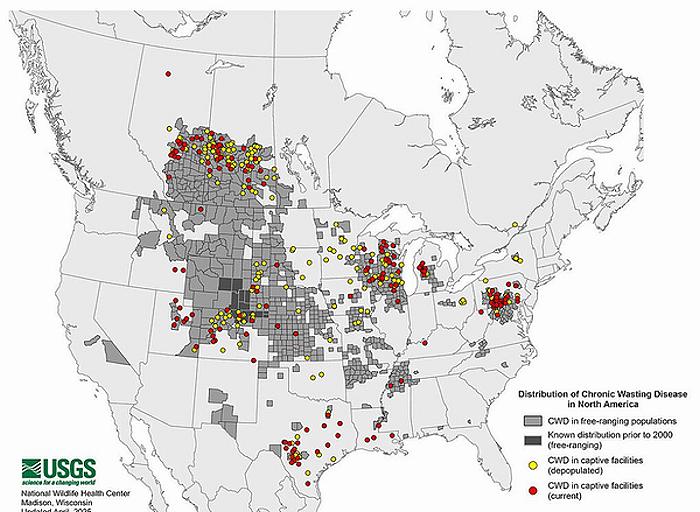
It was first found in free-ranging elk in the 1980s and has now been identified in captive and wild cervids across 36 U.S. states – 17 states have joined that list in the last 10 years alone.

The only prion disease known to affect free-ranging wildlife, CWD is increasing in prevalence in areas where the disease is already established. In heavily affected areas of Wyoming, Colorado, and Wisconsin, more than 40 percent of free-ranging cervids are infected, the USGS finds.

As Kentucky Fish and Wildlife staff continue to gather more details about the infected deer, agency officials are in close communication with national, state and local partners and will reference the agency’s CWD Response Plan in response to this new detection.

As part of the response plan, the agency will schedule a public meeting in Pulaski County in November to discuss the disease, available CWD testing options and any potential hunting regulation changes.

In addition, an update on CWD and suggested actions will be brought before the Kentucky Fish and Wildlife Commission for their review at the commission’s planned quarterly meeting on December 5, in the state capital city, Frankfort.

Since 2002, Kentucky Fish and Wildlife has CWD-tested more than 70,000 deer and elk from across the state.

“Routine and regular sample collection has been a key component in monitoring the health of our deer and elk herds,” Wildlife Division Director Ben Robinson said. “While this detection of CWD is not in close proximity to the other detections, we will work with hunters and partners to try to contain it.”

Fourteen counties near the previous positive detections make up the CWD Surveillance Zone. Ballard, Breckinridge, Calloway, Carlisle, Fulton, Graves, Hardin, Henderson, Hickman, Marshall, McCracken, Meade, Union and Webster counties are under carcass transportation and baiting restrictions in an effort to monitor and contain CWD.

Hunters in Henderson, Union and Webster counties also must take their harvested deer to a staffed check station or use a CWD Sample Drop-Off Site the first three days of modern gun season.

Hunters can help Kentucky Fish and Wildlife’s statewide monitoring efforts by dropping off the heads of legally harvested and telechecked deer for CWD testing and aging at self-serve CWD Sample Drop-off sites or via sample mail-in kits. This service is provided at no cost to hunters.

Detailed location information, instructions and additional resources may be found at the CWD Sample Drop-Off Sites and CWD Sample Mail-in Kit webpages on the department’s website. Hunters will be promptly notified if a deer they harvested tests positive for CWD.

Deer that appear to be sick but do not have an obvious injury can be reported using the department’s sick deer online reporting form; reports will be reviewed by the agency’s wildlife health program staff, who may contact the person submitting the report if additional information is needed.

Hunting Helps Control Chronic Wasting Disease

Hunting greater numbers of male deer can slow the spread of chronic wasting disease, a lethal wildlife disease, according to a new study by the U.S. Geological Survey and the Wyoming Game and Fish Department.

“We found that harvesting a high proportion of the adult males in the herd – around 40 percent every year for 20 years, is expected to keep chronic wasting disease infections at low numbers,” said Wynne Moss, lead author and USGS scientist.

If this high level of hunting pressure is applied consistently over 20 years, less than five percent of the males on average are expected to be infected. On the other hand, a lower level of hunting pressure, such as 20 percent of adult males harvested per year, would result in a much higher prevalence of around 30 percent infected.

For more information on CWD, please visit the department’s Chronic Wasting Disease webpage and follow its social media channels. More information about CWD is available through the CDC and cwd-info.org websites. For questions, contact the department’s Information Center at 800-858-1549, or at info.center@ky.gov, weekdays 8 a.m. to 4:30 p.m. ET, except holidays.

Featured image: Deer with chronic wasting disease in Kentucky. 2019 (Photo courtesy Kentucky Department of Fish and Wildlife)

EUGENE, Oregon, October 31, 2025 (ENS) – The Upper Willamette Soil & Water Conservation District, UWSWCD, is planning to acquire a 200+ acre hazelnut orchard located on the lower McKenzie River to protect the drinking water of Eugene, a college city of about 200,000 people that hosts the University of Oregon.

Known as the Rice Farm, it’s one of the oldest working hazelnut orchards in Lane County.

Along with the orchard, the farm includes river and stream environments that are a vital source of habitat for fish and wildlife along Cedar Creek and the McKenzie River.

“This property has unique and important habitat values that create public conservation benefits, including improving and protecting the source of drinking water for many Lane County residents,” District Manager Lily Leitermann explained.

The Rice Farm is directly upstream from the Eugene Water & Electric Board’s sole drinking water intake source. It has long been identified by local conservation organizations as an irreplaceable piece of the puzzle for local water quality protection and restoration projects, Leitermann says.

Upper Willamette Soil & Water Conservation District Manager Lily Leitermann took office in September 2025 after starting with the District as a watershed technician 10 years earlier. (Photo courtesy UWSWCD)

The property has been valued at $5.8 million. Dietz is offering the district a gift of $1.8 million, reducing the asking price to $4 million.

From the time that the District received voter approval for a tax base in 2020, it has been developing a reserve fund to acquire property for conservation projects and an office. Leitermann reveals that those reserves now amount to enough to cover the cost of the Rice Farm purchase.

“As a tax-funded local government district, we use our funding to support local soil and water conservation efforts, working with partner organizations and private landowners,” she said.

While researching the land and various funding opportunities, the District found “many potential conservation projects as well as various funding sources to pursue long-term stewardship of the property,” she said.

The district’s first priority will be to focus on restoring riparian areas, improving water quality near the Eugene Water & Electric Board, EWEB, water intake, which will be an immediate benefit to fish and wildlife species as well as the drinnking water in Eugene and parts of neighboring Springfield.

The Freshwater Trust’s shade credit program would fund the removal of invasive plants, replacing them with native plant species along the McKenzie River and Cedar Creek.

The Eugene Water and Electric Board, EWEB, led emergency responders in its annual “spill drill” on the lower McKenzie River, an exercise that improves readiness to react to a real oil or chemical spill. October15, 2025, (Photo courtesy EWEB)

Applied farming research opportunities with the University of Oregon and Oregon State University would help to reduce pesticides, herbicides and other chemicals, improving the soil health of the hazelnut orchard.

“We are committed to keeping the majority of the hazelnut orchards in production, working with a local farmer to manage the farm and using conservation practices that improve both soil health and water quality,” Leitermann said.

“In purchasing the Rice Farm, we intend to protect crucial working lands and wildlife habitat while continuing to support Eastern Lane County landowners, community-based organizations, and their regional partners in a wide variety of conservation projects,” she explained.

“We also plan to shift the hazelnut orchard operations to organic and apply sustainable practices throughout the farm,” Leitermann revealed. The district is seeking additional partnership support and funding for this environmentally-friendly endeavor.

The Upper Willamette Soil & Water Conservation District Board of Directors is expected to make a final decision on the Rice Farm property acquisition in November.

Featured image: The Upper Willamette Soil & Water Conservation District, UWSWCD, in Oregon is considering buying a 200+ acre hazelnut farm on the lower McKenzie River. Known as the Rice Farm, it is the second-oldest working hazelnut orchard in Lane County and includes river and stream habitats for fish and wildlife. undated. (Photo courtesy UWSWCD)

DETROIT, Michigan, October 31, 2025 (ENS) – General Motors has announced that in 2028 the company will introduce a next-generation centralized vehicle computing platform serving both its electric and gas powered vehicles. The move is a pivot for the company, which was poised to ramp up electric vehicle production until President Donald Trump discontinued federal $7,500 subsidies for EV buyers on September 1.

General Motors will launch the centralized computing platform and next-generation electrical architecture starting with the Cadillac Escalade IQ in 2028.

“The new design represents a fundamental reimagining of how GM vehicles are built, and how they can be updated over time,” the company said in its announcement of the new technology on October 22.

Already, more than 4.5 million GM vehicles can receive over-the-air vehicle system updates, a number growing by about two million vehicles per year. Last year alone, 1.6 million vehicles received coordinated software updates this way.

Now, the company is taking this capability farther to fashion a new approach to mobility that GM says “…unlocks new levels of performance, scalability, and software efficiency.”

The revised architecture cuts the number of vehicle modules needed under the hood, simplifying vehicle design, improving reliability, and enabling faster software updates, GM said.

GM will share software across its portfolio, both electric and gas-powered vehicles, large and small, so that GM vehicles will be always connected, awake, and available, with near-instant responsiveness to remote commands.

GM EV Sales Slow, So Are Tesla’s

In the first quarter of 2024, U.S. year-over-year growth rate for electric cars was 15 percent, compared to the overall market, which was up 4.7 percent. Year-over-year growth of electric car sales did slow compared to the 2022-2023 numbers, which rose by about 50 percent. Still, electric vehicles were 7.8 percent of the new-car market compared to 7.1 percent in the same period of 2023.

Tesla as a brand is experiencing slowing demand as shown in the company’s production and delivery report for Q1 2024. Tesla reported delivery of about 387,000 vehicles, missing its target level of 430,000.

Still, the Tesla Model Y remains the best-selling EV in the United States, and it continues to have “an outsize impact” on overall EV sales, according to Lawrence Yap, writing for the website Green Cars in May 2024.

“There are many reasons why Tesla’s numbers have fallen off. Some pundits have speculated that CEO Elon Musk’s controversial political leanings are beginning to turn off swaths of mainstream buyers, which are key to the success of the Model Y and Model 3,” Yap writes. “A more likely explanation is that, aside from the all-new and low-volume Cybertruck, the brand’s line is aging … and competition from other brands is increasing.”

On April 25, 2023, GM Chair and CEO Mary Barra said that General Motors’ electric car, the Bolt, and Bolt EUV would be discontinued at the end of 2023 to make room for GM’s “new generation of electric vehicles.”

General Motors phased the electric Bolt out of production, and its sales of electric vehicles dropped 21 percent, as the new Blazer electric SUV faced production delays and stop-sale orders.

GM’s Chevy Bolt EV 2027 claims a 255-mile range, slightly better than the outgoing Bolt EUV’s 247-mile EPA rating. (Photo courtesy Chevrolet)

One bright spot was the Cadillac Lyriq, which nearly quintupled sales compared to the first quarter of 2023.

Another potential bright spot is the reintroduction of the Chevy Bolt EV for 2027 at a price point that hovers around $30,000.

The 2027 Bolt designers focused on a refined, familiar look paired with the latest safety technologies, software updates, and driver-assistance features. The Bolt is shaping up to be “a practical, budget-conscious EV for everyday drivers,” GM says.

With the Blazer EV and the new Silverado EV now back in production, Yap expects GM’s numbers to grow from its roughly three percent EV share of the market.

GM’s North American President Duncan Aldred said earlier this year, “There’s no doubt we’ll see lower EV sales next quarter after tax credits end, and it may take several months for the market to normalize. We will almost certainly see a smaller EV market for a while, and we won’t overproduce.”

The Role of Tariffs

While starting on a program for producing more electric cars and trucks during the administration of President Joe Biden, GM and other American automakers had to pivot when President Donald Trump took office on January 20. Companies had to change their plans as Trump said immediately that he was going to support the use of fossil fuels, reversing the U.S. policy of working to defeat climate change by limiting the burning of diesel, oil, and gasoline.

The Tesla electric Cybertruck features supervised full self-driving. This requires the driver to remain attentive and does not make the vehicle autonomous, the company says on its website. (Photo courtesy Tesla)

On Friday, October 17, Trump issued a Presidential Proclamation invoking Section 232 of the Trade Expansion Act of 1962, imposing a 25 percent tariff on imports of medium- and heavy-duty vehicles and related parts as well as a separate 10 percent on imports of buses. These tariffs will take effect at 12:01 am ET on November 1.

The 25 percent tariff on imports of medium- and heavy-duty trucks and parts applies to parts used in medium- and heavy-duty trucks, such as engines, transmissions, tires, and chassis.
Medium- and heavy-duty trucks include vehicles like large pick-up trucks.

Under a new Tariff Offset Program manufacturers using U.S. assembled medium- or heavy-duty truck parts may receive a tariff credit equal to 3.75% of the aggregate value of all trucks assembled in the United States from 2025–2030. This reflects the duty owed when a 25% tariff is applied to 15% of the value of a U.S. assembled medium- and heavy-duty truck.

This credit can be used to reduce the tariffs that truck manufacturers owe on medium- and heavy-duty truck parts.

Products subject to this tariff WILL NOT be subject to additional or existing tariffs on steel, aluminum, copper, cars and car parts, or lumber. They also will not be subject to reciprocal tariffs that the U.S. has placed on Canada, Mexico, Brazil, and India.

In an October 21 Letter to Shareholders, GM Chair and CEO Mary Barra thanked President Donald Trump for relieving the pressure of tariffs on the company.

When Mary Barra took over as chief executive of General Motors in January 2014, she became the first female head of an automobile manufacturer in the United States. (Official portrait as a member of the Homeland Security Advisory Council, 2022)

“I also want to thank the President and his team for the important tariff updates they made on Friday. The MSRP [manufacturers suggested retail price] offset program will help make U.S.-produced vehicles more competitive over the next five years, and GM is very well positioned as we invest to increase our already significant domestic sourcing and manufacturing footprint,” Barra told GM shareholders.

Earlier this year, General Motors announced $4 billion in capital investments to onshore production at plants in Tennessee, Kansas, and Michigan over the next two years, Barra explained.

“Once these investments come online, we plan to produce more than two million vehicles per year in the United States,” she said.

“We are also investing close to $1 billion to build a new generation of advanced, fuel-efficient V8 engines in New York. Importantly, we are maintaining our capital discipline while adding this production and creating new jobs,” Barra declared.

Barra knows GM better than most other people in the automotive universe. She started working for GM in 1980 as a student when she was 18, checking fender panels and inspecting hoods, and she used this job to pay for her college tuition. Later, she held engineering and administrative positions at GM and managed its Detroit/Hamtramck Assembly plant.

GM Takes a Fresh Approach

Now, a new presidential administration with new goals has GM moving toward a centralized computing design that unlocks new levels of performance, scalability, and software efficiency.

The updated architecture builds on GM’s Vehicle Intelligence Platform, which launched in 2020 to allow secure over-the-air updates.

In 2022, GM unified dozens of infotainment modules into a single computing platform. The company also consolidated multiple advanced driver assistance systems into one. The new platform consolidates dozens of electronic control units into a unified computing core that coordinates every subsystem in the vehicle in real time, the company explained.

Much like a smartphone’s single, powerful microprocessor that orchestrates everything from camera to messages, this centralized approach connects every system – propulsion, steering, braking, infotainment, and safety – through a high-speed Ethernet backbone.

This has the potential to drive “dramatic change for customers,” Barra explained to the GM shareholders that hit a series of bullet points.

  • – Growing to deliver 10 times more software updates for new features than our previous system.
  • – Real-time safety updates in a self-driving system that reacts in milliseconds and evolves with each autonomous update – even faster than our current system.
  • – 1,000 times more bandwidth for faster connectivity, richer entertainment, and future AI workloads.
    Under the hood
  • – At the heart of the system is a liquid-cooled central computing unit powered by next-generation processors such as NVIDIA Thor. That core connects to three aggregators, serving as hubs for the vehicle’s different zones. Instead of wiring hundreds of sensors and actuators directly to the central processor, the aggregators act as translators. They convert sensor signals into a unified digital language, and route commands back to the correct hardware.

This design delivers two major advantages, Barra said.

  • – Hardware freedom: Vehicle-specific components stay isolated from the software layer, so GM can swap suppliers or upgrade parts like brake actuators, cameras, displays, and other components without rewriting core code.
  • – Radical simplification: The new architecture simplifies the network topology. Instead of hundreds of point-to-point connections creating complex wiring and software integration challenges, you get clean “star-network” topologies with aggregators fanning out to their local zones.

Built to Scale

With up to 35 times more AI computing power, as well as TOPS, trillions of operations per second, for autonomy, and a two-to-four multiplier boost in infotainment performance, GM’s platform is engineered with headroom as the company builds next-generation features, the GM leader explained.

“GM’s new platform is engineered to support both electric and internal-combustion vehicles. A single software and computing foundation means innovations developed for one vehicle type can be rapidly scaled across the entire portfolio,” Barra said, “accelerating feature deployment while upholding GM’s standards for safety, cybersecurity, and reliability.”

Eyes-off Driving?

General Motors says it is evolving into a new era of transportation. The company announced plans to bring “eyes-off” driving to market in 2028, debuting on the Cadillac ESCALADE IQ electric SUV.

GM says it has already mapped 600,000 miles of hands-free roads in North America, and customers have driven 700 million miles with Super Cruise “without a single reported crash attributed to the system. 

“This combination of technology, scale, a decade of real-world deployment experience, and safety systems developed and tested for Super Cruise gives us the foundation to deliver the next phase of personal autonomy,” GM reasons.

Barra Welcomes a New Chapter

By combining centralized computing, software consolidation, and GM’s global scale, this architecture marks the beginning of a new chapter for the company’s vehicles, Barra told the shareholders and listed the benefits they will enjoy:

  • – Cars that learn and improve throughout their lifetime.
  • – Architectures that deliver real-time intelligence and faster autonomy.
  • – Platforms that bring the efficiency of the digital world into the physical one.
  • – Delivering 10 times more software updates for new features than GM’s previous system.
  • – Real-time safety updates in a self-driving system that reacts in milliseconds and evolves with each autonomous update.
  • – 1,000 times more bandwidth for faster connectivity, richer entertainment, and future AI workloads.

Barra is not the type of CEO to take a negative view of change. Instead, she took a positive tone, saying, “GM’s new computing platform will connect every GM vehicle to a smarter, faster, and continuously improving future.”

Please address questions or comments to: news@gm.com

Featured image: The 2028 Cadillac Escalade IQL. Simulated images. Production vehicle may vary. GM says the ESCALADE IQ will feature next generation electrical architecture in 2028. (Photo courtesy General Motors)

KINGSTON, Jamaica, October 30, 2025 (ENS) – The death toll from catastrophic Hurricane Melissa rose to at least 36 across Haiti, Jamaica and Cuba today as residents of these island nations begin to dig themselves out from under the wreckage left by the second strongest hurricane ever recorded in the Caribbean Sea.

The storm has caused flooding, landslides, fires, storm surges, power outages, and hospital evacuations across Haiti, Jamaica, Cuba and the Turks and Caicos Islands. The majority of deaths happened in Haiti due to flooding. At least 20 Haitians, including 10 children, died due to river flooding as Melissa blasted across the island. 

Volunteers from the Cuban Red Cross visit a householder impacted by Hurricane Melissa. October 30, 2025 (Photo courtesy Cuban Red Cross)

Data from the UN aid coordination office (OCHA) shows Melissa ranks among the most intense storms to strike Cuba in recent decades, with maximum sustained winds near 138 mph (222 km/h) and two-day rainfall totals approaching 145 millimeters (5.7 inches). 

On Wednesday, the UN allocated US$4 million each to Haiti and Cuba from its Central Emergency Fund to help communities prepare for the storm and reduce its impact. 

Conveying his condolences to the families of those who have lost their lives, the UN Secretary-General António Guterres reiterated his solidarity with the governments and communities affected by the hurricane. 

“Guided by Resident Coordinators on the ground, the UN is working hand in hand with authorities and humanitarian partners to assess needs, assist those impacted, and prepare in areas that may yet face the storm’s impact,” the secretary-general said. 

UN General Assembly President Annalena Baerbock is convinced that the planet’s rising temperature is to blame for increasingly destructive storms.

Hurricane Melissa coming off the Caribbean whips the palm trees on Jamaica’s south shore. October 29, 2025 (Screengrab from video courtesy See Jamaica on YouTube)

Baerbock tweeted that for small island developing States such as those in the Caribbean, “The climate crisis is a lived reality, and the cost of inaction is measured in lives and livelihoods. Adaptation isn’t optional, it’s survival. Solidarity must become sustained, scaled-up climate action.”

In Jamaica, Hurricane Melissa made landfall at 1 p.m. EDT Tuesday near New Hope, a community in southwestern Jamaica’s Westmoreland Parish, as a Category 5 hurricane with maximum sustained winds of 185 mph.

At 3:10 a.m. EDT Wednesday, Melissa made a second landfall near Chivirico, Cuba, a coastal town 75 km (45 miles) southwest of the island’s second-largest city, Santiago de Cuba, as a Category 3 storm.

Current Situation

With maximum sustained winds of 105 mph, the hurricane is moving to the north-northeast at 21 mph as a Category 2 storm. Melissa is in the Atlantic Ocean, 605 miles southwest of Bermuda and 295 miles northeast of the Central Bahamas.

Reporting on the situation on his home island, Jamaica’s Prime Minister Andrew Holness said up to 90 percent of roofs in the southwestern coastal community of Black River were destroyed.

“Black River is what you would describe as ground zero,” Dr. Holness said. “The people are still coming to grips with the destruction.”

Kingston, Jamaica’s capital, was spared the worst impact of the hurricane, but western parts of the island experienced “total devastation,” according to Jamaican Minister of Energy, Transport and Telecommunications Daryl Vaz.

“The devastation is enormous,” Transportation Minister Vaz said.

Hurricane Melissa has paralyzed transportation, with cars and buses stranded or swept away. Here, cars are stuck in mud caused by the storm. Kingston, Jamaica, October 28, 2025 (Screengrab from video courtesy See Jamaica)

Officials warned of a “total communication blackout” in the region that took the brunt of Melissa’s winds and downpour on Tuesday.

“There is a lot of flooding around the city,” Storm Chaser Bryce Shelton told AccuWeather Tuesday evening while in Mandeville, Jamaica. “There are homes that are submerged, there are cars submerged. It is basically impossible to get out of the city.”

Approximately 6,000 people are currently in 382 shelters across the island, Jamaica’s Minister of Local Government and Community Development Desmond McKenzie reports. All of the country’s 881 shelters are now open to accommodate people after the passage of Hurricane Melissa.

Starlink, the low-earth orbit satellite service owned by Elon Musk, is offering free services for those impacted in Jamaica and the Bahamas, the company announced on X.

Airports Reopening, With Limitations

This Thursday morning, Jamaica, Cuba, and Haiti are assessing what it will take to recover from the second-strongest Atlantic hurricane ever recorded, which blasted across the region Tuesday night with high winds and more than 12 inches of rain, leaving residents without power, and closing airports.

This morning, Jamaica’s airports are reopening, but many flights are still canceled.

Jamaica’s largest airport, Sangster International Airport (MBJ) in Montego Bay, closed on Sunday ahead of Melissa’s arrival and remained closed until Wednesday when it reopened for emergency flights. Sangster technically reopened for commercial flights on Thursday, but, according to FlightAware, 86 percent of all flights from Sangster were still canceled on Thursday.

Photos from within Sangster International Airport revealed the damage. Here, the ceiling at the concourse for Gates 1 through 5 is on the floor. Montego Bay, Jamaica, October 30, 2025 (Photo by Jamaica’s Transport Minister Daryl Vaz)

Jamaica’s Transport Minister Vaz, said that photo shows just “one section of a very large airport.”

The airport’s other concourse fared better, surviving the storm with minimal damage, and should be able to host flights either on Thursday or not far after. Both runways at Sangster are “fine,” Minister Vaz said.

Norman Manley International Airport (KIN) in Jamaica’s capital city, Kingston, reopened on Thursday at 8 a.m. for commercial flights. It had reopened for emergency and relief flights on Wednesday.

At Norman Manley, which operates a scheduled number of flights about half that of Sangster in Montego Bay, nearly half the airport’s 30 departures listed for Thursday are canceled.

Turks and Caicos Airports Open, But Flights Canceled

The “all clear” from Hurricane Melissa was issued across the Turks and Caicos Islands today at 6:00 a.m. All six airports under the Turks and Caicos Islands Airport Authority are open and operating again. Even so, more than 40 percent of departures have been canceled, and travelers are being told to check with their airline before going to the airport.

Even with the resumption of some flights, airlines are still offering flexibility for travelers scheduled to fly through Jamaican and Caribbean airports over the next few days.

Airlines Offer Waivers

American Airlines has a waiver out for travel through November 2 for L.F. Wade International Airport (BDA) in Bermuda that allows travelers to switch to new flights through November 5.

JetBlue has a waiver out for flights through both Kingston (KIN) and Montego Bay (MBJ). That waiver runs through November 8 and allows flyers to rebook their flights for travel through November 16 without penalty.

JetBlue has a separate waiver out for travel through Providenciales, Turks and Caicos (PLS) that runs through the end of October 30. Flyers can rebook their flights for travel through November 5. It also has a waiver out for L.F. Wade (BDA) that runs through October 30 and allows for travelers to change to new flights through November 7.

Southwest has a waiver out for Montego Bay (MBJ) through November 2. Travelers can rebook or travel standby within 14 days of the original ticket without penalty. It has the same waiver out for Providenciales, Turks and Caicos (PLS) for travel through November 1.

United Airlines has a waiver out for flights through Grand Cayman (GCM), Montego Bay (MBJ), Nassau (NAS), and Providenciales (PLS) for travel through Oct. 31. Travelers can change their flight to a new one through November 7 without penalty.

United has a separate waiver out for Bermuda GB (BDA) for travel starting on Oct. 30 through November 2. United is allowing travelers to change to a new flight through November 9.

United also has a last waiver out for travel through Montego Bay (MBJ), which includes all flights through that airport through November 8. Travelers can rebook on flights through November 21 without penalty.

Scams? Yes, Watch Out!

The U.S. Better Business Bureau has issued warnings about scams targeting residents and donors in the aftermath of Hurricane Melissa. Dozens of false charities have created scams online. Scammers can exploit the chaos and emotions surrounding natural disasters to steal money or personal information.

The BBB list three Common Scams to Watch For:

  • – Fake Charities: Fraudulent websites or social media pages mimicking legitimate disaster relief organizations.
  • – AI-Generated Scams: Scammers use artificial intelligence to create convincing fake images and videos to solicit donations.
  • – Crowdfunding Scams: Unverified campaigns on social media may be fraudulent. Donate only to established charities with proven disaster relief experience.

The Better Business Bureau advises, “Stay vigilant and verify organizations before donating.”

Featured image: The Lacovia St. Thomas Anglican Church in Jamaica’s St. Elizabeth parish lost its roof and its interior was smashed in the storm. The church is one of many historical cultural and religious landmarks damaged by Hurricane Melissa. October 29, 2025 (Photo posted on X by meteorologist and hurricane specialist Dylan Federico)

KINGSTON, Jamaica, October 28, 2025 (ENS) – The eye of the “extremely dangerous” Category 5 Hurricane Melissa is approaching western Jamaica at this moment, menacing the Caribbean island nation with catastrophic winds, flash flooding, and storm surge, warn the Meteorological Service of Jamaica and the U.S. National Hurricane Center, NHC. It is expected to be the strongest hurricane ever to make landfall in Jamaica since record-keeping began in 1851.

Melissa is moving toward the north-northeast near seven mph (11 km/h). A turn toward the northeast with an increase in forward speed is expected later today, followed by a faster northeastward motion on Wednesday and Thursday, the NHC predicts.

On the forecast track, the core of Melissa is expected to make landfall on Jamaica between East Westmoreland and Western St. Elizabeth during the next several hours, move across southeastern Cuba Wednesday morning, and move across the southeastern or central Bahamas later on Wednesday.

Maximum sustained winds are near 175 mph (280 km/h) with higher gusts. Melissa is a category 5 hurricane on the Saffir-Simpson Hurricane Wind Scale. the highest category on the Scale.

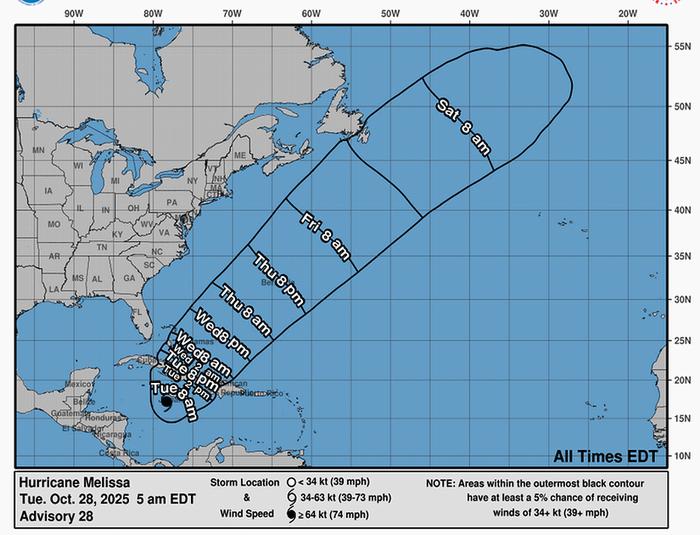
Map showing the Earliest Reasonable Arrival Time for Hurricane Melissa as the storm passes between Cuba and Jamaica and blows up the Atlantic coast of the United States and Canada. It shows the period during which preparations should be completed for those with a low tolerance for risk. (Map courtesy U.S. National Ocean and Atmospheric Administration, NOAA, and U.S. National Hurricane Center)

Melissa is expected to reach Jamaica and southeastern Cuba as an extremely dangerous major hurricane, and it will still be at hurricane strength when it moves across the southeastern Bahamas.

Hurricane-force winds extend outward up to 30 miles (45 km) from the center and tropical-storm-force winds extend outward up to 195 miles (315 km).

During the past few hours, Norman Manley International Airport in Kingston, on Jamaica’s south shore, reported a sustained wind of 43 mph (69 km/h) and a gust of 59 mph (93 km/h). Sangster International Airport in Montego Bay, on Jamaica’s north shore, reports sustained winds of 38 mph (61 km/h) and gusts of 54 mph (87 km/h).

A life-threatening storm surge is likely along the south coast of Jamaica today. Peak storm surge heights could reach nine to 13 feet above ground level, near and to the east of where the center of Melissa makes landfall. This storm surge will be accompanied by large and destructive waves.

On the northwest coast of Jamaica, near Montego Bay, there is the possibility of two to four feet of storm surge above ground level, forecasters warn.

A storm surge of up to 13 feet (four meters) is expected along coastal Kingston, which hosts Jamaica’s main international airport and power plants.

Hurricane Melissa is photographed from the inside. A U.S. Air Force Reserve crew from the 53rd Weather Reconnaissance Squadron, known as the Hurricane Hunters, flew multiple passes through Melissa on October 27, 2025 to collect critical weather data for the National Hurricane Center. (Screengrab from video by Hurricane Hunters courtesy U.S. Defense Department)

Melissa is expected to bring rainfall of 15 to 30 inches to portions of Jamaica and additional rainfall of six to 12 inches for southern Hispaniola through Wednesday, with 40 inches possible. Catastrophic flash flooding and numerous landslides are likely, NHC predicts.

For eastern Cuba, storm total rainfall of 10 to 20 inches, with local amounts to 25 inches, is expected into Wednesday resulting in life-threatening and potentially catastrophic flash flooding with numerous landslides.

Over the Southeastern Bahamas and the Turks and Caicos, rain is expected to develop later today and continue into Wednesday. Total rainfall of 5 to 10 inches is expected to result in areas of flash flooding.

For a complete depiction of forecast rainfall associated with Melissa, please see the U.S. National Weather Service Storm Total Rainfall Graphic.

Jamaica in Melissa’s Path, But Residents Slow to Evacuate

The hurricane is expected to make landfall today between East Westmoreland and Western St. Elizabeth, Jamaica’s two southwestern-most parishes.

All of these warnings sound life threatening, but despite Mandatory Evacuation Orders from the Jamaican Government, many residents want to stay in their homes.

Jamaica’s Prime Minister Dr. Andrew Holness is urging citizens to obey the legal directive.

“We have always had a very slow, if not non-response to the call for evacuation, and it is a balance between respecting the rights of persons to stay and protect their property and trying to balance the national good of saving lives and the expenditure of resources unnecessarily,” Prime Minister Holness said.

Prime Minister of Jamaica Dr. Andrew Holness responds to reporters’ questions at a news conference about Hurricane Melissa. October 27, 2025, Kingston, Jamaica (Photo by Rudranath Fraser courtesy ODPEM)

“I think generally we have struck the balance in favor of respecting the rights of citizens to stay where they are, though we give them the information for them to make the decision,” he said.

“We are in that zone where we have given the information; no one can say that the Government was not forward leaning in giving the information to persons who are in areas of risk. You have been warned, so it is now up to you to use that information to make the right decisions,” the prime minister said.

He explained that the Office of Disaster Preparedness and Emergency Management, ODPEM, as well as the Security Forces “…could very well go into some areas and effect… their evacuation of persons who are there.”

“If there were a catastrophic event and persons were there in the path of the catastrophe and we were still able to go, because it’s a big if; if we were still able to go, then the country, the Government and myself, I couldn’t sit by and see my citizens in danger and I am able to go and save them, even if they don’t want to be moved, and I don’t do it,” the prime minister reasoned.

“But I couldn’t do it unless it is within the law, and that is why we make the evacuation Orders, so that if that scenario were to materialize, within the law I’m acting, the compulsory evacuation orders have been put to ensure that there is a legal framework for the Government to act,” he said.

The mandatory Order will remain in place for the duration of the Declaration of the Threatened Area Order, which Prime Minister Holness declared over the island on Friday when Hurricane Melissa was slowly moving towards the island as a tropical storm.

Featured image: Hurricane Melissa makes itself felt on West Parade Street, Downtown Kingston, Jamaica, October 28, 2025 (Screengrab from video courtesy See Jamaica via YouTube)

By Micah Drew

GLACIER NATIONAL PARK, Montana, October 27, 2025 (ENS) – Glacier National Park remains open to visitors during the current federal government shutdown, which a former superintendent said could lead to trash pileup, a lack of communication for visitors, and limited emergency response operations.

Last month, former Glacier National Park Superintendent Jeff Mow joined more than 40 former national park superintendents in signing a letter urging the federal government to close National Park Service sites in the event of a government shutdown.

“Past shutdowns in which gates remained open with limited staff have hurt our parks: iconic symbols cut down and vandalized, trash piled up, habitats destroyed, and visitor safety jeopardized. If you don’t act now, history is not just doomed to repeat itself, the damage could in fact be much worse,” the park superintendents’ letter says.

When the calendar rolled over to October, the federal government shut down and roughly 750,000 federal workers were furloughed, but parks stayed open.

A bright red banner across the websites for Glacier and Yellowstone national parks states that national parks “remain as accessible as possible” during the shutdown, but services may be limited or unavailable. Visitors are directed to a Department of the Interior webpage that lists contingency plan documents for each agency group, which vaguely outline what operations can remain.

However, those contingency plans are about the only communication given to the public about national park system operations, which Mow said adds to the uncertainty for visitors and staff alike.

Glacially sculpted mountains and valleys line Glacier National Park’s Going-to-the-Sun Road along 50 miles between the West Entrance and St. Mary Entrance. The road climbs to 6,466 ft (2,025 m) at Logan Pass. undated (Photo by Jacob W. Frank / National Park Service)

For example, Glacier National Park’s Going-to-the-Sun Road typically closes the third Monday of October, but that is contingent on weather conditions along the alpine stretches of the 50-mile scenic byway. The park superintendent has the ability to close the road if inclement weather hits, and typically, any winter-related closures are communicated through press releases, social media posts, and updates to the park’s website.

According to Glacier’s official social media accounts, the National Park Service “will continue to share critical information about park access, safety, and resources. Some services may be limited.”

But during a shutdown of the federal government, communication isn’t a top priority.

Glacier Park staff did send out an update on October 4 that the Sun Road will close at 5 p.m. between Avalanche and Rising Sun due to winter weather warnings.

But Glacier’s communications specialist is among those furloughed, and cannot respond to emails or speak on behalf of the park. Emails sent to the National Park Service’s media office about what constitutes “critical information about park access” have gone unanswered.

“If there’s a snowstorm that closes the Sun Road, will that show up on the website?” Mow said. “I don’t know. We’ll see how long it stays open.”

Mow served as Glacier’s superintendent during the last government shutdown, a 35-day long affair that stretched from December 2018 to January 2019 during President Donald Trump’s first administration.

Back then, Mow said, Glacier was fully in winter mode – most roads into the park, including Going-to-the-Sun Road, were closed, and operations and programming were already parred down compared to peak season.

Mow was among the employees furloughed during the last shutdown as a “nonessential” part of daily operations. He said one of the biggest concerns for the year-round staff who also ended up furloughed was the lack of communication – about what employees could still do, any timeline for returning to work, and whether to sign up for unemployment benefits.

“It’s adding more of this uncertainty in their lives, and this administration has certainly done a lot to add uncertainty into federal employees’ lives,” Mow said.

In 2018, Mow said there was an employee Facebook page where staff could post updates to communicate – furloughed staff can’t access their emails or government-issued devices – and they found ways to bring the staff together, including setting up work days at the local food bank to “maintain our community as employees of Glacier National Park,” Mow said.

There is no indication how long the current shutdown will last.

The current shutdown comes amid one of the largest reductions in force across the National Park system. According to Politico, since Trump took office for his second term, the Park Service has lost roughly 35 percent of its staff, while the Interior Department as a whole is down around 14 percent.

Despite this sign, all visitor centers at Joshua Tree National Park, California are open. Headquarters offices are closed. Emergency responders extinguished a fire spotted on October 12, Cal Fire reports. The state agency is providing updates while federal staff are on furlough due to the government shutdown. October 2025 (Photo courtesy National Park Service)

An internal memo from Glacier obtained by the Daily Montanan in May indicated that 20 percent of park positions were vacant, including almost half of dispatch positions.

A shutdown further compounds problems from short staffing.

“National parks are not designed to run with so little staff. I think that’s one of the things that differentiates us from other public lands – national parks are designed and staffed for high levels of visitation,” Mow said. “There’s lots of infrastructure, visitor information centers, and a response system for visitor safety issues. Our counterparts in the Fish & Wildlife Service and Bureau of Land Management, not so much, they depend more on local and county resources.”

The contingency plan released by the National Park Service said “park roads, lookouts, trails, and open-air memorials will generally remain accessible to visitors.” However, parks without “accessible areas,” such as primarily indoor exhibitions, will be closed, and sites currently open could close if damage is done to park resources or garbage is building up, the plan says.

For Glacier and Yellowstone, two massive parks where the main attractions are natural features more than exhibitions, that means the public is free to roam.

Some Services Still Operating

The Montana Free Press reported in early October that Yellowstone’s entrance stations are open, concessionaire-run businesses including lodges and restaurants are operational, and private commercial guiding companies were still allowed to operate within open parts of the Park.

In Glacier, private concessionaire Xanterra, which operates lodges, restaurants, gift shops, the iconic red bus tours, and crucially, restrooms, “will be open and welcoming guests and visitors from around the world,” according to their website.

Andrew Heltzel, chief commercial officer for Xanterra, said in an email that staffing has remained the same at both parks as the shutdown began, and the Park Service had shared that entrances and roads to the parks would remain open and accessible.

“We are optimistic that our guests will continue to come and enjoy the incredible landscapes and experiences these parks offer. Travelers can book with confidence knowing that we are working closely with the National Park Service and we are committed to providing clear and timely communication to our guests,” Heltzel said.

Agency activities that are supposed to continue during a shutdown, subject to the continued availability of funds, according to the National Park Service in a planning document, are:

  • Law enforcement and emergency response;
  • Border and coastal protection and surveillance;
  • Fire suppression for active fires or monitoring areas currently under a fire watch, or staffing commensurate with Preparedness Level conditions;
  • Protection of Federal lands, buildings, waterways, equipment, and other property within the National Park System, including research property;
  • Activities essential to ensure continued public health and safety, including safe use of food and drugs and safe use of hazardous materials, drinking water, and sewage treatment operation;
  • Activities that ensure production of power and maintenance of the power distribution system;
  • Activities related to United States Park Police annuity benefits transfer;
  • Activities related to facilitation of First Amendment activities including permitting and monitoring (necessarily implied by law, U.S. Constitution, Amendment I); and
  • Activities necessary to oversee or support excepted or exempted activities, including budget, finance, procurement, communications, human resources, and information technology services.

Sarah Lundstrum, the Glacier program manager for the National Parks Conservation Association, said the organization has pushed for parks to close down if they aren’t being fully staffed.

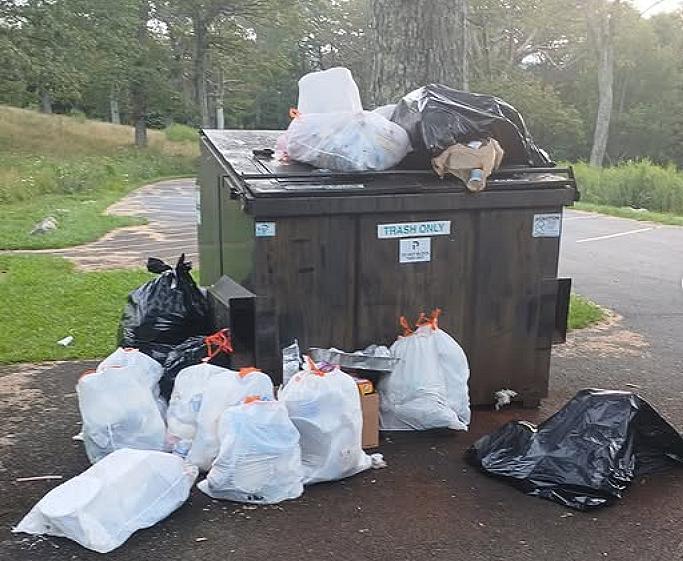
Leaving trash outside a full bin is messy and harmful. When animals find food scraps, the reward teaches them to return to human spaces, putting wildlife and people at risk. 2025, Shenandoah National Park, Virginia (Photo by Lavon Runion via Instagram)

“In previous years, we’ve seen vandalism, trees cut down, petroglyphs vandalized, people driving where they shouldn’t, trash, garbage and feces piling up in national parks,” Lundstrum said. “If there’s not going to be full staffing, parks shouldn’t be open.”

The association is encouraging people to avoid going to parks, but if they do visit, to do so responsibly.

“Be prepared for not a lot of services. Recreate responsibly, leave no trace, take your garbage with you,” Lundstrum said. “And be polite to the staff that are there – they’re under a lot of stress – so just be a good steward.”

Earlier this month, the National Park Service released an economic report showing that Glacier and Yellowstone generated roughly $1.5 billion in nearby communities in 2024.

While Glacier has entered its shoulder season and nearby communities didn’t rely on October visitation to bolster their bottom lines, other parks, including Yellowstone and those in warmer climates, such as Utah and southern California, are closer to peak season, Lundstrum said, and are preparing for much larger economic impacts of a shutdown.

During the last shutdown, public lands across the country saw issues with garbage buildup and human waste as workers were unable to take out the trash and restock toilet paper in public restrooms.

“Whenever we go into these minimal-operations mode, things will suffer. Resources will suffer, staffing will suffer, visitor safety – if there are emergency response needs – they will probably suffer some,” Mow added. “Honestly, it should not be a goal for the National Park Service of ‘how to run a park during a shutdown.”

Editor’s Note: This article was originally published in The Daily Montanan and is republished under Creative Commons license CC BY-NC-ND 4.0. It has been updated and edited for length..

Featured image: Located at the highest point along the Going-to-the-Sun Road, the Logan Pass area includes the Logan Pass Visitor Center, trailheads for the Highline and Hidden Lake trails, and normally has restrooms, potable water, and shuttle service. This view shows the Logan Pass parking lot with Mt. Pollock and Going-to-the-Sun Mountain in the background.

This webcam image is shown courtesy of a partnership between the Daily Montanan and the Glacier National Park Conservancy. Click here to see the Conservancy’s three Logan Pass webcams at once.

BOSTON, Massachusetts, October 21, 2025 (ENS) – The State of Massachusetts and the State of California have announced their intentions to join the nonprofit International Union for the Conservation of Nature, IUCN. Based in Switzerland, the IUCN is the world’s largest and most diverse environmental membership network with 1,400 governments and non-governmental organizations committed to global action on biodiversity conservation.

Governor Gavin Newsom of Californnia and Massachusetts Governor Maura Healey announced October 10 that California, with Massachusetts, would make history as the first American states, and among the first North American subnational governments, to join the IUCN to uphold this global commitment to collective action on biodiversity and climate.

As the Trump administration continues to wage war on science and engage in dangerous climate denialism, Governor Newsom’s announcement doubles down on California’s commitment to fight climate change and protect nature both at home and around the world.

California Governor Gavin Newsom announces his state will seek membership in the International Union for the Conservation of Nature, IUCN, October 10, 2025 (Screengrab from video courtesy Office of the Governor)

“As we become one of the first states in the nation to join the International Union for Conservation of Nature, California’s message to the world is clear: we are a stable and reliable partner in the global effort to protect our planet. California is on track to conserve 30 percent of our lands and coastal waters by 2030, and by working with leaders across the globe, we’ll help shape a better world not just for Californians but for everyone,” Governor Newsom said.

The announcements were made in conjunction with the 2025 IUCN World Conservation Congress, which was held earlier this month in Abu Dhabi, United Arab Emirates.

“Massachusetts is leading the way to a future where people and nature thrive. As the first states to announce our intention to join the IUCN, Massachusetts and California are standing firm by our commitments to lead the nation on biodiversity conservation,” Massachusetts Governor Maura Healey said.

“The value of this work is undeniable. This will help us protect wildlife, strengthen our local economies, and really preserve what makes Massachusetts so special,” she said.

Massachusetts and California would be the first U.S. states to join and become official members in 2026.

Membership in the IUCN will deepen Massachusetts’ commitment to global action on biodiversity and climate.

Massachusetts’ announcement follows the state’s recent announcement of nation-leading Biodiversity Conservation Goals.

As called for by Governor Maura Healey’s Executive Order No. 618, this ambitious, 25-year plan defines a whole-of-government approach to rebuild biodiversity and invest in nature to sustain our health and well-being, food security, and economy.

Massachusetts Governor Maura Healey, 2024 (Photo courtesy Office of the Governor)

“Biodiversity is a key climate solution. By joining this network of global leaders at the forefront of tackling the climate and biodiversity crisis, we can collaborate, learn, innovate, and drive progress, both globally and right here in the Bay State,” said Massachusetts Climate Chief Melissa Hoffer.

“Massachusetts is proudly leading in harnessing the full potential of our natural world to improve the quality of life for all of our residents. Protecting our mountains, coastlines, and marshes is core to our tourism economy and the health of our communities. Being part of IUCN will help our state accelerate our work to make our communities safer, healthier, and better prepared for extreme weather,” Rebecca Tepper, Secretary of the state’s Executive Office of Energy and Environmental Affairs, said.

“Massachusetts is proud to be recognized by the IUCN for our commitment to protect and restore nature for wildlife and people,” Massachusetts Department of Fish & Game Commissioner Tom O’Shea said.

“Joining the IUCN will be a huge opportunity to elevate our work on the global stage. We look forward to building partnerships across boundaries, tapping into the knowledge and expertise of the IUCN network, and pursuing innovative approaches and cutting-edge solutions here at home,” O’Shea said.

At the heart of New England, Massachusetts faces mounting challenges from climate change, including coastal and inland flooding as well as increasing drought, which threaten both its ecosystems and the livelihoods of its communities.

By joining IUCN, Massachusetts will strengthen its capacity to address these challenges through access to a global network of conservation expertise and resources.

Massachusetts’ collaboration through IUCN is expected to enhance ongoing initiatives in biodiversity conservation, restoration, and climate resilience. The partnership will open avenues for Massachusetts to engage in international programs and strengthen its participation in international efforts to foster integrated approaches to environmental protection and community well-being.

California Shows Conservation Leadership

At the IUCN World Conservation Congress, the Newsom administration accepted the IUCN Green List award for California’s marine protected area network. The Green List is a high-profile international certification that recognizes the most successful examples of biodiversity conservation worldwide.

California’s system of marine protected areas, which spans the state’s 1,100-mile coastline and covers over 16 percent of state waters, is the first nature network in the world to receive this honor.

Green Listing of the state’s marine protected areas network represents the culmination of a seven-year evaluation process conducted by IUCN in close collaboration with California experts. This process helped IUCN tailor its Green List standard so that it could be applied to a large-scale network. This will ultimately help advance nature networks around the world.

In California, pollution is down and the economy is up. Greenhouse gas emissions in the state are down 20 percent since 2000 – even as the state’s GDP increased 78 percent in that same time period all while becoming the world’s fourth largest economy.

The state also continues to set clean energy records. California was powered by two-thirds clean energy in 2023, the latest year for which data is available – the largest economy in the world to achieve this level of clean energy. The state has run on 100 percent clean electricity for some part of the day almost every day this year.

Since the beginning of the Newsom Administration, battery storage is up to over 15,000 megawatts – a 1,900 percent+ increase, and over 30,000 megawatts of new resources have been added to the electric grid.

“We are thrilled to have California declare their intention to join IUCN as a subnational Member – the first state along with Massachusetts within the United States of America to do so,” IUCN Director General Grethel Aguilar said.

The IUCN leader explained, “IUCN subnational Members are crucial for global conservation because they provide direct access to implement solutions on the ground, they influence national and international policy, they foster collaboration, and they offer diverse knowledge and practical experience to help all of us implement a global conservation agenda. We are certain that California will play a leadership role as an IUCN subnational Member.”

Featured image: Spanning California’s entire 1,770 km coastline and protecting 16% of state waters, the California MPA Network comprises 124 sites governed under a single, science-based, stakeholder-driven system. It is the largest MPA network in North America and one of the most comprehensive in the world. (Photo courtesy IUCN)

EXETER, England, October 13, 2025 (ENS) – “The world has entered a new reality. Global warming will soon exceed 1.5°Celsius.” Warm-water coral reefs are dying across the planet as the world hits its first climate tipping point, finds a new report released today by the University of Exeter and dozens of international partners. The only way to avert planetary disaster is to act urgently, triggering “positive tipping points,” advises the Global Tipping Points Report 2025.

“We are rapidly approaching multiple Earth system tipping points that could transform our world, with devastating consequences for people and nature. This demands immediate, unprecedented action from leaders at COP30 and policymakers worldwide,” Professor Tim Lenton from the Global Systems Institute at the University of Exeter said.

This second Global Tipping Points Report finds that warm-water coral reefs – on which nearly a billion people and a quarter of all marine life depend – are now passing their tipping point. Widespread dieback is occurring, and unless global warming is reversed, extensive reefs as we know them will be lost. However, “small refuges may survive and must be protected,” the report states.

Authored by 160 scientists from 87 institutions in 23 countries, the report warns that the planet is dangerously close to triggering other catastrophic tipping points – from melting ice sheets to Amazon rainforest dieback and the collapse of key ocean currents.

The “new reality” is certain to galvanize at least some of the world leaders set to attend the United Nations’ annual climate conference, known as COP30, opening a month from today in Brazil.

“The Global Tipping Points Report 2025 comes at a time of urgency – but also of possibility,” COP30 President-designate, Ambassador André Corrêa do Lago wrote in his Foreword to the Global Tipping Points Report 2025.

COP30 President-designate, Ambassador André Corrêa do Lago 2025 (Photo courtesy Wilson Center)

“As the world prepares to gather in Belém for COP30, from 10-21 November in the heart of the Brazilian Amazon, science warns us of ecosystems approaching dangerous thresholds. Yet this same science also shows us the extraordinary potential of positive tipping points: self-reinforcing shifts in policies, technologies, finance, and behaviors that can drive change at unprecedented speed and scale,” Corrêa do Lago said.

He said the negotiations seek to galvanize an Action Agenda embracing all levels of policy makers, businesses, civil society and indigenous groups – not just central governments.

“Brazil’s vision for COP30 is to transform the narrative of tipping points from fear to hope. We must prevent irreversible harm but equally trigger positive tipping points that can propel societies towards low-carbon, resilient development and inclusive prosperity. This requires collective effort – a Global Mutirão – where all nations and communities act together, by choice, to build a future not imposed by catastrophe, but designed through cooperation. The COP30 Action Agenda embodies this approach,” the president-designate said.

The Brazilian Presidency has designated COP30 as the “implementation COP, ” Corrêa do Lago said during a visit to the World Meteorological Organization, WMO, in September. Countries are being urged to commit to more ambitious climate action plans, called Nationally Determined Contributions, NDCs, to implement the Paris Agreement on climate.

It is a decisive year, not just because it marks the 10th anniversary of the Paris Agreement.

The lower Paris Agreement temperature target of keeping temperatures to 1.5°C below the pre-industrial era is in jeopardy, Corrêa do Lago said. “The past 10 years were the warmest on record and 2024 was the first calendar year to exceed 1.5°C above the pre-industrial era.”

The International Coral Reef Initiative warned in April that between January 1, 2023 and March 30, 2025, bleaching-level heat stress impacted 84 percent of the world’s reefs, with 82 countries, territories and economies suffering damage.

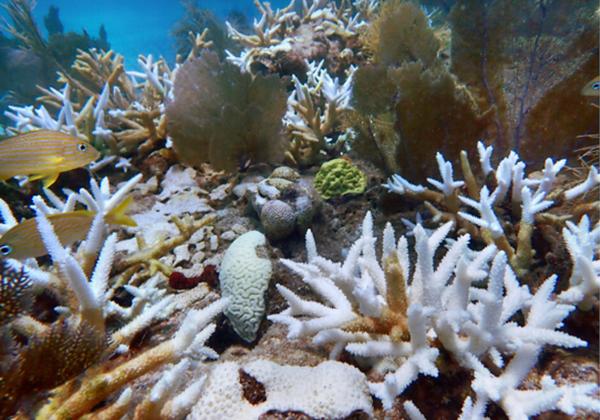
Bleached coral, summer 2023, Florida waters. (Photo courtesy National Oceanic and Atmospheric Administration)

During the first global coral bleaching event in 1998, 21 percent of reefs experienced bleaching-level heat stress, rising to 37 percent in the second event in 2010 and 68 percent during the third event (2014-2017).

Scientists called the fourth global coral bleaching event “unprecedented” as early as May 2024, and a widely-used bleaching prediction platform had to add three new levels (Levels 3-5) to their Bleaching Alert Scale to indicate the heightened risk of mass coral mortality. Level 5 indicates the risk of over 80 percent of all corals on a reef dying due to prolonged bleaching.

“We know coral bleaching is accelerating as our oceans warm, driven by the world’s continued reliance on fossil fuels. As an atoll nation, we see our reefs damaged and livelihoods threatened. We must urgently end the fossil fuel era and transition to a just, sustainable future powered by clean energy. Our oceans and the communities that depend on them cannot wait,” President of the Pacific island nation of Palau Surangel Whipps Jr., said.

Bleached coral reefs, 2025, Palau, Pacific Ocean (Photo by Coral Reef Research Foundation)

Corals bleach when environmental stressors such as heat cause them to expel the colorful, energy-producing algae that live inside them, leaving them white. If conditions return to normal quickly enough, corals can regain their algae and return to health. However, if the water stays too hot for too long, the corals die.  

“Let’s not beat around the bush. Corals are bleaching and dying primarily because the ocean is warming at an alarming rate, as evidenced by the sheer scale of this Fourth Global Bleaching Event. The ocean is warming primarily because of accumulating greenhouse gases emitted by humankind’s ongoing burning of fossil fuels. In short, if we want coral reefs to survive, we must drastically reduce our emissions and keep global warming to below 1.5 degrees Celsius, Ambassador Peter Thomson, the UN Secretary-General’s Special Envoy for the Ocean, said.

Coral Reefs Bleach in Overheated Oceans

  • – Warm-water coral reefs are vital to the wellbeing of up to a billion people and almost a million species around the world.
  • – Globally, coral reefs are experiencing unprecedented mortality under repeated mass bleaching events, highlighting the impact that global warming (interacting with other, predominantly human-driven environmental stressors is already having.
  • – The central estimate of the thermal tipping point for warm-water coral reefs of 1.2°C global warming above pre-industrial is already exceeded and without stringent climate mitigation their upper thermal threshold of 1.5°C may be reached within the next 10 years, compromising reef functioning and provision of ecosystem services to millions of people.
  • – Even under the most optimistic emission scenarios of stabilizing warming at 1.5°C without any overshoot, it is considered that warm-water coral reefs are virtually certain (>99% probability) to tip, given the upper range of their thermal tipping point is 1.5°C.
  • – The goal of the Paris Agreement to limit global warming “well below 2°C” or 1.5°C will not prevent coral reefs from irreversibly passing their thermal tipping point.

Global Tipping Point Report Recommendations

  • – Returning global mean warming below 1.2°C with a minimal overshoot period and eventually returning to 1°C above preindustrial is essential for retaining functional warm water coral reefs at meaningful scale, beyond a relatively few isolated refuge areas.
  • – Minimizing non-climatic stressors, particularly improved reef management, can give reefs the best chance of surviving under what must be a minimal exceedance of their thermal tipping
    point.
  • – Risk assessments and urgent policy responses are needed to address the ecosystem and livelihood impacts of degraded or nonfunctional reefs.

Reactions Range From Alarmed to Determined

Dr. Mike Barrett, chief scientific adviser at the nonprofit WWF-UK and a co-author of the report, warns that the findings are “incredibly alarming.”

“That warm-water coral reefs are passing their thermal tipping point is a tragedy for nature and for the people who rely on them for food and income. This grim situation must be a wake-up call: unless we act decisively now, we will also lose the Amazon rainforest, the ice sheets, and vital ocean currents. In that scenario, we would face a truly catastrophic outcome for all humanity,” Dr. Barrett said.

“COP30 in Belém will be more than just a climate conference,” WMO Secretary-General Celeste Saulo said. “COP30 aspires to be a turning point, a moment when the world shifts from ambition to implementation. At the heart of this transformation lies science. Science is our compass,” she said.

“Science is clear: extreme weather and climate change impacts are worsening. The question before us is not whether we act, but whether we act in time, together, and with the courage required. The cost of action may seem high. The cost of inaction is much higher,” said Saulo.

Not Just Corals

The report finds that the temperature that would trigger widespread dieback of the Amazon rainforest is lower than previously thought, with the lower end of the estimated range now at 1.5°C, showing the need for urgent action.

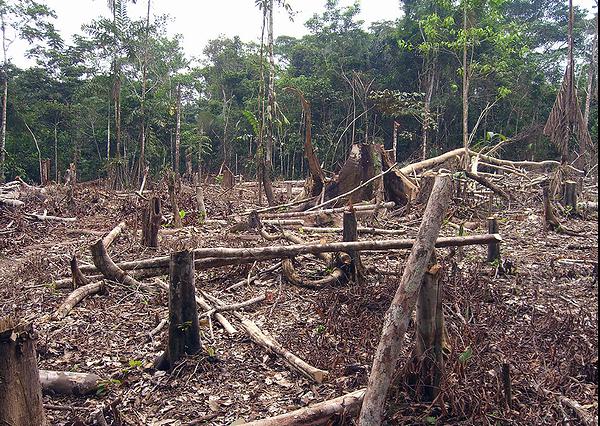
Destruction of the Amazon rainforest for slash and burn agriculture, September 2007, Colombia, South America (Photo by Matt Zimmerman courtesy Wikimedia)

Over a 100 million people depend on the Amazon, and it could also be subject to positive social tipping points: inclusive local governance, including by Indigenous People, recognition of traditional knowledge, and targeted investments in conservation and restoration could boost the resilience of people and nature, the report finds.

And there’s yet another danger. The Atlantic Meridional Overturning Circulation is a system of ocean currents that circulates water within the Atlantic Ocean, bringing warm water north and cold water south. The report shows that this system is at risk of collapse even below 2°C of global warming. “This would result in much harsher winters in northwest Europe, disrupt the West African and Indian Monsoons, and decrease agricultural yields in much of the world,” with major impacts on global food security,. 

Report contributor Dr. Manjana Milkoreit from the University of Oslo said, “Current policy thinking doesn’t usually take tipping points into account. Tipping points present distinct governance challenges compared to other aspects of climate change or environmental decline, requiring both governance innovations and reforms of existing institutions.”

Positive Tipping Points – Solar and Wind

Yet the report also highlights progress on positive tipping points and opportunities for positive change.

Positive tipping points have already been crossed in solar PV and wind power globally, as well as in the adoption of electric vehicles, battery storage, and heat pumps in leading markets. Coordinated policy action, it says, can trigger further transformative change across sectors and societies, according to the Stockholm Resilience Centre at the University of Stockholm in Sweden, a co-author of the report.

Stockholm Resilience Centre researcher Dr. Laura Pereira served as the “equity and justice” liaison for the report’s Risks chapters and also contributed to the Human Rights chapter together with former Centre MSc student Ida Edling. Their work shows that climate tipping points are deeply intertwined with social justice and human rights.

“Whilst we are entering an unprecedented phase of human-induced change to the planet, there remains time to act and to create a more sustainable and just future for all. The findings of this report require a strong reckoning with our current social and economic systems, which have led to this moment of potentially imminent cascading crises across our planet and societies, whilst offering some of the transformative solutions we must undertake to enable a more just and sustainable future,” Dr. Pereira said.

“We cannot address the climate crisis by perpetuating the same systems of injustice and oppression that caused it in the first place. We need deeper, more equitable solutions that allow a sustainable future for both people and planet,” she said.

Professor Tim Lenton, Global Systems Institute, University of Exeter, undated (Photo courtesy University of Exeter)

At the University of Exeter, Professor Lenton said we need to do much more to bring global warming under control. “There has been a radical global acceleration in some areas, including the uptake of solar power and electric vehicles. But we need to do more – and move faster – to seize positive tipping point opportunities,” he advised. “By doing so, we can drastically cut greenhouse gas emissions and tip the world away from catastrophic tipping points and toward a thriving, sustainable future.”

The report calls on global leaders ahead of COP30 in Brazil to embed tipping point science into governance, economic planning, and adaptation policies. Researchers are working with Brazil’s COP30 Presidency to ensure that tipping points are included on the summit’s agenda.

“Positive tipping points need to be well governed to ensure a rapid and just transition,” the report advises, hopefully. “Governance can create the enabling conditions for positive tipping, including easing access to finance, providing the necessary infrastructure to support rapid deployment and cultivating sufficient stakeholder engagement and public support for policies to be approved and implemented.”

Professor Lenton concluded, “Only with a combination of decisive policy and civil society action can the world tip its trajectory from facing existential Earth system tipping point risks to seizing positive tipping point opportunities.”

Featured image: Blistering Coral Sea temperatures from February to April 2024 led to the Great Barrier Reef’s fifth mass bleaching event in eight years, turning patches of staghorn and other coral species white. 2024 (Photo by Ove Hoegh-Guldberg)

WASHINGTON, DC, October 11, 2025 (ENS) – On July 8, Congressman Nick Begich III, an Alaska Republican, introduced a draft bill amending the Marine Mammal Protection Act, MMPA, the federal law that has governed marine resource management and conservation of whales, orcas, porpoises, seals, polar bears, walruses, sea otters, and manatees in U.S. waters since 1972.

Congressman Begich’s bill would strip protections for these keystone species and remove bedrock scientific concepts to support the expansion of harmful extractive activities, like oil and gas extraction, in U.S. waters, environmental groups warn.

As analyzed by the nonprofit group Orca Conservancy based in Seattle, Congressman Begich’s amendment would “dismantle the current legal standards” for authorizing the hunt, capture, harassment, and killing of marine mammals and allow for automatic approval for take permits. Agencies would be stripped of their authority to require mitigation processes around marine mammal takes and to issue protective regulations.

The Begich III amendment would constrain the federal definition of “harassment” so that it no longer prohibits actions with the potential to harm marine mammals. It would remove protections for poorly-known marine mammal populations, and eliminate best-practice precautionary approaches backed by decades of science, the Conservancy advises.

The amendment would downgrade conservation goals by only ensuring survival and not maintaining a healthy population not require agencies to ensure “negligible impact,” as they must now, according to the Orca Conservancy.

The Conservancy warns that the change would remove safeguards for commercial fishing and downgrade the “zero bycatch goal” to a “near-zero bycatch goal.”

It would require unreasonable or impossible data to estimate population abundances and design best practices for management.

“These changes would decimate federal protection for threatened and endangered populations of marine mammals, including orcas, by walking back decades of stewardship and conservation in favor of destructive exploitation,” the Orca Conservancy said in a statement.

Who is Nick Begich III?

Nick Begich III, right, his wife Dharma, and son Nicholas. 2024 (Photo courtesy Nick Begich for Alaska)

Founder of the software company FarShore Partners, Nick Begich III was elected as Alaska’s sole member of the U.S. House of Representatives in November 2024. He was born in Anchorage, Alaska and raised by his maternal grandparents in Florida. He returned to Alaska as an adult with Republican political views that distinguished him from his grandfather and uncles, who have held elected office in Alaska as Democrats.

Begich III is the paternal grandson of Nick Begich Sr., a Democrat who served as Alaska’s third U.S. House member before his flight on a plane that disappeared between Anchorage and Juneau in October 1972, while he was in office. He is presumed to have died as a result.

He is the nephew of Tom Begich, a Democrat who served in the Alaska State Senate from 2017 to 2023. In August, Tom Begich announced he would run as a Democrat in the 2026 Alaska gubernatorial election.

Begich III also is the nephew of Alaska’s Democratic former U.S. Senator Mark Begich who served from 2009 to 2015.

Back in 2010, during the months-long Deepwater Horizon oil spill in the Gulf of Mexico, Senator Mark Begich introduced two pieces of legislation that would provide for better science, response, and rescue related to oil and gas activities in Alaska’s Arctic waters.

At the time, Michael LeVine, Pacific senior counsel for the marine conservation group Oceana, said, “The ongoing tragedy in the Gulf of Mexico is a stark reminder of the increasing risks as oil companies drill in remote, sensitive places and under forbidding conditions. With exploration wells similar to the one in the Gulf proposed in the Beaufort and Chukchi Seas, it is imperative we have adequate scientific data to proceed as safely and efficiently as possible, and that we have sufficient response and recovery resources in the area before any work begins.”

“Senator Begich’s bills are significant steps in the right direction and would allow for better response and rescue capabilities and the necessary science to guide decisions about whether we should drill in Arctic waters and, if so, when, where, and how. It’s too late to prevent the Deepwater Horizon disaster, but it would be equally tragic if we don’t apply the lessons we’ve learned to other critical places such as the Arctic,” LeVine said.

Representing Alaska, Affecting the World

Today, Congressman Nick Begich represents Alaska, but the Marine Mammal Protection Act, MMPA, applies nationwide. Weakening this law would have serious consequences for marine ecosystems and coastal economies around the country and even in the waters of other countries, conservationists warn.

For instance, the International Fund for Animal Welfare, IFAW, explains that white beluga whales live in the Arctic Ocean around multiple countries, including Canada, Greenland, Russia, and the United States, mainly in Alaska. While some beluga whales live permanently in one area, many migrate to warmer climates during the winters when the Arctic water freezes. When they migrate, they pass through the waters of other countries, including Japan, the United Kingdom, Denmark, Norway, Sweden, and the Faroe Islands.

Belugas are considered top ocean predators, regulating the populations of prey species by picking off ill or injured individuals. They also provide a food source, when hungry orcas and polar bears are on the hunt.

Beluga whales in Alaska’s Cook Inlet. The National Marine Fisheries Service completed its second five-year status review in September 2022, concluding that the Cook Inlet beluga whale population should retain its status as endangered. (Photo courtesy Marine Mammal Commission)

Belugas swim in oceans full of other dangers, too: pollution, shipping, oil drilling and global warming. The isolated Cook Inlet beluga whale population must also contend with the increasingly perilous and industrialized waters near Anchorage, Alaska’s most populated and fastest-growing city.

Beluga whales were classed as Vulnerable to extinction by the International Union for the Conservation of Nature, IUCN, in 1996, changed to Near Threatened in 2008, and as the belugas reecovered, changed again to Least Concern in 2017.

But a specific subpopulation of belugas in Alaska’s Cook Inlet has been assessed separately and listed as Critically Endangered on the IUCN Red List of Threatened Species. This subpopulation is also considered Endangered under the Endangered Species Act in the United States.

In May, several groups and an Alaska resident filed suit to protect Cook Inlet beluga whales and the Johnson River, which flows through Lake Clark National Park before entering Cook Inlet. Lake Clark’s rivers are still inhabited by salmon, trout, and grayling, as well as ducks, swans, and other waterfowl.

The lawsuit, filed in U.S. District Court in Anchorage, challenges a U.S. Army Corps of Engineers’ Clean Water Act permit for the Johnson Tract gold mining exploration project at the headwaters of the Johnson River, on private lands surrounded by the park.

The Center for Biological Diversity and other groups allege that the Army Corps violated the Clean Water Act, the Endangered Species Act, and the National Environmental Policy Act in granting the permit.

Before it issued the permit to mining company Contango Ore to build a haul road through the upper Johnson River watershed, the suit charges that the Army Corps did not consult with NOAA Fisheries to ensure endangered Cook Inlet belugas are protected from harms caused by the project.

The permit also allows the company to expand an airstrip to allow large, noisy cargo aircraft into the only known winter foraging area for the Cook Inlet beluga.

Begich’s Proposed Changes to Marine Mammal Protection

On July 8, Congressman Begich introduced a draft bill that would reverse many provisions of the sole federal law protecting marine mammals in U.S. waters from injury and death caused by commercial fishing, oil and gas development, and other human activities.

In a statement, Mike Senatore, the nonprofit Defenders of Wildlife’s senior vice president of conservation programs, outlined why his D.C.-based organization is opposed to the Begich changes.

“For more than 50 years, the Marine Mammal Protection Act has safeguarded iconic species like whales, dolphins, polar bears, sea otters and manatees from drowning in fishing gear, being run over by boats and being poisoned by oil spills,” Senatore said.

“True to form, the anti-wildlife members of Congress demonstrate interest not in protecting America’s imperiled wildlife, but only in letting species die in favor of private industry handouts. Defenders strongly opposes this bill and will fight to protect our nation’s marine mammals and our flagship conservation laws.”

Under the current MMPA, the authority to manage marine mammals is shared between the U.S. Fish and Wildlife Service, USFWS, and the National Marine Fisheries Service, NMFS, an office of the National Oceanic and Atmospheric Administration, NOAA, in consultation with the Marine Mammal Commission.

The USFWS is responsible for managing polar bears, walruses, sea otters, and manatees. NMFS is responsible for the management of whales, dolphins, porpoises, seals, and sea lions.

Begich mantains that his amendment will help commercial fishermen and oil and gas developers.

On July 22, during a hearing of the House Subcommittee on Water, Wildlife and Fisheries on his discussion draft of changes he wants to make in the law, Begich described his proposal as a first step in a discussion aimed at “modernizing the MMPA,” which he noted has been important in marine mammal conservation.

“The MMPA has been in place for over 50 years and during that time, it’s served an important role in conserving marine mammals and protecting our oceans. As the decades have passed, we’ve seen how its implementation, particularly in the use of vague or overly precautionary standards, has led to confusion, delay and unintended harm,” Begich said. “This draft aims to bring clarity, objectivity, and balance back into the implementation of the MMPA.”

Justin Shirley, Principal Deputy Director and Acting Director for the U.S. Fish and Wildlife Service, is in favor of the changes, telling the subcommittee, “The Service appreciates the sponsor’s work on marine mammal issues and intent to modernize the MMPA.”

Begich argued that delays to Alaskan resource exploration and harbor expansion projects have resulted from vague terms in the current law such as “harassment” and “negligible impact.”

He said the amendment seeks to find a balance between protecting marine mammals and enabling development to support Alaskan communities.

Instead of requiring marine mammal populations to be restored to their “maximum productivity,” the Begich amendment would lower the population goal to the level needed to “support continued survival.”

The proposed changes would narrow the definition of harassment to cover only activities that actually injure a marine mammal, rather than actions with the potential to cause harm.

Begich claims overly precautionary principles have been used instead of hard evidence. The amendment aims to mandate the use of objective, scientifically balanced data without applying overly precautionary assumptions, he says.

“The MMPA has been in place for over 50 years and during that time, it’s served an important role in conserving marine mammals and protecting our oceans. As the decades have passed, we’ve seen how its implementation, particularly in the use of vague or overly precautionary standards, has led to confusion, delay and unintended harm,” Begich stated. “This draft aims to bring clarity, objectivity, and balance back into the implementation of the MMPA.”

Justin Shirley, Principal Deputy Director and Acting Director for the U.S. Fish and Wildlife Service, spoke in support of the Begich amendment, saying, “The Service appreciates the sponsor’s work on marine mammal issues and intent to modernize the MMPA.”

In response to Begich’s amendment, the Southern Environmental Law Center’s Wildlife Program Leader Ramona McGee warned against politics that put marine mammals at risk.

“If Republican lawmakers follow this path of choosing the interests of big corporations ahead of our natural heritage, they risk breaching the trust of the American public,” she said. “The types of rollbacks contemplated during today’s committee hearing would erase the hard work of wildlife managers who honorably protect our public trust. Mass firings of public servants who work with applicants to design and issue permits to protect imperiled species is the real threat to permitting hurdles.”

Rice’s Whale Tells the Opposition’s Tale

Conservationists point to the situation of Rice’s whale, a newly discovered species in the Gulf of Mexico, that they warn would struggle to survive as a species if Begich’s MMPA amendment is signed into law.

In January 2021, scientists determined the Rice’s whale to be its own, distinct species, contrary to previous classifications as a population of Bryde’s whales. There are fewer than 100 Rice’s whales remaining, and a “best estimate” population of 50 animals, so swift and decisive action is urgently needed to save this species from extinction.

NOAA Fisheries listed the Rice’s whale, then known as the Gulf of Mexico Bryde’s whale, as an endangered species under the Endangered Species Act in 2019. Rice’s whales are also protected under the Marine Mammal Protection Act and are considered depleted.

Gray in color with broad flukes and a hooked dorsal fin, Rice’s whales do not migrate. “The Rice’s whale is the only baleen whale that makes the Gulf of Mexico its full-time home,” Defenders of Wildlife points out. Current data suggest that this whale is unique to the United States.

While Rice’s whales swim from Texas to Florida, their core habitat is the De Soto Canyon, an underwater canyon located about 60 miles offshore from Pensacola, Florida.

Acoustic research has shown that Rice’s whales communicate using unique vocalizations, or calls, which can be detected with passive acoustic monitoring devices, according to NOAA.

NOAA Fisheries listed the Rice’s whale (then known as the Gulf of Mexico Bryde’s whale) as an endangered species under the Endangered Species Act in 2019.

Rice’s whales are one of the marine mammal species that was most heavily impacted by the Deepwater Horizon oil spill. A modeling study conducted after the spill estimated that 48 percent of Rice’s whale habitat in the eastern Gulf was exposed to oil. The population declined by as much as 22 percent compared to its pre-spill size. Few calves have been seen during surveys since 2010. There have been frequent observations of individual whales in poor body condition, suggesting there may be lingering effects on reproduction and population growth.

Another cautionary tale is told by the Orca Conservancy about the AT1 killer whales, a unique group of mammal-eating orcas in Alaska’s Prince William Sound, that were “devastated” by the Exxon Valdez oil spill in 1989.

Declared depleted under the MMPA, this orca population has seen no births since 1984 and is now functionally extinct. “Their collapse shows what can happen when protections fail or come too late. Strong, science-driven safeguards like those in the MMPA are essential to prevent other vulnerable populations, like the Southern Residents, from meeting the same fate,” the Conservancy advises.

“My goal is simple,” Congressman Begich told the members of the House Subcommittee during its July hearing on his proposed amendment to the Marine Mammal Protection Act. “I want a bill that protects marine mammals and also works for the people who live and work alongside them, especially in Alaska.”

Featured image: One of two Rice’s whales observed by the Southeast Fisheries Science Center in the western Gulf of Mexico during an aerial survey, April 11, 2024. (Photo by NOAA Fisheries/Paul Nagelkirk)

SALEM, Oregon, October 10, 2025 (ENS) – Oregon Governor Tina Kotek this week signed an Executive Order accelerating renewables project development in the state before time runs out on federal clean energy tax credits. Tax credits now on the table that are set to expire on July 4, 2026 can fund between 30 and 50 percent of most solar and wind projects, the governor said.

Kotek signed the order Monday directing state agencies and commissions to take “any and all steps” allowed by law to hurry renewable energy permitting, to the point of adopting temporary emergency rules and outsourcing assessments to third-party contractors.

Solar and wind companies face a strict July 4, 2026 deadline to start construction and qualify for the Investment Tax Credit and the Production Tax Credit set by President Donald Trump’s domestic policy law.

Recent guidance has narrowed qualification requirements and required project completion within four years for companies to qualify for the full federal incentive. Projects that fail to meet the July 4 construction deadline must enter into service by December 31, 2027 to qualify for federal tax credits.

Oregon Governor Tina Kotek, 2022 (Photo courtesy Office of the Governor)

“With the elimination of promised incentives by the Trump Administration, states must step up as the last line of defense against climate catastrophe. We have to get renewable energy infrastructure built, and quickly,” said Governor Kotek, a Democrat.

“We cannot afford to lose this critical window; every wind and solar project we help complete now directly fights the irreversible climate damage we’re racing to prevent,” she declared.

These federal tax credits make clean energy projects more affordable, accelerating Oregon’s transition away from fossil fuels.

“Without expedited permitting, shovel-ready solar and wind projects may miss the July deadline, potentially losing millions in federal funding that would otherwise reduce electricity costs and advance our climate goals,” Governor Kotek said in her order.

The Oregon Department of Energy and the Energy Facility Siting Council are ordered to “identify projects that must begin construction by July 4, 2026 and subsequent process changes that would be of greatest assistance to meeting the deadline for federal tax credits,” the governor’s order states.

The order gives the highest priority “to projects that have secured power purchase and interconnection agreements and can demonstrate the project will provide benefits to Oregon ratepayers.”

The Oregon Public Utility Commission is ordered to accelerate utility Request for Proposal, RFP, timelines and procurement of clean energy resources.

In her order, the governor said, “When someone wants to build a solar farm or wind farm, they need to study how it will connect to the existing electrical grid. This is called an ‘interconnection study.’ Staff will suggest that the Commission consider using outside contractors to study how solar and wind power projects connect to the electrical grid.”

The Oregon Department of Energy lists 14 wind and solar projects that have at least submitted Notices of Intent to build.

For example, Summit Ridge Renewable Energy Facility is a proposed wind and solar photovoltaic energy generation facility including battery storage and related and supporting facilities to be located within a 4,061-acre (6.35 square mile) site boundary of private land zoned for exclusive farm use in northeastern Wasco County 17 ​miles southeast of The Dalles, and eightmiles east of the town of Dufur, Oregon.

Summit Ridge Energy CEO Steve Raeder, left, leads staffers on an inspection of an array of solar panels. undated (Screengrab from video courtesy Summit Ridge Energy)

The Summit Ridge project includes 32 wind turbines and up to 178,507 solar modules on racking systems and posts – with a combined wind and solar generating capacity of 261 megawatts – enough to power 260,000 average homes in the United States, according to federal government data.

Oregon’s per capita energy use in the residential sector is the third lowest in the nation.

Hydroelectric power typically provides more than half of Oregon’s in-state total electricity net generation, but abnormally dry weather and drought in recent years has limited hydroelectric power to less than 50 percent of Oregon’s in-state electricity since 2022. In 2024, hydropower accounted for about 41 percent of Oregon’s total electricity generation.

Natural gas fuels the second-largest share of Oregon’s electricity generation. In 2024, natural gas-fired power plants provided 38 percent of the state’s total net generation.

Nonhydroelectric renewable resources – wind, solar, biomass, and geothermal power – provide almost all the rest of Oregon’s total generation, 21 percent in 2024.

A decade ago, coal fueled five percent of Oregon’s in-state net generation, but Oregon’s last coal-fired power plant closed in 2020. There are no commercial nuclear power plants in the state.

Renewables in Oregon

In 2024, renewable energy resources, led by hydroelectric power, accounted for about 62 percent of Oregon’s total in-state electricity net generation. Electricity generation from nonhydroelectric renewable sources has increased by almost 50 percent since 2014, state data shows.

In 2024, wind power accounted for 15 percent of Oregon’s total in-state electricity generation. By the end of 2024, Oregon had almost 4,000 megawatts of wind capacity.

A 200-megawatt wind farm, which will be part of Portland General Electric’s larger Wheatridge Renewable Energy Facility, is in development and is scheduled to come online by mid-2025.

In 2024, solar energy, small-scale and utility-scale combined, supplied four percent of Oregon’s total electricity generation. The state’s first utility-scale solar photovoltaic facilities came online in late 2011.

Utility-scale solar generated almost four-fifths of the state’s solar power in 2024. Numerous additional larger solar PV projects are in development, and 216 megawatts of additional solar PV capacity is scheduled to come online in 2025, says the U.S. Energy Information Administration.

Governor Kotek explains in her Executive Order that “…demand for clean electricity is rising rapidly across the region, and development of solar and wind energy facilities in Oregon aligns with the state’s
goals and values by producing clean and affordable electricity, supporting jobs and economic growth, generating property tax revenue for local communities, and advancing progress towards Oregon’s clean energy and climate goals…”

In 2025, Oregon’s goals are implementing its Climate Protection Program, CPP, and the new Oregon Energy Strategy, with a new deadline to submit a Comprehensive Climate Action Plan, CCAP, in December 2025.

The Climate Protection Program sets declining limits on fossil fuel emissions, aiming for a 50 percent reduction by 2035 and 90 percent by 2050, while the Comprehensive Climate Action Plan will identify opportunities to reach these goals and address gaps in existing efforts.

In addition, the Oregon Legislature, in which Democrats hold the majority, is addressing barriers to clean energy and resilience, exploring new energy technologies like super-hot rocks geothermal, and advancing zero-emission vehicle goals.

“Oregonians are already feeling the strain of rising energy costs and worsening climate impacts, yet Congress and the Trump administration have launched an all-out assault on affordable clean energy and our safe climate future,” Nora Apter, Oregon director for the nonprofit organization Climate Solutions, said.

“By moving swiftly to get as many wind and solar projects across the finish line as possible before the loss of federal tax credits, Governor Kotek is defending Oregon families, family-wage jobs, and energy resilience against these senseless attacks,” Apter said.

“Today’s action will help ensure that renewable energy projects can capture critical federal incentives before they disappear – keeping Oregon competitive and able to power our state’s growing energy demands with clean, affordable electricity,” she said.

See the full text of Governor Kotek’s Executive Order here.

Featured image: The Wheatridge Renewable Energy Facility, a hybrid renewable energy plant in Lexington, Oregon, combines solar power, wind power and gigantic batteries to store the energy generated there. It was the first utility-scale plant of its kind in North America when it came online May 24, 2022 (Photo courtesy Portland General Electric)

ABU DHABI, United Arab Emirates, October 9, 2025 (ENS) – The world’s foremost international event centered on conserving nature opened today in Abu Dhabi. Held every four years, the IUCN World Conservation Congress is convened by the International Union for the Conservation of Nature, a nonprofit based near Geneva, Switzerland that tracks species survival on the IUCN Red List.

This year, the IUCN World Conservation Congress brings together more than 10,000 attendees from October 9 to 15 – both on-site, at the Abu Dhabi National Exhibition Centre, and virtually.

The opening ceremony was hosted by Sheikh Khaled bin Mohamed bin Zayed Al Nahyan, Crown Prince of Abu Dhabi, who chairs the Abu Dhabi Executive Council.

Indigenous Peoples’ Summit group photo, IUCN World Conservation Congress, October 8, 2025, Abu Dhabi, UAE (Photo by IISD/ENB | Mike Muzurakis)

The 2025 Congress meets under the theme, “Powering transformative conservation,” aimed at shaping dialogue, decisions, and initiatives that deliver transformative outcomes for nature and people.

Decision makers from government, civil society, Indigenous Peoples’ organizations, academia, youth, and business will set the conservation and sustainable development agenda going forward.

The Congress will address five interlinked themes, as defined by the IUCN:

  • scaling up resilient conservation action: This theme aims to protect more land and sea areas while making ecosystems more resilient to climate change and human pressures.
  • reducing climate overshoot risks: Scientists warn that we could briefly exceed safe global warming limits. This “overshoot” could trigger extreme weather, droughts, and sea-level rise. The Congress will explore strategies to prevent this outcome and prepare for its possible effects.
  • delivering on equity: Environmental action must be fair. This means recognizing the rights and knowledge of Indigenous peoples and ensuring that conservation policies do not harm vulnerable communities. Delegates will discuss how to make sustainability more inclusive.
  • transitioning to nature-positive economies and societies: This theme focuses on transforming industries – like agriculture, construction, and finance – to support nature rather than deplete it. A nature-positive economy restores and protects ecosystems while supporting human development.
  • disruptive innovation and leadership for conservation: The Congress will highlight cutting-edge technology and bold leadership. Topics may include artificial intelligence for wildlife tracking, carbon-negative materials, and community-led restoration projects. The goal is to accelerate solutions that are effective and scalable.

The Congress enables IUCN’s more than 1,400 member organizations to democratically determine the most pressing issues in nature conservation and actions to address them to help guide humanity’s relationship with the planet.

Day One: Renewable Energy Agreement Signed

The IUCN and the International Renewable Energy Agency, IRENA, today signed a Memorandum of Understanding at the IUCN World Conservation Congress that takes what the Parties call “a major step towards strengthening collaboration” between the two organizations “in accelerating a renewable energy transition that is both sustainable and nature-positive.”

Signed by IUCN Deputy Director General Stewart Maginnis and IRENA Deputy Director-General Gauri Singh, the MoU outlines joint work to ensure that “the roll out of renewable energy not only reduces greenhouse gas emissions but also safeguards biodiversity, strengthens community resilience, and contributes to global sustainable development goals.”

The two gigawatt Al Dhafra Solar Plant 38 km (23.6 miles) south of Abu Dhabi uses four million crystalline, bifacial solar modules that capture sunlight on both sides for increased efficiency. 2023 (Photo courtesy Emirates Water and Electricity Company)

“This collaboration sends a strong message: the renewable energy transition must go hand in hand with protecting biodiversity and supporting communities,” said Maginnis. “Together with IRENA, we will work to ensure that solutions for the climate crisis also build a healthier planet.”

“Achieving the 11.2 terawatts of renewables capacity by 2030 in line with the UAE Consensus must take into account the preservation of ecosystems and enhancement of biodiversity,” said Singh. “With this partnership, we can ensure targeted measures that work in harmony with nature are put in place, so our pursuit of a renewables-based future truly benefits the planet and its people.”

Under the agreement, IUCN and IRENA will collaborate to:

  • – Support the rapid transition from fossil fuels to renewable energy, reducing greenhouse gas emissions and addressing environmental challenges;
  • – Develop projects to ensure that the roll out of renewable energy development mitigates negative impacts on biodiversity and local communities;
  • – Develop tools to assess impacts on biodiversity and contributions towards positive nature goals from renewable energy projects;
  • – Promote co-benefits between renewable energy deployment and conservation through joint policy analysis, guidelines and best practices;
  • – Explore further cooperation, including capacity building, technical research, and knowledge dissemination.

Conservation Leaders Open World Congress

Today, the IUCN staged an opening ceremony that featured:

President of the Republic of Palau Surangel Whipps Jr.;
Her Royal Highness, Princess Lalla Hasna of Morocco;
Panama’s Minister of Environment Juan Carlos Navarro;
IUCN Patron of Nature and Founder of Mission Blue Dr. Sylvia Earle of the United States;
UN Assistant Secretary-General and Deputy Executive Director of UNEP Elizabeth Maruma Mrema;
IUCN President Razan Khalifa Al Mubarak, and;
IUCN Director General Dr. Grethel Aguilar.

Their remarks, and the comments of other officials, underscored the urgency of collective action to protect ecosystems and advance the Global Biodiversity Framework, the IUCN said.

Amna bint Abdullah Al Dahak, UAE Minister of Climate Change & Environment, at the UN Biodiversity Conference, October 30, 2024, Cali, Colombia (Photo courtesy IISD/ENB) 

“Every day, the UAE affirms its pioneering role as a global driver of innovative solutions and comprehensive sustainability for all peoples. This approach is embodied in hosting the IUCN World Conservation Congress, a milestone event in global efforts to place nature at the heart of our development systems and achieve greater prosperity,” UAE Minister of Climate Change and Environment Dr. Amna bint Abdullah Al Dahak told the Congress.

“Supported by wise leadership, the UAE has a distinguished record in nature protection, reflecting a deep-rooted legacy of the Emirati people’s relationship with their environment, which continues today through the National Biodiversity Strategy 2031. This strategy aims to promote nature-based solutions, restore ecosystems, protect endangered species, and expand nature reserves, which now cover more than 15 percent of the country,” Dr. Al Dahak said.

IUCN President Razan Khalifa Al Mubarak 2025 (Photo courtesy IUCN)

“This Congress is a reminder that the well-being of people and the well-being of nature are inseparable,” IUCN President Razan Khalifa Al Mubarak said. “We understand more than ever how deeply our lives depend on the natural world, yet we continue to act as if we are apart from it,” she said.

“Here in Abu Dhabi, we have the chance to turn understanding into unity, and unity into action,” she said. The decisions taken this week will determine whether we meet the moment with courage and cooperation. If we succeed, this Congress will show that science, inclusion, and shared purpose can still guide humanity toward a future where both people and nature thrive,” Dr. Al Shamsi said.

Secretary-General of the Environment Agency – Abu Dhabi, Dr. Shaikha Salem Al Dhaheri, highlighted the UAE’s advances in conservation.

“The UAE’s journey shows how science, innovation, and international cooperation can transform challenges into shared victories – from restoring more than four million corals and planting 50 million mangroves, to reintroducing the Arabian Oryx and leading global efforts to bring the Scimitar-horned Oryx back from extinction in the wild. These are not just national milestones, but models of collaboration that the world can replicate,” Al Dhaheri said. As we open the Congress, our message is clear: conservation succeeds when ambition is matched by evidence-based action and global partnership.”

Day One Focus on Rewilding

New guidelines on rewilding practice have been launched at the IUCN World Conservation Congress. Evolving over many years, the guidelines offer a clear, evidence-based framework for rewilding initiatives anywhere in the world.

Developed by the Rewilding Thematic Group of the IUCN Commission on Ecosystem Management, CEM, more than 60 groups collaborated on the guidelines. Created for practitioners, policymakers and communities, they emphasize foundational principles for rewilding projects and for integrating rewilding into overall conservation strategies.

Sunrise through the trees at Fritton Lake in the heart of a 1.000-acre Norfolk rewilding project, East Anglia, England, May 8, 2023 (Photo by Robert Pittman)

“These guidelines have been eight years in the making, involving input from hundreds of people including policymakers, practitioners, scientists and academics from across the conservation sector, representing the views and expert knowledge of rewilding organisations worldwide. They provide a definitive statement of the state of the art in this growing field,” Dr. Steve Carver, professor at the University of Leeds, co-chair of the CEM Rewilding Thematic Group, and co-author of the guidelines, said.

With a nod to the hard work of the many Commission experts and stakeholders involved, CEM Chair Angela Andrade emphasized that “this momentum towards a formal IUCN policy on rewilding will ensure that rewilding is firmly embedded in global conservation policy in a way that is inclusive, evidence-based, and forward-looking.”

The Arabian Oryx (Oryx leucoryx) an antelope native to the United Arab Emirates, was declared Extinct in the wild in 1972 due to overhunting, but captive breeding in zoos and private reserves saved the species. By the 1980s, reintroductions to the wild began.

Today, the United Arab Emirates are inhabited by the largest population of Oryx leucoryx in the world. In 2023, the Arabian oryx population reached 8,016 individuals across the UAE, with 5,679 in the Abu Dhabi Emirate, both in captivity and in the wild. Now, the Environment Agency – Abu Dhabi is funding further reintroductions.

IUCN World Congress Plan of Work

Dr. Grethel Aguilar of Costa Rica assumed office as Director General of the International Union for Conservation of Nature, IUCN, in October 2023. (Photo courtesy IUCN)

The 2025 IUCN Congress features the Members’ Assembly – the highest IUCN decision-making body. At the start and end of the Congress, IUCN Members will debate and vote on draft motions, which, if and when adopted, become Resolutions and Recommendations, forming the core body of IUCN’s policy and program, driving action on nature loss and other global challenges.

The Members Assembly is also expected to approve the IUCN Programme and Financial Plan for 2026–2029 and the new 20-year Strategic Vision. It will also elect the IUCN President, Council, Commission Chairs, and officers for the next term.

The full list of 40 motions, to be debated and voted upon in-person at Congress (and accessible to journalists), are here.

Five other summits will also enliven the opening days of the IUCN World Congress: the first World Summit of Indigenous Peoples and Nature, a Business Summit, a Youth Summit, a Philanthropy Summit and the third Middle East and North Africa, MENA, Oceans Summit.

Dr. Jane Goodall, DBE, had been scheduled to attend the IUCN Congress. Following her passing on October 1, IUCN said the organization will pay tribute to her conservation legacy and continue the vital work she inspired.

Featured image: The Arabian Oryx (Oryx leucoryx) an antelope native to the United Arab Emirates, was declared Extinct in the wild in 1972 due to overhunting, but captive breeding programs in zoos and private reserves saved enough animals to recover the species. Reintroductions into the wild began in the 1980s.

Today, the United Arab Emirates are inhabited by more than 8,000 Oryx leucoryx, the largest population in the world. The Environment Agency – Abu Dhabi is promising to fund more reintroductions. (Photo courtesy The Environment Agency – Abu Dhabi)

By Wesley Muller

ROSELAND, Louisiana, October 9, 2025 (ENS) – On August 22, an explosion erupted at Smitty’s Supply, a lubricant manufacturing facility in Roseland, a town about 60 miles northeast of Baton Rouge. The blaze swept through the 15-acre complex that housed half a million gallons of flammable materials.

Large amounts of petrochemicals still blanket nearby bodies of water six weeks after the explosion in Tangipahoa Parish, where some affected residents believe the federal and state governments have failed in their response and aren’t telling the truth about the health and environmental risks.

Candy Cardwell, who lives a few hundred yards from the Smitty’s Supply Inc. plant, walked around her property on a Tuesday in early October and pointed to black oily residue embedded into virtually everything from the roof of her home to the ground.

On the side of her roof facing the Smitty’s plant, shingles are stained with black oily residue, discolored compared to the other side’s reddish brown shingles. Cardwell’s gutters, surface concrete, fence, patio furniture, grass and vegetation all bear the same dark stains. She said she had to dig up her fruit and vegetable garden and dispose of the entire harvest because the plants were covered in oil and soot.

She has tried scrubbing and cleaning her furniture and concrete, but she said the stains won’t come out. Cardwell’s dog, Rusty, became ill soon after the incident and still hasn’t recovered, she said.

“It fell literally on everything,” Cardwell said. “This was my little piece of heaven … Now, it’s a sad state.”

An industrial explosion led to a fire burning for days in Roseland, Louisiana, a predominantly Black town 60 miles northeast of Baton Rouge. The cause of the explosion is under investigation. August 22, 2025 (Photo courtesy U.S. Environmental Protection Agency)

Residents across Tangipahoa Parish have reported similar property damage after the fire at Smitty’s Supply. The explosion sent smoke, soot and oily residue into the air and onto nearby homes, businesses and an elementary school. Petroleum products from the plant also spilled into area waterways, including several adjacent ponds and the Tangipahoa River. By the weekend after the explosion, oil had reached waterways 30 miles south of Roseland.

Now, oily materials have traveled nearly 40 miles down the waterway that leads to Lake Pontchartrain.

About three miles away in Amite, the home of Mike and Kathleen Bassemier bears many of the same markings. Black residue is stuck to everything, from leaves in the trees to recently painted concrete around their pool.

Even pressure washing the concrete didn’t get rid of the residue, they said. Like Cardwell, the Bassemiers also have a dog that’s been sick for weeks.

“You could walk out in the backyard barefoot, and your feet would be black,” Mike Bassemier said.

The couple’s biggest concern is their home’s roof, which they said was just replaced in 2021. Just like at Cardwell’s house, the shingles are covered with oily residue, and all three wonder if the chemicals could deteriorate the roofing materials or make them flammable.

Even those without property have had their lives impacted.

Stephen Williams, a Bogalusa native who said he’s lived along the Tangipahoa River in Amite for the past few months, said he had to get rid of his tent after it was soaked with soot and oily residue. He and his dog, Tick Tock, now live under the Louisiana Highway 16 bridge, though Williams said they had to move temporarily when cleanup crews returned Tuesday.

Williams said he and Tick Tock have struggled to find enough to eat since the Smitty’s Supply explosion. Before, the river was their primary food source.

“Being homeless when something like this oil happens can be tough,” the 61-year-old said as rainbow sheens of petrochemicals floated down the river behind him. “Sometimes fishing’s the only way we eat at night.”

Cardwell and the Bassemiers said they want straight answers about what hazards the chemical residue poses. Immediately after the incident and again this week, the U.S. Environmental Protection Agency has insisted the soot poses no imminent health risk. However, soot in general is known to contain a number of carcinogens and heavy metals, according to the National Institutes of Health.

EPA Blamed for Withholding Information on Chemicals

Within days of the explosion, the EPA received an inventory list of the chemicals at the Smitty’s plant at the time of the incident, but the agency withheld the information from the public for five weeks.

The EPA finally disclosed it to the Louisiana Illuminator last week only after the agency got permission from Smitty’s Supply executives to release it. The Louisiana Illuminator is part of States Newsroom, the nation’s largest state-focused nonprofit news organization.

Detailed on a 305-page spreadsheet, the inventory list included a variety of flammable and otherwise hazardous products.

Rough estimates indicate Smitty’s Supply stored several million gallons of motor oils, lubricants and various automotive fluids. Hydraulic fluids, gas mixtures, methanol, drilling oils, solvents, acids, bases and other petrochemical products were also part of its inventory on hand.

Lawsuit Calls for Greater Transparency

LaCrisha McAllister, an environmental justice attorney representing a Roseland farmer who is suing Smitty’s Supply, said she’s not surprised to hear of other sick animals because her client’s cow gave birth to a stillborn calf and believes it was due to the chemical exposure. She said officials should be more forthright about what chemicals were on site at the Smitty’s plant at the time of the fire and which specific ones were actually burned or exploded.

“That speaks to a bigger, more dangerous issue … What really is this?” McAllister said in a phone interview. “We don’t know what this will look like down the line.”

She recommended that affected residents prioritize their health and well-being, take any sick pets to a veterinarian and document any damages or changes that have occurred since the fire in case they need it for insurance or legal purposes.

After nearly six weeks of being surrounded by chemical contaminants and polluted ponds and rivers, Cardwell and the other residents said they hope things return to normal soon – to the way they were before the explosion.

It’s a promise they say they’ve heard Governor Jeff Landry repeat in the weeks since the explosion.

The governor addressed recovery efforts again Wednesday at a news conference in Tangipahoa Parish, simultaneously praising the Trump administration’s response and acknowledging that it could’ve been better.

“No plan is 100 percent perfect,” Landry told reporters at the parish government offices in Amite. “There’s been no hiding of the ball. We’ve been completely transparent.”

The governor’s comments came just days after drone video revealed the extent of the pollution still present near the Smitty’s facility. The footage, which went viral on social media Sunday, prompted Landry to issue a video message from the Governor’s Mansion, saying the EPA was working too slowly in its recovery efforts.

After connecting with several state officials and EPA regional coordinator Scott Mason, the governor promised in his video that cleanup efforts would intensify soon.

“You know it’s been over a month now that the Smitty’s facility caught fire…and over those 30 days, contractors contracted by the EPA were supposed to be cleaning that up,” Landry said Sunday. “And they’re not going fast enough.”

The governor walked back some of those comments Wednesday, saying he doesn’t believe any of the government agencies have failed and that he has full confidence in Mason, an appointee from President Donald Trump’s first term.

U.S. EPA contractors wash oil and petrochemicals off the banks of the Tangipahoa River in Amite, Louisiana. September 30, 2025, nearly six weeks after the Smitty’s Supply explosion. (Photo by Wes Muller/Louisiana Illuminator)

At a news conference, Mason said the drone footage shows only what’s on the surface of the water and isn’t a good indicator of how much oily material has already been removed. He estimated his agency has completed about 75 percent of the restoration of the Tangipahoa River.

“We know that we can always increase our pace and our progress to clean up a spill of this magnitude and also protect human health across this community,” Mason said.

Cardwell said she has lost trust in the government’s integrity and wonders why it has taken so long to get this rapid mobilization of government resources.

“I was really irritated at the governor who said he would be with us every step of the way and make Roseland whole again,” Cardwell said. “I’m tired of hearing what you’re gonna do … We worked hard for what we have, and I have more years behind me than I have ahead of me. It’s heartbreaking.”

Featured image: Petrochemicals still filled ponds near the Tangipahoa River across the street from the destroyed Smitty’s Supply facility in Roseland, nearly six weeks after it exploded. September 30, 2025, (Photo by Wes Muller/Louisiana Illuminator)

Editor’s Note: This article was first published by the Louisiana Illuminator. Used with permission. The Louisiana Illuminator is part of States Newsroom, the nation’s largest state-focused nonprofit news organization.

WOOD-RIDGE, New Jersey, October 8, 2025 (ENS) – Decades of contamination with mercury and polychlorinated biphenyl, known as PCB, are now on track to be cleaned up at the Berry’s Creek Study Area adjacent to Wood-Ridge in the Meadowlands of northeastern New Jersey, just 13 miles from New York City.

U.S. Environmental Protection Agency, EPA, has approved a cleanup blueprint for the Berry’s Creek Study Area, which lies between the Passaic and Hackensack rivers and has been called “the most contaminated freshwater stream in the United States.”

The blueprint covers cleanup work to be performed in the tidal creek and surrounding wetlands at the Ventron/Velsicol Superfund site and also at the waterways portion of the nearby Universal Oil Products Superfund site. The two systems are directly connected.

Berry’s Creek is a 6.5-mile tributary to New Jersey’s Hackensack River. The creek originates near Teterboro Airport and meanders through 750 acres of reed marshes, traveling through Carlstadt, East Rutherford, Lyndhurst, Moonachie, Rutherford, Teterboro, and Wood-Ridge.

Berry’s Creek Study Area in northeastern New Jersey with the Manhattan skyline seen in the distance. (Screengrab from video by Breathing Pelicans)

Animals found in and near Berry’s Creek include fish, crabs, turtles, and birds, though mercury contamination is a concern for these and other species in the marshy, estuarine Hackensack Meadowlands ecosystem where the creek is located.

Common species like blue-claw crabs, white perch, and mummichogs are present, as well as more than 260 resident and migrant bird species seen in the Meadowlands area – 33 of which are state-listed as endangered, threatened, or declining. At least 22 mammals, including beaver, mink, seals, shrews, voles, and other rodents, have been documented as well as 51-plus fishes, 51 bee species, and 420 plants.

Fish consumption advisories are in place, meant to help reduce people’s exposure to contaminated fish and crabs.

These contaminants can be damaging or even life threatening; pregnant women and infants are especially vulnerable. Exposure to toxic methyl mercury can cause blindness, deafness, growth problems, lung problems, seizures, impaired mental functioning, even cerebral palsy in the child of a pregnant woman exposed to methylmercury, according to the University of California at San Francisco.

The cleanup blueprint explains how decades of mercury and PCB contamination will be addressed through targeted sediment removal, capping and habitat restoration. The major contaminants in the Berry’s Creek Study Area are toxic mercury, methyl mercury, PCBs, and chromium, which are at high levels in the water and sediment.

EPA Regional Administrator, Region 2, Michael Martucci, 2025 (Photo courtesy U.S. Environmental Protection Agency)

EPA expects this cleanup work to begin late in 2026 and take roughly four years to complete.

“Before we can start work on a complex site like this, we have to first complete the extensive engineering design work that serves as a detailed blueprint, so this is a big step toward cleaning up this site,” said EPA Regional Administrator Michael Martucci.

Berry’s Creek has long been subject to state fish consumption advisories due to unsafe mercury and PCB levels. These advisories remain in place until cleanup goals are met, and monitoring confirms conditions have improved.

The areas selected for this cleanup address a major portion of the contamination within Berry’s Creek, which acts as a source of contamination to the other areas of the site, as well as to animal life.

Some cleanup work has already been done. Contaminated soils at nine residential properties and one publicly owned property were removed and replaced with clean fill in the fall of 1990. The cleanup of the first operable unit was completed in 2010. Groundwater use restrictions have been put in place. Deed restrictions limit use to industrial and commercial activities.

The second operable unit, Berry’s Creek Study Area, will be addressed in a phased cleanup approach, focusing first on the areas presenting the greatest risk and acting as a source to other areas. An interim source control action was selected in a September 2018 Record of Decision, and the design of the cleanup plan is ongoing.

“Berry’s Creek has been severely impacted for generations, and this project will finally begin to turn the tide for the community and the environment,” Administrator Martucci said.

The Ventron/Velsicol Superfund site is located in the boroughs of Wood-Ridge and Carlstadt. A mercury processing plant operated at the site from 1929 until 1974. Process waste, containing mercury and other contaminants was disposed of on the 40-acre property and to Berry’s Creek. Soils, groundwater, surface water and sediments are contaminated. Off-site sediments, surface water and biota are also contaminated.

Prior to 1927, most of the site was marshland. In 1929, F.W. Berk and Company, Inc. began operating a processing plant and manufacturing mercury products. Berk continued to operate the plant until 1960, when the corporation dissolved.

Then, Wood Ridge Chemical Corporation, a wholly owned subsidiary of the Velsicol Chemical Corporation, acquired the plant and the property. The mercury processing plant manufactured red oxide of mercury, yellow oxide of mercury, phenyl mercuric acetate, and other organic and inorganic mercury compounds. The plant also reclaimed mercury from both in-house and customer waste products such as amalgams, batteries, thermometers, and impure mercury.

Striped bass in the Berry’s Creek Study Area. undated. (Screengrab from video by Breathing Pelicans)

Beginning in the 1970s, the New Jersey Department of Environmental Protection oversaw various investigations of soil, groundwater, surface water, sediment and air quality at the site. After immediate actions to protect human health and the environment, and additional investigations, EPA placed the site on the Superfund program’s National Priorities List in September 1984.

Now, the approved cleanup blueprint, developed by the Berry’s Creek Group of potentially responsible parties under the oversight of the U.S. Environmental Protection Agency, provides crucial details needed to implement cleanup plans that EPA selected in 2018 for the Berry’s Creek Study Area and in 2019 for the Universal Oil Products waterways.

The cleanup will include:

  • – Removing contaminated sediment from key areas of the Berry’s Creek Study Area and Universal Oil Products waterways.
  • – Installing protective caps to prevent mercury and PCBs from re-entering the water.
  • – Replanting marshes and restoring habitat once work is complete.

Berry’s Creek Study Area has also been impacted by two other federal Superfund sites – Universal Oil Products and Scientific Chemical Processing – as well as several hazardous waste sites managed by New Jersey. Mercury, methyl mercury, and PCBs are the primary contaminants found at elevated levels throughout the surface water and sediment as well as animal and plant life in the area.

Featured image: The Berry’s Creek Study Area, BCSA, is part of the Ventron/Velsicol Superfund Site located in Bergen County, New Jersey. undated. (Photo courtesy BCSA Cooperating Potentially Responsible Parties Group)

LOS ANGELES, California, October 1, 2025 (ENS) – Dr. Jane Goodall, famed chimpanzee scientist, founder of the Jane Goodall Institute and UN Messenger of Peace, died of natural causes Wednesday at the age of 91. Dr. Goodall died peacefully in her sleep while in Los Angeles for her speaking tour in the United States. She was considered the world’s foremost expert on chimpanzees, having studied the social and family interactions of wild chimpanzees for over 60 years.

Born Valerie Jane Morris-Goodall in London, England, she was best known to the world as Dr. Jane Goodall, primatologist and anthropologist.

“Dr. Goodall’s life and work not only made an indelible mark on our understanding of chimpanzees and other species, but also of humankind and the environments we all share. She inspired curiosity, hope and compassion in countless people around the world, and paved the way for many others – particularly young people who gave her hope for the future,” the Jane Goodall Institute said in a statement Wednesday.

“She was a remarkable example of courage and conviction, working tirelessly throughout her life to raise awareness about threats to wildlife, promote conservation, and inspire a more harmonious, sustainable relationship between people, animals and the natural world,”  the Institute said.

In 1960, Dr. Goodall established the world’s longest running wild chimpanzee study in Gombe National Park, Tanzania which continues today.

Jane Goodall shares a moment of trust with chimpanzee David Greybeard, not long after she moved to Gombe, Tanzania, circa 1960. (Photo courtesy Jane Goodall Institute)

She pioneered and sustained the Jane Goodall Institute’s community-centered conservation initiatives across the chimpanzee range for decades. Her legacy includes the creation of Jane Goodall Institute’s international environmental and humanitarian youth program Roots & Shoots which is actively driving change in nearly 75 countries around the world. 

The groundbreaking scientific discoveries and methods established by Dr. Goodall are helped to remove barriers for women in science and other fields.

Her breakthrough and most famed observation of tool-use in non-human animals is known as the moment that “redefined humankind,” according to the Jane Goodall Institute. This finding was followed by many others during her research into the lives of wild chimpanzees.

Her findings included the existence of strong mother-infant bonds, meat-eating and hunting, primitive warfare, altruism, and compassion.

Dr. Goodall’s findings, and her passion and ingenuity, also influenced fields of human health, evolution, and ecology.

The Life of Jane Goodall 

Born Valerie Jane Morris-Goodall on April 3, 1934, in London England, she became a world-renowned scientist and environmental advocate, traveling, writing and speaking on the impact of climate change on endangered species such as chimpanzees.

In 1957, at the age of 23, Goodall’s love of animals led her to take a position as a secretary to famed Kenyan paleoanthropologist Louis Leakey.

By 1960, Leakey, eager to learn more about primates to deepen his study of early humans, had sent Goodall, then 26, to Gombe, in northwestern Tanzania, to study chimpanzees in the wild.

Goodall immersed herself in their habitat as a neighbor rather than a distant observer. Her discovery in 1960 that chimpanzees make and use tools shocked the scientific world and redefined the relationship between humans and animals.

In 1961, Goodall was one of the few students accepted into a PhD program at Cambridge University in England without an undergraduate degree. She completed her doctorate in 1965.

Dr. Jane Goodall with her second husband, Derek Bryceson, a parks director and member of Tanzania’s national assembly, who died of cancer in 1980. (Photo courtesy Jane Goodall Institute)

In 1963, “National Geographic” magazine published the first cover story about Dr. Goodall and her research. The article, “My Life Among the Wild Chimpanzees,” brought Dr. Goodall and her chimps into the homes of millions.

Goodall was married twice. On March 28, 1964, she married a Dutch nobleman, wildlife photographer Baron Hugo van Lawick, at Chelsea Old Church, London, and became known during their marriage as Baroness Jane van Lawick-Goodall.The couple had a son; they divorced in 1974.

The following year, Dr. Goodall married Derek Bryceson, a member of Tanzania’s parliament and the director of Tanzania’s national parks. Bryceson died of cancer in October 1980.

In 1965, National Geographic filmed and released “Miss Goodall and the Wild Chimpanzees” bringing the lives of chimps and her research into the spotlight internationally.

In 1977, she established the Jane Goodall Institute to advance her work around the world and for generations to come. The Institute continues the field research at Gombe and builds on Dr. Goodall’s innovative approach to conservation, which recognizes the central role that people play in the wellbeing of animals and the environment.

Earth-observing satellites have documented the shrinking of chimpanzee habitat, Africa’s equatorial forest belt. The Jane Goodall Institute uses Landsat and other satellite data to empower local communities to drive conservation on their own land by creating habitat suitability maps for chimpanzees. (Photo courtesy NASA/Jane Goodall Institute)

In 1991, she created Roots & Shoots, a global program that guides young people in 75 countries in becoming compassionate citizens and leaders in their daily lives.

in 1992, the Jane Goodall Institute established the 27-square-mile Tchimpounga Chimpanzee Rehabilitation Center in the Republic of the Congo for chimpanzees orphaned by the illegal commercial bushmeat and pet trades. The sanctuary was funded by Conoco, the global energy giant. It now cares for more than 150 chimpanzees.

She served as president of Advocates for Animals, an organization based in Edinburgh, Scotland, that campaigns against the use of animals in medical research, zoos, farming and sport.

She was a vegetarian, and later a vegan, and advocated the diet for ethical, environmental, and health reasons. In her book “The Inner World of Farm Animals,” (2009) Goodall wrote that farm animals are “far more aware and intelligent than we ever imagined and, despite having been bred as domestic slaves, they are individual beings in their own right. As such, they deserve our respect. And our help. Who will plead for them if we are silent?”

Goodall also said, sadly, “Thousands of people who say they ‘love’ animals sit down once or twice a day to enjoy the flesh of creatures who have been treated with so little respect and kindness just to make more meat.”

Goodall spoke on the effects of climate change on endangered species such as chimpanzees.

Dr. Jane Goodall holds a chimpanzee in Uganda, where she took part in celebrations marking 25 years of Ngamba Island Chimpanzee Sanctuary. August 23, 2023 (Photo courtesy Uganda Government Citizen Interaction Centre)

“Chimpanzees are highly social animals, very intelligent and have complex emotions like humans – it is imperative that we portray them appropriately and that they receive the best possible care in captive environments,” she said.

“To ensure the safe and ethical treatment of animals during ethological studies, Goodall, co-founded the organization Ethologists for the Ethical Treatment of Animals in 2000.

In 2018, World Chimpanzee Day was established to raise awareness for the care, protection, and conservation of chimpanzees both in the wild and in captivity.

In 2021, Dr. Goodall published the “Book of Hope” in which she shares her reasons for hope – human intellect, the resilience of nature, the power of young people, and the indomitable human spirit. Also in 2021, Goodall became a vegan and authored a cookbook titled “Eat Meat Less.”

Dr. Goodall traveled throughout the world, speaking about the threats facing wildlife, environmental crises and her reasons for hope. In her books and speeches, she emphasized the interconnectedness of all living things and the collective power of individual action.

Dr. Goodall was a UN Messenger of Peace and a Dame Commander of the British Empire.

Having served as a UN Messenger of Peace since 2002, Dr. Goodall’s recent efforts were marked by her tireless commitment to sharing her message of hope and inspiring individuals around the world to take action and make a difference every day.

Dr. Goodall has published scholarly articles and books, many of which have been translated into dozens of languages to help spread her message of hope throughout the world.

Most recently, she received the United States’ Presidential Medal of Freedom from President Joe Biden in January 2025, for her contributions to science and tireless advocacy for the planet. 

She used her platform to support human rights, animal welfare, species and environmental protection, and many other issues.  Her podcast, “The Hopecast” reached millions, and she travelled nearly 300 days a year inspiring audience worldwide with her reasons for hope. 

Dr. Goodall’s vision-turned-mission lives on in the Jane Goodall Institute, which has chapters in 25 countries around the world. The global organization will continue to uphold and expand Dr. Goodall’s holistic approach to involve local communities in conservation efforts using the latest science and technology to promote understanding, conservation, and welfare of wild and captive apes.

The Roots & Shoots program, one of her most beloved initiatives, will continue to empower young people to live as compassionate citizens, and become our much-needed future conservation leaders.                

The Jane Goodall Institute says it is “incredibly grateful to all our supporters, partners, and friends, especially during this difficult time.”

To add a personal remembrance of Dr. Goodall and continue her legacy, please visit:  www.janegoodall.org/rememberingjane

To see a more complete account of Jane Goodall’s life and work, visit: https://en.wikipedia.org/wiki/Jane_Goodall

Featured image: Dr. Jane Goodall, founder of the Jane Goodall Institute, UN Messenger of Peace, and Dame Commander of the Order of the British Empire, is a world-renowned ethologist and activist who inspired greater understanding and action on behalf of nature. October 25, 2024, University of Salzburg, Austria. (Photo by

DILLARD, Oregon, September 25, 2025 (ENS) – An era in Oregon forest products is coming to an end. Roseburg Forest Products, a private company founded in 1936, has ceased operations at its Dillard Hardwood Plywood facility and will exit the hardwood plywood market, company executives announced Thursday.

“Successful businesses never stand still, and that’s been true for Roseburg for 90 years,” said President and CEO Stuart Gray.

This strategic move reflects the company’s long-term plan to concentrate resources on a more focused product portfolio with sustained customer demand and long-term growth potential, he explained.

Stuart Gray is president and CEO of Roseburg Forest Products. undated (Photo courtesy Roseburg Forest Products)

“Our hardwood plywood manufacturing legacy extends back to 1952, and we appreciate everything our operations teams have done to stay competitive,” Gray said. “But our evolution as an organization speaks to changing markets, evolving customer needs and following the best course for long-term success.”

The Dillard Hardwood Plywood plant, part of the company’s Dillard complex which also includes MDF and lumber production, was where the company got its start. It is one of the company’s longest-operating facilities and one of the largest stud manufacturing facilities in North America.

Hardwood plywood is used in cabinetry, millwork, furniture and flooring, fixtures and wall panels. Roseburg has been using: maple, oak, cherry, walnut, birch, white ash, hickory, and beech woods for the face and/or back of their SkyPly brand hardwood plywood panels. 

While hardwood plywood has been part of Roseburg’s portfolio for decades, the market has “shifted significantly,” the company says, with lower-cost imports now accounting for roughly 80 percent of the U.S. market.

The company’s decision to exit reflects what executives view as a “disciplined approach” to long-term competitiveness and product alignment.

“As we look to the future, we’re sharpening our focus on the products and capabilities that support the best use of our high-quality veneers and fiber, backed by continued investment in operational excellence. That includes our ongoing commitment to core product lines like engineered wood, MDF, lumber, and softwood plywood.”

Since April 2023, Roseburg has invested nearly $700 million in its Southern Oregon operations to support long-term growth and regional economic vitality. These investments include the launch of Armorite® Exterior Trim at the company’s new Dillard Components facility, as well as upgrades and modernization efforts across existing plants in Douglas and Coos counties.

The plant’s 107 team members are encouraged to apply for open positions at other facilities and will receive dedicated support and resources during the transition. All other operations at the Dillard complex will continue.

Roseburg Forest Products is one of North America’s leading producers of medium density fiberboard, MDF, plywood, lumber, exterior trim, and engineered wood products including I-joists, LVL, and rim board.

Roseburg’s hardwood plywood is featured in this kitchen to elevate and warm the room. undated (Photo courtesy Roseburg Forest Products)

The company owns and manages more than 400,000 acres of timberland in Oregon, North Carolina, and Virginia, as well as an export wood chip terminal in Coos Bay, Oregon. Roseburg products are shipped throughout North America and the Pacific Rim.

Sustainability is important to the future of Roseburg Forest Products.

“Beginning with our forests and extending through our manufacturing processes, Roseburg is committed to optimizing carbon capture and storage in the durable lumber and wood products we produce,” Gray said. “Our EPD reporting validates the benefits of this stewardship for customers who turn to us for the most responsible building materials available today.”

Featured image: Roseburg Forest Products facility at Dillard, Oregon is built along the Umpqua River. (Photo courtesy Roseburg Forest Products)

NEW YORK, New York, September 25, 2025 (ENS) – UN Secretary-General Antonio Guterres is hosting a climate ambition summit at the UN’s New York headquarters this week. The high-level week of the UN General Assembly is in full swing, and he is using the event to convince governments to elevate the level of ambition in their national climate pledges to the Paris Agreement ahead of November’s UN climate conference (COP30) in Belém, Brazil.

“The science demands action. The law commands it. The economics compel it. And people are calling for it,” declared the UN Secretary-General in his opening statement to the Climate Ambition Summit.

Brazilian President Lula da Silva co-chaired the Climate Ambition Summit with the secretary-general on Wednesday during the 80th session of the UN General Assembly.

Since the Paris Agreement was signed in 2015, there have been two rounds of Nationally Determined Contributions, NDCs, and a third round is currently underway.

Floods, wildfires, sea level rise, vanishing glaciers, coral bleaching, disappearing species, unbearable heat, disastrous storms – all are the results of climate change.

NDCs are pledges to act to address the climate crisis. These contributions outline each country’s planned actions to reduce greenhouse gas emissions and limit global warming to 1.5° Celsius above pre-industrial levels.

“The Paris Agreement made a difference. Over the past 10 years, the projected global temperature increase has fallen from 4°C to less than 3°C, if current NDCs are fully implemented. Now, we need new plans for 2035 that go much further and much faster,” Guterres said, adding that the targets should cover all greenhouse gas emissions in all sectors.

Wildfire smoke hangs over the city of Halifax, Nova, Scotia, Canada. Atlantic Canada endured heat waves and extreme fire conditions in early August, and fires broke out in Nova Scotia, New Brunswick, and Newfoundland. August 6, 2025 (Photo by Admitter)

The UN chief spoke plainly. Existing pledges are nowhere near sufficient, and only a fraction of member states have up-to-date NDCs for 2025.

Current national plans would only cut global emissions by 2.6 percent by 2030 compared to 2019 levels, a tiny fraction of the 43 percent reduction that scientists say is needed to keep global temperatures to no more than 1.5 degrees Celsius above pre-industrial levels.

So, the summit is designed as both a pressure point and an opportunity. Before the end of the month, leaders are expected not just to restate commitments, but to announce new NDCs, show how they will be implemented, and highlight how they align with the accelerating clean energy transition.

Some New Climate Targets

The UN plan is working. Close to 100 countries – including nearly 40 Heads of State and Government – today announced, committed to finalizing, or set out their commitment to implementing their new climate targets ahead of COP30.

For the first time, several major economies including China, the world’s largest greenhouse gas emitter, as well as Nigeria, announced economy-wide emissions reduction targets covering all greenhouse gases and all sectors.

China’s President Xi Jinping, on video screen, urged leaders to: cooperate on the energy transition and climate governance; uphold fairness and equity; honor the principle of common but differentiated responsibilities; and support green technology and industries with a free flow of green products globally. September 24, 2025, New York, NY (Photo courtesy IISD/ENB)

At the meeting, President Xi Jinping announced in a video message that by 2035 China will reduce economy-wide net greenhouse gas emissions by seven to 10 percent from peak levels.

President Xi also pledged to increase the share of non-fossil fuels in total energy consumption to over 30 percent, expand wind and solar power capacity six-fold compared to 2020 levels, and make “new energy vehicles” the mainstream in new vehicle sales, he said.

Nigeria’s new NDC aims for a 32 percent reduction in greenhouse gas emissions by 2035 compared to the 2018 baseline and sets a path to achieve net-zero emissions by 2060.

In the European Union where emissions are down nearly 40 percent since 1990, “the clean transition is moving on,” said European Commission President Ursula von der Leyen.

European countries are “doubling down on global partnerships” and will remain the world’s largest providers of climate finance, she said, while also mobilizing up to €300 billion to support the clean energy transition worldwide.

Spain’s King Felipe VI addresses the UN General Assembly, New York, NY, September 24, 2025 (Screengrab from video courtesy DRM News via Flickr)

The “triple planetary crisis” – climate change, pollution and biodiversity loss – was featured in the address by King Felipe VI of Spain, who underscored that governments must accelerate a just energy transition.

The King pressed for tripling renewable capacity, doubling efficiency and advancing decarbonization in time for COP30, where Spain hopes to see consensus and ambition.

“These objectives are as ambitious as they are necessary,” he said. “Hesitation can no longer be part of the global equation.”

Vulnerable Nations ‘Between Hope and Hardship’

For the small Central American country of Belize, the 1.5°C goal “is not an aspiration” but “a threshold between hope and hardship, between flourishing communities and forced displacement, between shared prosperity and irreversible loss,” Prime Minister Johnny Briceño said.

Belize’s new NDC covers expanding renewable electricity generation to cover 80 percent of domestic needs by 2035, restoring some 25,000 hectares (96 square miles) of degraded forest, and planting a million trees over the next three years.

Scientists studied Belize’s barrier reef system, including a deep marine cave known as the Great Blue Hole, shown above, using 20 years of NASA satellite data to assess the risk to coral reefs from higher temperatures. (Image courtesy NASA)

“But let me be clear, ambition can only succeed if matched by support for small climate-vulnerable nations like Belize,” Briceño said.

“This means scaled up, predictable finance; accessible technology and genuine partnerships,” he said. “Success depends on all of us acting with unprecedented urgency, solidarity and climate justice.”

Other nations detailed ambitious renewable energy goals, plans to curb methane emissions, strategies to safeguard forests, and measures to phase out fossil fuels.

The UN Secretary-General also emphasized that these new NDCs must reflect the acceleration of a “globally just energy transition. Your new plans can take us a significant step forward,” he said.

President Lula Finds Strength in Multilateralism

President Lula noted that, while countries are free to plan their own emissions reduction strategies, submitting these plans to the United Nations Framework Convention on Climate Change, UNFCCC, “is not optional.”

Brazil was the second country to present its new NDC, in November of 2024. It intends to reduce all greenhouse gases by between 59 percent and 67 percent%, and end deforestation by 2030.

“In a world where serious violations have become commonplace, failing to present an NDC may seem like a lesser evil. However, without a collective set of NDCs, the planet is walking in the dark. Only with the full picture will we know where we are headed and at what pace,” the Brazilian leader emphasized.

Overflight image of wildfire in the Brazilian Amazon, in an area of around 8,000 hectares of deforestation that burned for days. 2022 (Photo © Nilmar Lage / Greenpeace)

Lula stressed that complying with the climate agreement reinforces multilateralism. “No one is safe from the effects of climate change. Border walls won’t stop droughts or storms. Nature does not bow to bombs or warships. No country stands above another,” he said.

“I appeal to the countries that have not yet submitted their nationally determined contributions (NDCs): The success of COP30 in Belém depends on you. Together, let us make the Amazon the setting for a pivotal moment in the history of multilateralism,” Lula urged.

Ambassador Corrêa do Lago, who will serve as the president of COP30 in Belem, emphasized the importance of the Climate Ambition Summit in strengthening multilateralism. “This event is clearly a great success, and everyone is commenting on how much it represents a reaction and a demonstration of confidence in multilateralism and in COP30,” he said.

The deadline for submitting NDCs is the end of September. A total of 198 parties must deliver their contributions; 120 of those parties participated in the Climate Ambition Summit.

Featured image: At the Climate Summit in New York, Brazilian President Lula da Silva, left, and UN Secretary-General Antonio Guterres called for the submission of substantial climate pledges from governments, September 24, 2025, UN Headquarters, New York City, (Photo by Ricardo Stuckert / COP30 PR)

BRUSSELS, Belgium, September 18, 2025 (ENS) – The European Commission has presented its proposal to the European Council to suspend billions of euros under the trade-related provisions of the Association Agreement between the EU and Israel, as European Commission President Ursula von der Leyen previewed in her State of the Union address on September 10. The Commission also proposed stern sanctions on Hamas, extremist Israeli government ministers, and violent settlers.

A body composed of the heads of state or government of EU countries, the European Council sets the general political direction and priorities of the EU. This Council does not legislate. A separate EU institution, the Council of the European Union, is the body that receives legislative proposals from the Commission.

The Commission is also putting on hold its bilateral financial support to Israel, with the exception of support to civil society and Yad Vashem, Israel’s official memorial honoring the victims of the Holocaust.

This affects future yearly allocations between 2025 and 2027, as well as ongoing institutional cooperation projects with Israel and projects funded under the Regional EU-Israel cooperation facility.

European Commission President, Ursula von der Leyen, said, “The horrific events taking place in Gaza on a daily basis must stop. There needs to be an immediate ceasefire, unrestrained access for all humanitarian aid, and the release of all hostages held by Hamas.”

Following the recent decision by Israel to introduce a blockade to the access of humanitarian aid to Gaza, the humanitarian situation has deteriorated to an unprecedented and unsustainable level, driven by ongoing bombardments, military operations, mass displacement, and the collapse of basic services, the Commission said in a statement.

The Euro-Mediterranean Agreement establishes an association between the European Communities and their Member States, of the one part, and the State of Israel, of the other part.

The EU High Representative presented to the Foreign Affairs Council on June 23 a review which concluded that there are indications that Israel would be in breach of Article 2 of the the Euro-Mediterranean Agreement, which establishes “respect for human rights and democratic principles as an essential element of that Agreement.”

European Commission President Ursula von der Leyen of Germany delivers the State of the Union Address, September 10, 2025 Strasbourg, France (Photo courtesy The European Federalist)

Violation of Article 2 amounts to a serious material breach of that Agreement. The European Union has the right to respond to such a breach in a way that is proportionate and in view of promoting the end of the violations.

Given the special urgency of the situation, the EU can act without first taking recourse to the Association Council established under the Agreement.

“The European Union remains the biggest donor of humanitarian aid and an unwavering champion of the two-state solution. Reflecting these principled commitments, and taking into account serious recent developments in the West Bank, we propose to suspend trade concessions with Israel, sanction extremist ministers and violent settlers, and put bilateral support to Israel on hold, without affecting our work with Israeli civil society or Yad Vashem,” von der Leyen said.

EU-Israel Trade

The EU is Israel’s biggest trading partner, accounting for 32 percent of Israel’s total trade in goods with the world in 2024. Israel is the EU’s 31st largest trading partner.

Total trade in goods between the EU and Israel in 2024: €42.6 billion.

EU imports from Israel were worth €15.9 billion, and the EU’s exports to Israel amounted to €26.7 billion. Both were led by machinery and transport equipment and chemicals.

The suspension concerns the core trade-related provisions of the Agreement, and in practice means that imports from Israel will lose their preferential access to the EU market. These goods will therefore be charged duties at the level applied to any other third country with whom the EU has no free trade agreement.

Europe Says Israel Has Failed to Comply

The European Commission’s proposals follow a review of Israel’s compliance with Article 2 of the Association Agreement. The review found that actions taken by the Israeli government breached “essential elements relating to respect for human rights and democratic principles.” This entitles the EU to suspend the Agreement unilaterally.

A severely malnourished girl in Gaza. Aid teams have repeatedly called for Israel to allow much more aid to enter Gaza to prevent the ongoing humanitarian catastrophe. July 29, 2025 (Photo courtesy World Health Organization)

This breach refers to the rapidly deteriorating humanitarian situation in Gaza following the military intervention of Israel, the blockade of humanitarian aid, the intensifying of military operations and the decision of the Israeli authorities to advance the settlement plan in the so-called E1 area of the West Bank, which further undermines the two-state solution.

In its conclusions of June 27, 2024, the European Council reiterated its strongest condemnation of the brutal terrorist attacks conducted by Hamas and other terrorist groups against Israel on October 7, 2023. The European Council strongly condemned the ongoing extremist settler violence in the West Bank, including East Jerusalem and invited the Council to take work forward on further restrictive measures against extremist settlers.

The European Council also called for safe access to the holy sites and for the Status Quo to be upheld. Lastly, the European Council condemned the Israeli government’s decisions to further expand illegal settlements across the occupied West Bank and urged Israel to reverse these decisions.

Gaza Residents Suffer Environmental Destruction

In a 2024 report of its own, the United Nations detailed the environmental destruction that has enveloped Gaza since Hamas attacked Israel on October 7, 2023, killing approximately 1,200 people and taking 250 people hostage, according to Israeli government figures.

In the report entitled, “Environmental impact of the conflict in Gaza,” the UN Environment Programme announced that three entities – the UN, the World Bank and the European Union – are planning to undertake a rapid damage and needs assessment in Gaza and a field inspection when circumstances permit. Until then, UNEP offered a “preliminary assessment of environmental impacts.”

Quoted in the report, UN Secretary-General Antonio Guterres called what is happening in Gaza an “entirely manmade disaster.” The UN system and its partners are focused on saving civilian lives and averting famine in Gaza, in what has become – in the Secretary-General’s words – a “humanitarian hellscape.”

Damage following an Israeli airstrike on the El-Remal aera in Gaza City, October 9, 2023. (Photo by Naaman Omar courtesy Conflict and Environment Observatory)

“The escalation of conflict since 7 October 2023 has clearly had a profound impact on people and the environment in Gaza. Intensive bombardment by Israel has led to unprecedented intensity of destruction in terms of infrastructure, productive assets and service delivery,” the UNEP report states.

“Sewage, wastewater and solid waste management systems and facilities have collapsed. The destruction of buildings, roads and other infrastructure has generated over 39 million tons of debris, some of which is contaminated with unexploded ordnance, asbestos and other hazardous substances. Human remains are buried in this vast quantity of building debris,” UNEP reported.

Water and sanitation engineers from Doctors Without Borders, MSF, assess water pipes in Beit Lahia, northern Gaza. 2025 © Nour Alsaqqa/Doctors Without Borders)

“Another set of urgent but less immediately visible environmental challenges include the contamination of land, water resources and the air by munitions and unexploded ordnance; possible instability of land arising from the prior construction of an extensive system of tunnels; and contamination of soil and water resources arising from the recent destruction and flooding of such tunnels,” UNEP stated.

The UNEP report concluded that only when a ceasefire is accomplished, can restoration begin in Gaza.

“Halting the destruction will allow the hard, work of restoring services such as wastewater treatment and solid waste collection to begin. Restoration of such services will be costly: damage already
sustained in the water, sanitation and hygiene sector alone is assessed at over US$500 million, the World Bank, the European Union and the UN concluded jointly in 2024.

“Restoring safe living conditions for a densely-populated, water-scarce and contaminated strip of land will also require exceptionally careful planning. Incorporating environmental dimensions into such planning will be necessary from the very start. Planning to rebuild hospitals, schools and homes should incorporate analysis of potential contaminants, so that high-risk areas can be avoided; and be sensitive to possible land instability arising from destroyed tunnels,” the UNEP report advises.

“Clearance of debris also requires an understanding of the contaminants such debris contains, to ensure the clearance and disposal does not spread and further contaminate soil or water, and thus create new risks to Gaza’s inhabitants. Understanding the extent and type of pollution affecting the Coastal Aquifer will also be critically important, to ensure that people are not further exposed to dangerous chemicals and heavy metals in their water or food,” the report states.

Next Steps: Suspension of Some EU-Israeli Trade

The Commission is proposing a European Council decision on the suspension of certain trade-related provisions of the Agreement that fall within the Union’s common commercial policy.

The Council needs to adopt the decision with a qualified majority. The decision will enter into force on the date of its adoption.

Once the decision is adopted, the EU-Israel Association Council will be notified about the suspension. The suspension will take effect 30 days after the notification to the Association Council.

The Commission is also proposing to sanction Hamas, extremist Israeli Government ministers, and violent settlers. The package consists of five draft legal acts with nine listing proposals against the ministers and the settlers under the EU Global Human Rights Sanctions Regime, as well as a reinforced package of listings against 10 members of the Hamas politburo, based on a new listing criterion under the Hamas Sanctions Regime.

EU’s Financial Support to Israel Suspended

“We are putting on hold all bilateral financial support to the Israeli government. We continue to advocate for a Two-State solution – one based on a secure Israel and a viable Palestinian Authority,” Kaja Kallas, High Representative for Foreign Affairs and Security Policy and Vice-President of the European Commission, and Dubravka Šuica, Commissioner for the Mediterranean, said in a joint statement.

Palestinians crowd to get food in the city of Han Younis in the southern Gaza Strip, December 12, 2024. (Photo by Anas-Mohammed / Shutterstock)

“To help make this possible, we are supporting the Palestinian reform process with substantial funding, amounting to €1.6 billion (US$1.878 billion) over the next two years. Yet our funding alone is not sufficient. The upcoming Palestine Donor Group will serve as a platform to catalyse efforts of regional and international partners. We invite others to join us and pledge their support,” Commissioners Kallas and Šuica said.

The EU’s financial support to Israel is covered by the Neighbourhood, Development and International Cooperation Instrument Global Europe for the period 2021 to 2027. In this context, Israel was set to receive an average of €6 million (US$7 million) per year between 2025 and 2027. The Commission is proposing to suspend this support.

In addition, the EU will equally put on hold the institutional cooperation projects, including twinning programs and projects under the Regional EU-Israel cooperation facility benefitting Israel in the region in the context of the Abraham Accords. The amount to be put on hold is approximately €14 million (US$16.4 million).

Under the EU Global Human Rights Sanctions Regime, the Council has listed so far nine individuals and five entities linked to violent extremism in the West Bank and East Jerusalem, as well as the blocking of humanitarian aid into Gaza.

On December 7, 2020, the European Council established a Global Human Rights Sanctions Regime, which applies to acts such as genocide, crimes against humanity and other serious human rights violations or abuses, such as torture, slavery, extrajudicial killings, arbitrary arrests or detentions.

The EU Global Human Rights Sanctions Regime underscores the EU’s determination to enhance its role in addressing serious human rights violations and abuses worldwide. Achieving the effective enjoyment of human rights by everyone is a strategic goal of the European Union. Respect for human dignity, freedom, democracy, equality, the rule of law and human rights is a fundamental value of the EU and of its common foreign and security policy.

“We all agree that the situation in Gaza continues to head in the wrong direction. We must leverage the tools at our disposal to pressure the Israeli government into changing course,” Commissioner Kallas said. “Among the options on the table, suspending trade concessions and imposing sanctions on extremist ministers, violent settlers, and Hamas operatives would send a strong message from the European Union: this war must end, the suffering must stop, and the hostages must be released. The next crucial step is securing support from our Member States to implement this proposal.”

U.S. Vetoes Gaza Ceasefire

Morgan Ortagus, Minister Counsellor of the US Mission to the UN, votes against a draft resolution during the 10,000th meeting of the Council on the situation in the Gaza. September 18, 2025 New York, NY (UN photo by Laura Jarriel)

At the UN Security Council meeting today, the United States for the sixth time again vetoed a UN resolution demanding an immediate, unconditional and permanent ceasefire in the Gaza Strip, following a vote in the Security Council on Thursday. 

The United States is one of five permanent Security Council member countries that possess the right to veto.

The draft resolution also demanded the release of all hostages held by Hamas and for Israel to lift all restrictions on the entry of humanitarian aid and ensure that it is safely distributed to the population – in particular by UN agencies and partners.

The draft was put forward by the Council’s 10 non-permanent members: Algeria, Denmark, Greece, Guyana, Pakistan, Panama, Republic of Korea, Sierra Leone, Slovenia and Somalia.

“Even though this resolution was not adopted today at this 10,000th meeting of the Council, 14 members of this Council have sent a clear message,” said Danish Ambassador Christina Markus Lassen.

“We want to see an immediate and lasting ceasefire, the immediate and unconditional release of all hostages, and the urgent lifting of all restrictions on humanitarian aid,” Lassen said. “We will continue to work for this for however many Council meetings it may take.” 

Featured image: View of destruction in Rafah, southern Gaza Strip, January 2025. (Photo by Ashraf Amra courtesy United Nations Relief and Works Agency for Palestine Refugees)

WASHINGTON, DC, September 17, 2025 (ENS) – The reporting of industrial greenhouse gas emissions to the U.S. Environmental Protection Agency, a complex system that serves both national and international reporting requirements to mitigate climate change, is being dismantled by the Trump administration.

“Human activity is now leading to the equivalent of 40 billion tons of carbon dioxide, CO2, emitted into the atmosphere each year, putting us on track to increase the planet’s temperature by 1.5 degrees Celsius over pre-industrial levels by 2040,” stated the Lawrence Berkeley National Laboratory in 2021.

According to the Intergovernmental Panel on Climate Change, the world must limit global warming to 1.5 degrees Celsius to avoid the most dangerous impacts of climate change.

But the United States is moving in the opposite direction under President Donald Trump.

To comply with President Trump’s executive order on Day One of his second term, the U.S. Environmental Protection Agency Administrator Lee Zeldin this week proposed a rule to end what he called “the burdensome Greenhouse Gas Reporting Program.”

President-elect Donald Trump, left, and his choice to head the Environmental Protection Agency, Lee Zeldin, a former Congressman from New York. November 12, 2024 (Photo courtesy Lee Zeldin)

Zeldin says the move will save American businesses up to $2.4 billion in regulatory costs while maintaining the agency’s legal obligations under the Clean Air Act.

The Greenhouse Gas Reporting Program was created in 2008 to provide a comprehensive summary of U.S. greenhouse gas emissions. If finalized, the EPA’s proposal would remove reporting obligations for most large facilities, all fuel and industrial gas suppliers, and carbon dioxide, CO2, injection sites.

Unlike other mandatory information collections under the Clean Air Act, the Greenhouse Gas Reporting Program is not directly related to a regulation and has no material impact on improving human health and the environment, Zeldin says.

“Alongside President Trump, EPA continues to live up to the promise of unleashing energy dominance that powers the American Dream. The Greenhouse Gas Reporting Program is nothing more than bureaucratic red tape that does nothing to improve air quality,” said Zeldin. “Instead, it costs American businesses and manufacturing billions of dollars, driving up the cost of living, jeopardizing our nation’s prosperity and hurting American communities.”

“By reducing the overall regulatory burden, current regulated parties will be able to focus compliance expenditures on actual, tangible environmental benefits. As the agency continues to Power the Great American Comeback, this proposal represents a significant step toward streamlining operations, cutting unnecessary red tape, unleashing American energy, and advancing EPA’s core mission of protecting human health and the environment,” Zeldin claimed, announcing the proposal on Friday.

The Greenhouse Gas Reporting Program now covers roughly 8,000 sources. In the oil and gas industry, covered facilities include upstream production, gathering and boosting as well as transmission assets, refineries, petrochemicals facilities, and CO2 reinjection wells. Onshore oil and gas producers must report emissions of carbon dioxide, methane, and nitrous oxide.

Chart showing how the top 10 polluting nations rank in their emission of greenhouse gases, MT stands for metric tonnes. (Graphic by Geeks for Geeks)

“The U.S. greenhouse gas inventory has served as the model for other countries to tally greenhouse gases across their economies. In fact, it is the basis for reporting of greenhouse gases under the UN Framework Convention on Climate Change, the parent treaty for the Paris Agreement,” Ben Cahill, director for Energy Markets and Policy at the Center for Energy and Environmental Systems Analysis, University of Texas at Austin, said.

NGOs Mount Legal Challenge

Environmental groups, including the three-million member Environmental Defense Fund, EDF, have filed or indicated plans to file lawsuits to block removal of greenhouse gas reporting in the United States.

The environmental organizations argue that the EPA’s removal of the reporting program is unlawful and harms the public interest by eliminating a vital source of data on climate pollution.

A mile-wide tornado tore through the northern part of St. Louis in May, destroying Centennial Christian Church. A woman was killed when the steeple collapsed on her. June 20, 2025 (Photo by Steven Zumwalt / Federal Emergency Management Agency)

“People across the country are suffering because of climate change and the more powerful storms, more extreme heat waves, more frequent fires, and other disasters it brings. EPA’s Reporting Program provides communities with vital information to address the pollution that causes those dangers and to advocate for limits on it,” said EDF senior attorney Edwin LaMair. “Administrator Zeldin’s attempt to delay and undermine this important program is unlawful.”

“EPA’s Greenhouse Gas Reporting Program is a fundamental part of U.S. climate policy. Data gathered under the program, as required by Congress, is publicly available and is used by a wide variety of state and local governments, businesses, communities, and organizations. The data helps policy makers and the public better understand the pollution that causes climate change and allows them to make better decisions to address that pollution,” LaMair explains.

“Eliminating information about pollution will not make the problem of climate change go away, it will only make it more expensive and difficult to deal with,” the EDF attorney said.

The EDF previously sued the EPA in March 2025 over an earlier delay of the reporting deadline, arguing that the EPA acted unlawfully by shutting down the reporting portal and extending the deadline without public notice.

The Trump administration also refused to release this year’s U.S. Greenhouse Gas Inventory – an annual accounting of pollution that uses Greenhouse Gas Reporting Program data. EDF got those documents through the Freedom of Information Act and made them publicly available on its website.

“EPA has reliably released the U.S. Greenhouse Gas Inventory over the past three decades, under Presidential administrations of both parties,” said Erin Murphy, EDF Director and Senior Attorney. “The Trump administration’s decision to withhold this vital information left people in the dark about the sources of pollution while they’re experiencing the harms of a changing climate. Fortunately, public access to these important documents has now been restored.”

Find the 2025 U.S. Greenhouse Gas Inventory here.

The Greenhouse Gas Reporting Program requires 47 source categories, covering over 8,000 facilities and suppliers in the United States to calculate and submit their greenhouse gas emissions reporting annually.

In this action, EPA is proposing to permanently remove the following source categories from reporting requirements, along with dozens of others:

  • Stationary Fuel Combustion Sources
  • Electricity Generation
  • Adipic Acid Production
  • Aluminum Production
  • Ammonia Manufacturing
  • Cement Production
  • Electronics Manufacturing
  • Ferroalloy Production
  • Fluorinated Gas Production
  • Glass Production
  • Hydrogen Production
  • Iron and Steel Production
  • Lead Production
  • Lime Manufacturing
  • Magnesium Production
  • Nitric Acid Production
  • Petroleum and Natural Gas Systems
  • Petrochemical Production
  • Petroleum Refineries
  • Pulp and Paper Manufacturing
  • Underground Coal Mines

Following a review of the reporting program, EPA said “there is no requirement under the Clean Air Act section 114a to collect greenhouse gas emission information from businesses nor is continuing the ongoing costly data collection useful to fulfill any of the agency’s statutory obligations.”

International Obligations Still Apply

But the new Trump administration position on greenhouse gas emissions reporting contradicts U.S. obligations under the United Nations Framework Convention on Climate Change, UNFCCC.

Air pollution from Suncor’s Commerce City refinery near Denver, Colorado, which processes 98,000 barrels of oil a day. February 2022 (Photo courtesy WildEarth Guardians)

On his first day in office, January 20, 2025, President Trump signed an executive order to begin the process of withdrawing from the Paris Agreement. The withdrawal is set to take effect in January 2026, one year after the official notification to the United Nations. This is the second time the United States has initiated a withdrawal, the first being during Trump’s initial term.

But Trump’s 2025 executive order did not withdraw the United States from the broader 1992 UNFCCC treaty, which provides the framework for international climate negotiations. A withdrawal from the UNFCCC would require the consent of the Senate, which ratified the treaty decades ago.

By remaining a party to the UNFCCC, the United States retains its ability to participate in climate negotiations and meetings of the Conference of the Parties, though its influence is weakened by its withdrawal from the Paris Agreement. The United States also remains obligated to its reporting requirements under the UNFCCC.

Even so, EPA is proposing now to remove all greenhouse gas reporting requirements, except for those subject to the Waste Emissions Charge. Clean Air Act section 136 only requires data collection for segments of subpart W petroleum and natural gas systems subject to the Waste Emissions Charge.

Greenhouse Gas Reporting Timeline

  • The initial Greenhouse Gas Reporting Rule was mandated by Congress in the Fiscal Year 2008 Consolidated Appropriations Act and was promulgated under section 114 of the Clean Air Act. Congress authorized funding for the creation of the Greenhouse Gas Reporting Program in the Fiscal Year 2008 Consolidated Appropriations Act.
  • The Obama EPA promulgated the program and began collecting data in 2010. The Greenhouse Gas Reporting Program currently requires reporting of greenhouse gas data from certain large greenhouse gas emission sources, fuel and industrial gas suppliers, and CO2 injection sites.
  • The Greenhouse Gas Reporting Program requires reporting of greenhouse gas data from large sources and suppliers across a range of industry sectors. The Greenhouse Gas Reporting Program collects greenhouse gas data from 47 source categories and currently has several years of data from these sources, including reports from more than 8,000 direct emitters and suppliers of greenhouse gases.
  • In 2022, Clean Air Act section 136 required EPA to impose and collect the Waste Emissions Charge on methane emissions beginning with calendar year 2024 emission data from facilities in all segments of the petroleum and natural gas systems sector reported under subpart W except from the natural gas distribution industry segment.
  • On November 18, 2024, the Biden EPA issued the final Waste Emissions Charge rule to implement the 2022 Inflation Reduction Act’s methane tax provisions. Congress amended the Clean Air Act by adding section 136, “Methane Emissions and Waste Reduction Incentive Program for Petroleum and Natural Gas Systems.” Clean Air Act section 136 required EPA to impose and collect a waste emission charge on methane emissions that exceeded specified thresholds from applicable facilities that reported more than 25,000 metric tons of carbon dioxide equivalent of greenhouse gass under the petroleum and natural gas systems subpart W source category.
  • On March 12, 2025, Administrator Zeldin announced that the agency was reconsidering the Greenhouse Gas Reporting Program.
  • On March 14, 2025, President Trump signed a joint resolution of disapproval under the Congressional Review Act, disapproving the November 2024 final Waste Emissions Charge rule.
  • On July 4, 2025, President Trump signed the One Big Beautiful Bill Act which amended Clean Air Act section 136g to revise the period under which the Waste Emissions Charge is imposed and collected to begin with emissions reported for calendar year 2034 and later. In accordance with this new law, EPA will not be collecting subpart W data on petroleum and natural gas systems until 2034.

If finalized as proposed, no industries would need to submit reports with 2025 data. However, EPA is proposing to extend the March 31, 2026, reporting deadline until June 10, 2026. This extension, if
finalized before March 31, 2026, would allow EPA time to issue a final rule prior to the regulatory deadline for reporting year 2025.

EPA will initiate a public comment period to solicit input. Further information on the public comment process and instructions for participation will be published in the Federal Register and on the EPA website.

For more information on the proposed rule and how to comment, please see EPA’s fact sheet here.

Trump Administration Removes Critical Online Climate Data

The National Climate Assessment is an initiative within the U.S. federal government focused on climate change science, formed under the auspices of the Global Change Research Act of 1990. In writing its assessment, the U.S. Global Change Research Program coordinates a team of experts and receives input from a Federal Advisory Committee.

Congress requires the federal government to publish the National Climate Assessment every four years. The first National Climate Assessment was published in 2000. Since then, four additional reports have been published, with the fifth report published in 2023. This last report emphasized the degree to which climate change is expensive, deadly and preventable.

Work on the assessment halted in 2025 when funding was eliminated during the second Trump administration. The scientists and experts who had been compiling the report were dismissed as the scope of the report was being re-evaluated. On June 30, 2025, the government website hosting access to all past National Climate Assessment Reports was taken down.

The National Climate Assessment had been used widely used by teachers, city planners, farmers, judges and regular citizens looking for answers to questions such as how quickly sea levels are rising near American cities and how to deal with wildfire smoke exposure. The most recent edition had a searchable atlas that allowed anyone to learn about the current and future effects of global warming in their specific town or state.

“If you are a human being in the United States, your life is already being impacted by climate change whether you know it or not,” Katharine Hayhoe, a climate scientist who was one of the authors of the assessment, said.

“If we don’t recognize that, it’s simply because we haven’t connected the dots. And the National Climate Assessment was one of the primary tools connecting those dots.”

The next edition was supposed to be released in 2027, and about 400 volunteer authors had started working on it. That work stopped after all the federal staff who coordinate it were let go in April.

The lawsuits over the Greenhouse Gas Reporting Program repeal are occurring amid broader climate change litigation in 2025, including:

Challenges to other EPA rollbacks, such as the repeal of vehicle emission standards.

Litigation over the Securities and Exchange Commission’s climate-related disclosure rules, which have been paused in the Eighth Circuit Court of Appeals.

Federal challenges to state climate laws, such as the Trump administration’s attempt to strike down Vermont’s “climate Superfund” law.

Industry’s Position

Despite recent U.S. regulatory proposals, there is no widespread corporate movement to end greenhouse gas reporting. The global trend is toward increased disclosure, driven by investor demand, consumer pressure, and evolving international regulations. 

Many companies use this data internally to track progress and externally to meet shareholder expectations.

The playground at Salina Elementary school adjacent to the former Severstal steel plant, now the Cleveland-Cliffs Dearborn Works steel plant, Dearborn, Michigan, 2011 (Photo by Rebecca Williams / Michigan Public Radio)

Today, the U.S. captures and permanently sequesters about 16 million metric tons of the most abundant greenhouse gas, carbon dioxide, CO2, annually from industrial sources.

Some industry groups, including those involved with carbon capture technology, have spoken out against recent EPA proposals to cut reporting, citing its importance for verification. And investors are driving global demand for reporting.

A major force behind continued greenhouse gas reporting is the investment community, which uses the data to assess climate-related risks and opportunities. As investor interest in environmental, social, and governance performance grows, greenhouse gas reporting has become standard practice for many large companies. 

The International Sustainability Standards Board released a voluntary greenhouse gas reporting standard in 2023, which has been embraced by nearly 400 organizations and made mandatory in several countries.

The U.S. Securities and Exchange Commission finalized a rule in March 2024 to require disclosures related to emissions that are deemed financially material to investors.

The Carbon Capture Coalition is a nonpartisan collaboration of more than 100 companies, labor unions, and conservation and environmental policy organizations in the carbon capture and storage sector. Coalition members work together to lay the groundwork for the necessary portfolio of federal policies to enable nationwide, commercial-scale deployment of carbon management technologies.

The Coalition has publicly warned that removing the Greenhouse Gas Reporting Program, GHGRP, would jeopardize projects and billions in investments. “Reporting under the GHGRP is tied to the federal Section 45Q tax credit, creating financial instability for these projects. Some businesses that have already invested in carbon reduction efforts may also prefer that regulations remain in place to protect their investments and could join legal challenges.”

“It is not an understatement that the long-term success of the carbon management industry rests on the robust reporting mechanisms in place through the US EPA,” the Coalition said in a June statement.

“Additionally,” the Coalition explained, “the Greenhouse Gas Reporting Program operates alongside EPA’s Underground Injection Control Class VI well permitting program, which permits the construction and operation of CO2 injection wells to safely and permanently store CO₂ in deep geologic formations. Taxpayers seeking to claim the 45Q credit for saline storage must comply with both Class VI and GHGRP requirements, reinforcing the integrity of public investments in carbon management.”

Since the program began in 2009, U.S. industry has collectively reported a 20 percent drop in carbon dioxide emissions, most of it driven by the closure of coal-fired power plants.

Featured image: Alabama Power’s coal-fired James H. Miller Jr. Electric Generating Plant, located 16 miles northwest of Birmingham, was the top greenhouse gas-producing U.S. facility in 2015, federal data show. (Photo by Eric Chaney / weather.com courtesy The Center for Public Integrity)

NEW YORK, New York, September 16, 2025 (ENS) – “Forty years ago, nations came together to take the first step in protecting the ozone layer – guided by science, united in action,” said United Nations Secretary-General António Guterres today, in honor of the day in March 1985 when 28 nations agreed on the Vienna Convention for the Protection of the Ozone Layer, the parent treaty behind the Montreal Protocol.

They signed the Montreal Protocol on September 16, 1987 as a global agreement to phase out substances that deplete the ozone layer.

“The Vienna Convention and its Montreal Protocol became a landmark of multilateral success. Today, the ozone layer is healing. This achievement reminds us that when nations heed the warnings of science, progress is possible,” the UN leader said.

After the Montreal Protocol was signed, the phase out of chlorofluorocarbons, CFCs – manufactured chemicals used in refrigeration, aerosol sprays, and foam production – began, and it has continued, helping the ozone layer toward recovery.

On September 16, 2009, the Vienna Convention and the Montreal Protocol became the first treaties in the history of the United Nations to achieve universal ratification.

In Kigali, Rwanda on October 15, 2016, the Parties to the Montreal Protocol agreed to amend the agreement to include the phase down of hydrofluorocarbons (HFCs). These powerful greenhouse gases have a global warming potential thousands of times greater than the most abundant greenhouse gas, carbon dioxide. HFCs are now being phased out under the Kigali Amendment to the Montreal Protocol.

Now, around 99 percent of ozone-depleting substances have been phased out globally through the Montreal Protocol and its amendments, and the ozone layer is showing steady signs of recovery.

UN Ozone Secretariat Executive Secretary Megumi Seki of Japan addresses a workshop on strengthening the effective implementation and enforcement of the Montreal Protocol, July 2, 2023, Bangkok, Thailand (Photo courtesy Earth Negotiations Bulletin / Anastasia Rodopoulou)

Today, on the annual International Day for the Preservation of the Ozone Layer, the United Nations celebrates this “historic achievement” while looking forward “to another 40 years of action.”

“In the face of a triple planetary crisis – climate, nature and pollution – the Montreal Protocol is one of the best examples we have of the positive and powerful outcome of multilateralism,” Megumi Seki, executive secretary of the UN Environment Programme’s Ozone Secretariat, said in 2021. “When sound science is the basis for universal action, we can overcome what may seem insurmountable global environmental challenges.”

Protective Layer Needs Protection

The ozone layer is a protective film around the Earth that absorbs the Sun’s harmful ultraviolet, UV, radiation and protects all living beings from its damaging effects. Exposure to UV radiation can cause skin cancer and eye cataracts, and damage to crops, plants and micro-organisms, destroying ecosystems and food chains.

But this layer of ozone protecting the Earth was itself in urgent need of protection, scientists warned in the mid-1980s. It was vanishing, leaving a

The discovery of the Antarctic ozone hole was first announced in a paper by British Antarctic Survey’s Joe Farman, Brian Gardiner and Jonathan Shanklin, which appeared in the journal Nature in May 1985.

NASA’s satellite data confirmed that the Antarctic ozone hole was a massive, continent-wide phenomenon.

The scientific confirmation of depletion of the ozone layer prompted the international community to establish a mechanism for cooperation to take action to protect the ozone layer. This was formalized in the Vienna Convention for the Protection of the Ozone Layer, adopted and signed by 28 countries on March 22, 1985. In September 1987, this led to the signing of The Montreal Protocol on Substances that Deplete the Ozone Layer.

‘Every Action Counts’

“I urge governments to fully ratify and implement the Kigali Amendment to the Protocol which commits to phase down hydrofluorocarbons (HFCs) – potent  greenhouse gases used primarily in cooling technologies,” UN Secretary-General Guterres said today.

Secretary-General António Guterres smiles at the start of the 80th Anniversary Session of the United Nations General Assembly. September 16, 2025, New York, New York (UN Photo/Mark Garten)

“And I also urge them to reflect this commitment in their new national climate plans – or NDCs. These must be aligned with limiting global temperature rise to 1.5 degrees Celsius and cover all sectors and greenhouse gases, including HFCs,” he said.

“Implementing the Kigali Amendment could avoid up to 0.5 degrees Celsius of warming by the end of the century. Paired with energy-efficient cooling, we could double these gains,” Guterres said. “Every fraction of a degree matters. Every action counts.”

The hole that opens annually in the ozone layer over Earth’s southern pole was relatively small in 2024 compared to other years. Scientists with the U.S. National Aeronautics and Space Administration, NASA, and the National Oceanic and Atmospheric Administration, NOAA, project the ozone layer could fully recover by 2066 due to successful international action under the Montreal Protocol.

This finding was released in the United Nations’ quadrennial scientific assessment of ozone depletion in 2022, with projections based on the continued phasing out of ozone-depleting substances.

“New studies support previous Assessments in that the decline in ODS emissions due to compliance with the Montreal Protocol avoids global warming of approximately 0.5–1 °C by mid-century compared to an extreme scenario with an uncontrolled increase in ODSs of 3 – 3.5 percent per year.

“Actions taken under the Montreal Protocol continue to contribute to ozone recovery. Recovery of ozone in the upper stratosphere is progressing,” the UN assessment states.

Total column ozone, or TCO, is expected to return to 1980 values around 2066 in the Antarctic, around 2045 in the Arctic, and around 2040 for the near-global average (60°N–60°S),” according to the assessment.

Compliance with the 2016 Kigali Amendment to the Montreal Protocol, which requires phase down of production and consumption of some hydrofluorocarbons, HFCs, is estimated to avoid 0.3 – 0.5°C (.6° – .9° F) of warming by 2100.

The Montreal Protocol and Vienna Convention remain crucial for monitoring ozone and UV radiation levels, as well as levels of ozone-depleting substances and other chemicals, such as hydrofluorocarbons.

Common Chemicals Erode the Ozone Layer

A number of commonly used chemicals have been found to be extremely damaging to the ozone layer.

Halocarbons are chemicals in which one or more carbon atoms are linked to one or more halogen atoms such as fluorine, chlorine, bromine or iodine. Halocarbons containing bromine usually have much higher ozone-depleting potential than those containing chlorine.

The ozone layer in the stratosphere shields life on Earth from most UV-B and UV-C, the most harmful varieties of ultraviolet radiation. (Image courtesy NASA)

The manufactured chemicals that have released most of the chlorine and bromine that have depleted the ozone layer are methyl bromide, methyl chloroform, carbon tetrachloride, and families of chemicals known as halons, chlorofluorocarbons (CFCs) and hydrochlorofluorocarbons (HCFCs).

The Montreal Protocol is structured around groups of ozone-depleting substances. The groups of chemicals are classified according to chemical family and are listed in annexes to the Montreal Protocol text.

The Protocol requires the control of nearly 100 chemicals. For each group or annex of chemicals, the treaty sets out a timetable for the phase out of production and consumption of those substances, with the aim of eventually eliminating them completely.

The timetable set by the Protocol applies to consumption of ozone depleting substances. Consumption is defined as the quantities produced plus imported, less those quantities exported in any given year. There is also a deduction for verified destruction. Percentage reductions relate to the designated base-line year for the substance.

The Protocol does not forbid the use of existing or recycled controlled substances beyond the phase-out dates.

There are a few exceptions for essential uses where no acceptable substitutes have been found, for example, in metered dose inhalers commonly used to treat asthma and other respiratory problems or halon fire-suppression systems used in submarines and aircraft.

In 1990 the Technology and Economic Assessment Panel, known as TEAP, was established to advise the Parties to the Montreal Protocol. At the request of Parties, TEAP provides technical information related to the alternative technologies that have been investigated and employed to make it possible to virtually eliminate use of ozone depleting substances, such as CFCs and halons, that harm the ozone layer.

Implementation Has Gone Well

Implementation of the Montreal Protocol progressed well in both developed and developing countries. All phase-out schedules were adhered to in most cases, some even ahead of schedule.

Managing HFCs under the Montreal Protocol includes activities related to servicing, repair, installation, and disposal of equipment containing HFCs and their substitutes. (Photo courtesy U.S. Environmental Protection Agency)

Attention focused initially on chemicals with higher ozone-depletion potentials including CFCs and halons. The phase-out schedule for HCFCs was more relaxed due to their lower ozone-depletion potentials and because they have also been used as transitional substitutes for CFCs.

The HCFC phase-out schedule was introduced in 1992 for developed and developing countries, the latter with a freeze in 2015, and final phase-out by 2030 in developed countries and 2040 in developing countries. In 2007, Parties to the Montreal Protocol decided to accelerate the HCFC phase-out schedule for both developed and developing countries.

On September 10, Saudi Arabia became the latest country to accept the Kigali Amendment to the Montreal Protocol, the 166th country to join.

Montreal Protocol Gets a Revolving Fund

In a move to accelerate global energy efficiency, the Executive Committee of the Multilateral Fund for the Montreal Protocol approved a revolving fund mechanism at its meeting in December 2024.

Aimed at scaling-up the adoption of energy-efficient, low global-warming-potential technologies, a US$40 million funding window was established to support two pilot projects in developing countries, designed to create revolving funds for energy-efficiency end users, such as supermarkets, hotels, cold chain for food and medicines.

These funds, to be transferred to the Multilateral Fund’s implementing agencies, will provide low or zero-interest loans through national financial institutions, enabling those who will benefit from them to invest in energy-efficient, low-global-warming-potential technologies.

Repayments from beneficiaries will replenish the funds, providing an additional cycle of financial support to other beneficiaries. Set to run over an eight-year period, the pilot projects will eventually return the funds to the Multilateral Fund, maximizing the impact of the initial investment.

At its May 2025 meeting, the Executive Committee agreed on the operational modalities of the revolving fund mechanism. The Committee also agreed to support project preparation in Grenada, Thailand, and Türkiye through the World Bank, and a global initiative covering Colombia, Ghana, and Jordan through the UN Development Programme, UNDP. These projects proposals are to be considered in 2026.

For its part, China has eliminated approximately 628,000 tonnes of ozone-depleting substances in production and usage, accounting for over half of the total that has been phased out by developing countries to date, Vice Minister of Ecology and Environment Yu Huiwen said on Tuesday.

Yu Huiwen, China’s Vice Minister of Ecology and Environment, undated (Photo courtesy Ministry of Ecology and Environment)

Yu made the remarks at a conference in Beijing marking the 40th anniversary of the Vienna Convention for the Protection of the Ozone Layer and the International Day for the Preservation of the Ozone Layer.

China joined the Montreal Protocol on Substances that Deplete the Ozone Layer in 1991 and accepted the Kigali Amendment in 2021, strengthening its control over non-carbon-dioxide greenhouse gases like hydrofluorocarbons. As a key participant of the convention and protocol, China has made significant contribution to the recovery of the ozone layer and addressing climate change, he said.

Yu said that China will continue to support ozone layer protection, climate response and sustainable development worldwide through measures such as improved policy frameworks and enhanced international cooperation.

UN Secretary-General Guterres is hopeful. “UN week offers every possibility for dialogue and mediation. Every opportunity for forging solutions. Thousands of leaders’ meetings will take place. I will hold over 150 bilateral meetings myself. I will use every one of them to press leaders to contact each other, to speak directly with each other. To bridge divides. To reduce risks. To find solutions. To get serious,” said the secretary-general.

“Scientists estimate that the hole in the ozone layer will be no more by the 2060s,” said Meg Seki from the Ozone Secretariat. “However, it’s very difficult to talk about complete recovery because the atmosphere itself is very different to what it was when there was no ozone depletion. Greenhouse gases, temperature changes and global warming all affect the dynamics and chemical processes in the atmosphere, impacting the recovery process. In other parts of the stratosphere, the ozone layer recovery is expected to be earlier.”

Ozone depletion is not limited to the area over the South Pole. Research has shown that ozone depletion occurs over the latitudes that include North America, Europe, Asia, and much of Africa, Australia, and South America. More information about the global extent of ozone depletion can be found in the Scientific Assessment of Ozone Depletion: 2018 developed by the United Nations Environment Programme.

Featured image: The ozone layer, a thin shield of gas, is seen from space. Found high in Earth’s atmosphere, the ozone layer shields the planet from most of the Sun’s ultraviolet rays. undated (Photo courtesy NASA)