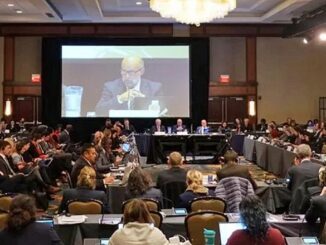
BELEM, Brazil, December 10, 2025 (ENS) – This year’s annual United Nations’ 2025 Climate Change Conference, COP 30, convened exactly one month ago in the Brazilian city of Belém as political tensions around the world hit new levels, and planetary temperatures spiked. The year 2024 was the warmest on record at 1.55°C above pre-industrial levels.
To pile on difficulties, the third round of nationally determined contributions – pledges from countries to cut carbon emissions under the Paris Agreement – did not slash climate-heating emissions enough to prevent the planet from warming.
Most nationally determined contributions, NDCs, were submitted later than expected, and several countries have yet to submit any plans at all. The collective ambition of all of the countries’ NDCs remains insufficient to meet the objectives of the Paris Agreement, conference organizers said.
Before the COP began on November 10, various groups and countries proposed eight items for inclusion on the already packed negotiations agenda.
The Brazilian Presidency launched negotiations on the understanding that it would hold Presidency consultations on four of the newly proposed items:
- – implementing developed countries’ finance obligations under Paris Agreement Article 9.1;
- – unilateral trade-restrictive measures;
- – responding to the latest Nationally Determined Contributions, NDCs; and
- – biennial transparency reports to address the 1.5°C ambition and implementation gaps.
These bundled consultations led to the adoption of the “Mutirão” decision.
The Global Mutirão – one key text within the Belém Package agreed to by all 195 participating countries – widely acknowledged that “the Paris Agreement is working,” but it needs to do more, and quickly, to limit climate change and the floods, droughts, sea-level rise, and extreme storms it brings.
The text emphasizes adaptation, protecting tropical forests, like South America’s Amazon rainforest, and encouraging a just energy transition.
The Brazilian Presidency announced that, in response to the lack of consensus on addressing fossil fuels and deforestation in the “Mutirão” decision, they will develop two roadmaps: one on the transition away from fossil fuels in a just and equitable manner and the other on halting and reversing deforestation. Outcomes will be reported next year at COP 31.
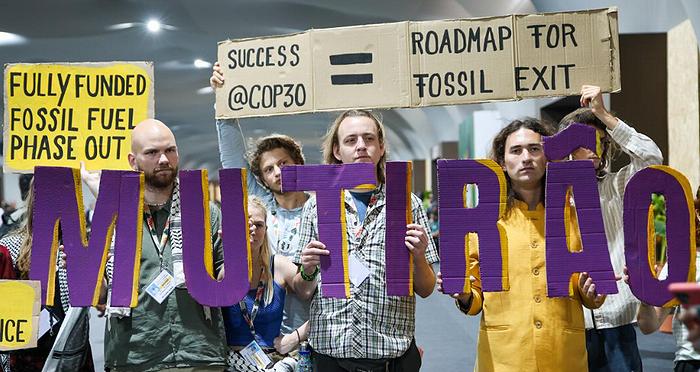
“Mutirão” is a Portuguese/Tupi-Guarani word meaning a collective, voluntary effort by a community to achieve a common goal. The COP30 Brazil Presidency proposed it as a framework for the global fight against climate change.
Examples of “Mutirão” actions include mobilizations for car-free days, building sustainable transport, and integrating indigenous knowledge.
It was the central theme of COP30, driving ambition for progress against climate change in 2025, the Paris Agreement’s 10th anniversary, focusing on strengthening multilateralism, connecting climate action to daily life, and accelerating implementation.
Following general support by the negotiating Parties for an outcome or package in the form of a “Mutirão decision,” Parties convened in the format of a “Mutirão mobilization for the Belém package” on November 17 and 18.
Global Mutirão Final Outcome
“Uniting humanity in a global mobilization against climate change” is the simplest statement of the Global Mutirão Final Outcome at COP30. Among other items, the outcome document:
- – recalls with concern that the carbon budget consistent with achieving the Paris Agreement temperature goal is now small and being rapidly depleted;
- – recognizes that limiting global warming to 1.5°C with no or limited overshoot requires deep, rapid, and sustained reductions in global GHG emissions and reaching net zero carbon dioxide emissions by 2050;
- – recognizes the centrality of equity and the best available science for effective climate action and policymaking, as provided by the IPCC;
- – reaffirms the Paris Agreement temperature goal of holding the increase in the global average temperature to well below 2°C, and pursuing efforts to limit the temperature increase to 1.5°C above pre-industrial levels;
- – underscores that the risks and impacts of climate change will be much lower at the temperature increase of 1.5°C compared with 2°C and reiterates its resolve to pursue efforts to limit the temperature increase to 1.5°C;
- – acknowledges that significant global progress has been made over the last decade, including rapid advancements in and declining costs of technologies and record levels of global renewable energy capacity and clean energy investments, and highlights the economic and social benefits and opportunities of climate action, including economic growth, job creation, improved energy access and security, and improved public health;
- – acknowledges that the global transition towards low GHG emissions and climate-resilient development is irreversible and the trend of the future; and
- – recognizes the need for a manifold increase in financial support provided to and mobilized for developing countries for ambitious adaptation and mitigation action aimed at achieving Article 2 of the Paris Agreement, noting that the cost of inaction would significantly outweigh the cost of timely and effective climate action.
The Meeting of the Parties to the Paris Agreement further:
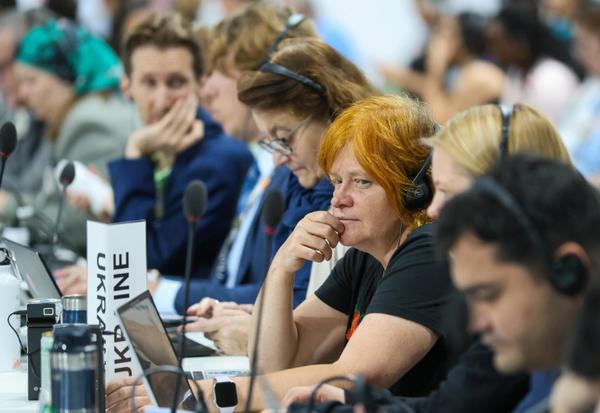
- – recognizes the need for urgent action and support for achieving deep, rapid and sustained reductions of GHG emissions in line with 1.5°C pathways, noting that finance, capacity-building, and technology transfer are critical enablers of climate action;
- – calls on Parties to enhance their enabling environments, in a nationally determined manner, with a view to increasing climate financing;
- – recognizes the efforts of the COP 30 Presidency in launching voluntary initiatives and the work of non-Party stakeholders in supporting Parties in implementing their NDCs;
- – decides to launch the Global Implementation Accelerator to accelerate implementation across all actors to keep 1.5°C within reach and supporting countries in implementing their NDCs and National Adaptation Plans (NAPs);
- – decides to launch the “Belém Mission to 1.5,” aimed at enabling ambition and implementation of NDCs and NAPs;
- – decides to convene a high-level ministerial roundtable to reflect on the implementation of the NCQG, including on the quantitative and qualitative elements;
- – reaffirms the doubling of adaptation finance provided by developed countries, calls for efforts to at least triple adaptation finance by 2035, and urges developed countries to increase the trajectory of their collective provision of climate finance for adaptation to developing country Parties;
- – decides to establish a two-year work program on climate finance, including on Article 9.1, in the context of Article 9 as a whole;
- – reaffirms that Parties should cooperate to promote a supportive and open international economic system that would lead to sustainable economic growth and development in all Parties, particularly developing countries, thus enabling them to better address the problems of climate change and also * – reaffirms that measures taken to combat climate change, including unilateral ones, should not constitute a means of arbitrary or unjustifiable discrimination or a disguised restriction on international trade; and
- – requests SB 64, SB 66, and SB 68, with the participation of Parties and other stakeholders, including the International Trade Centre, the United Nations Conference on Trade and Development, and the World Trade Organization, to consider opportunities, challenges, and barriers in relation to enhancing international cooperation related to the role of trade, decides to exchange experiences and views on related matters at a high-level event in 2028, and
- – requests the SBs to present a report summarizing the discussions at the high-level event
At COP 30, GAP Means Gender Equality
Adopted by Parties at COP30, the Belém Gender Action Plan, GAP, for 2026–2034 marks a new chapter for equality, ambition and inclusion in climate policy and action. It places gender equality at the heart of climate action, from safer participation to stronger data, finance, and technology.
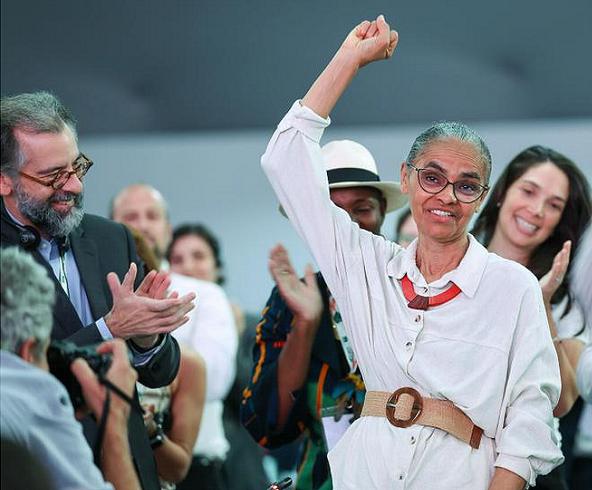
The Belém GAP is designed to drive sustained, long-term gender-responsive climate policy and action, implementing the vision of the enhanced Lima work programme on gender. Spanning 2026 to 2034, it establishes a nine-year framework with built-in learning and accountability through regular reporting and a mid-term review in 2029.
Through its 27 activities and 98 deliverables, the Gender Action Plan is expected to drive meaningful action at every level. It calls on governments, UN entities, civil society, and other relevant organizations to work collectively to drive implementation – from the global to the local level.
Recognizing that climate change impacts people differently, the Belém GAP places a strong emphasis on “multidimensional factors.” For the first time, it explicitly references women and girls of African descent; women environmental defenders; migrant women; women smallholder farmers; women from rural and remote communities; and women with disabilities.
The Belém GAP also deepens the discussion on the role of men and boys as allies in advancing both gender equality and climate action.
“Keeping Humanity in the Fight”
“COP30 showed that climate cooperation is alive and kicking, keeping humanity in the fight for a liveable planet, with a firm resolve to keep 1.5°C within reach,” Simon Stiell, executive secretary of the UNFCCC said in his closing remarks.
“I’m not saying we’re winning the climate fight. But we are undeniably still in it, and we are fighting back. Here in Belém, nations chose solidarity, science, and economic common sense,” Stiell said.
Stiell noted that COP 30 took place amidst stormy geopolitical waters but highlighted the unity of the 194 nations that continue to fight for a livable planet by keeping the 1.5°C goal within reach.
The UNFCCC leader urged the rejection of disinformation that weaponizes the transition away from fossil fuels and implored countries to accelerate climate action by speeding up national climate plans.
With the words “one country stepping back,” he recognized that President Donald Trump has pulled the United States out of the Paris Agreement for the second time, after President Joe Biden restored U.S. participation following Trump’s first term.
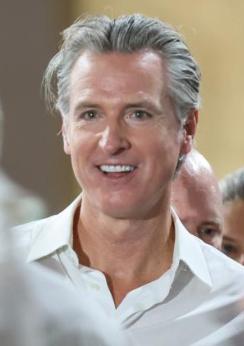
While the United States did not send a delegation to COP 30, many prominent Americans attended the conference, including former Vice President Al Gore, Senator Sheldon Whitehouse of Rhode Island, California Governor Gavin Newsom, Wisconsin Governor Tony Evers, and New Mexico Governor Michelle Lujan Grisham – all Democrats.
“But,” said Stiell, who heads the UNFCCC, “amid the gale-force political headwinds, 194 countries stood firm in solidarity – rock-solid in support of climate cooperation.”
“We see progress in a new agreement on just transition, signaling that building climate resilience and the clean economy must also be fair, with every nation and every person able to share in its vast benefits,” Stiell said.
“We see it in the agreement to triple adaptation finance, ensuring more countries have the support they need, even as climate disasters wreck lives and slam into global supply chains, on which every economy depends,” he told delegates.
For the first time, 194 nations said in unison, ‘…the global transition to low greenhouse gas emissions and climate-resilience is irreversible and the trend of the future.’
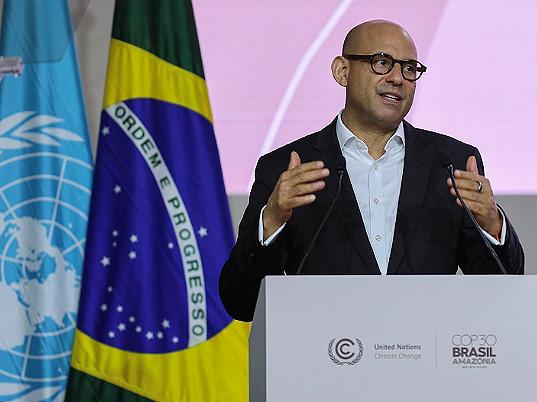
Stiell said, “194 nations agreed this word by word, because it is the truth – backed up by investment flows into renewables that now double fossil fuels.”
“This is a political and market signal that cannot be ignored. In this new era, we must bring our process closer to the real economy, to deliver concrete results faster, and spread the benefits to billions more people,” he said.
“At COP30 – through the Action Agenda – that is exactly what we did. A trillion dollars for clean grids. Hundreds of millions of hectares of forest, land and oceans protected or restored. Over 400 million people becoming more resilient,” the leader of the UNFCCC said.
“These achievements are not a side-show – they are real-world progress on the things billions of people care about most.”
Financial Health of the Paris Agreement
The Paris Agreement, unanimously agreed by UN member countries at the Conference of Parties to the UNFCCC in 2015, has bent the emissions curve, according to the 2025 Nationally Determined Contributions Synthesis Report, which gathers all NDCs submitted by nations, blocs and territories.
Countries now support a 12 percent reduction in planet-heating emissions by 2035 compared to 2019 levels that is attributable to NDCs, but the risk of “overshoot” was formally acknowledged for the first time.

Countries agreed “to pursue efforts to limit the temperature increase to 1.5°C, to limit both the magnitude and duration of overshooting, and to close the adaptation gaps.”
The countries also acknowledged the Baku-to-Belém Roadmap to US$1.3 trillion, a framework developed with the COP29 Presidency last year to increase climate finance flows to at least US$1.3 trillion per year by 2035, emphasizing public-private mobilization and enhanced access for developing countries.
Ministers defined five action areas for both public and private sector roles in scaling financing to developing countries – the so-called 5Rs: replenishment, rebalancing, rechanneling, revamping, reshaping.
In support of the Roadmap, UNEP FI and partners in the Transformational Finance for Climate Group shared a new position paper presenting key action and encouraging public and private actors to work together to reorient and mobilize financial flows, scaling high-quality, just, inclusive, and long-term finance using a systems-level approach.
Convened by a Geneva, Switzerland-based secretariat, the UNEP Finance Initiative brings investors together with more than 500 banks and insurers. Together their assets exceed US$170 trillion. The UNEP FI Initiative catalyzes action across the financial system to deliver more sustainable global economies.
Financial institutions work with UNEP FI on a voluntary basis and receive help to apply the industry frameworks and develop practical guidance and tools to position their businesses for the transition to a sustainable and inclusive economy. Click here to see a list of cooperating financial institutions compiled by the UN Environment Programme, UNEP.
New Collective Quantified Goal
A new, enhanced financial commitment is replacing the $100 billion/year pledge. Discussions centered around US$1.3 trillion annually by 2035, with $300 billion annually for developing countries by the same year.
Funding sources involve public, bilateral, private, and innovative finance. Negotiators debated quantity, who pays, the timeframe, thematic scope, and ways of ensuring that funds aren’t just debt for receiving nations.
These funds address the disproportionate impacts of climate change on vulnerable nations. They will help implement the Paris Agreement. And they are expected to build confidence between the Global North and South.
In Belém, countries also agreed to a new sub-target within the already-established New Collective Quantified Goal for the amount of climate finance to be provided to developing countries for adaptation: a tripling of adaptation finance by 2035, with an implied baseline of the now-expired USD 40 billion by 2025 goal agreed to in Glasgow in 2021.
As Ethiopia is designated as the COP32 Presidency for 2027, the first Least Developed Country to serve as COP host, the finance sector can expect continued calls for refinement of their roles in building climate resilience.
Many delegations advocated for some form of reference to fossil fuel phaseout in this context, possibly in the form of developing roadmaps. But neither this, nor provisions on halting and reversing deforestation, which also enjoyed wide support, made it into the adopted decision.
The COP 30 closing plenary session convened on Saturday, November 22, characterized by turmoil, with various groups and Parties interrupting the adoption of decisions to raise points of order, voice objections, and make comments on various negotiation issues.
Pointing out that fossil fuels are by far the largest driver of climate change, Colombia questioned what message the Conference is sending to the world, underscoring that the “COP of truth cannot support an outcome that ignores science.”
Panama, Uruguay, and several other Parties denounced the gaveling of the decision on the Global Goal on Adaptation in spite of their delegations having raised their flags and signaled points of order, unacknowledged by COP officials. They lamented that the indicators included in the final text erase two years of technical work conducted with expert input.
After the plenary session was suspended for over an hour, COP President André Corrêa do Lago stated his regrets that he had not been made aware of the points of order. He noted the Secretariat’s confirmation that the decisions were adopted; suggested that work on these issues continue at the 2026 June meeting of the Subsidiary Bodies; and invited the Secretariat to prepare a description of best practices to ensure the predictability and legitimacy of the process.
By contrast, other decisions were adopted more smoothly. Participants applauded the adoption of the new Gender Action Plan as well as the decision to develop a just transition mechanism.
Parties also: operationalized the Technology Implementation program; launched new work on finance flow alignment (Paris Agreement Article 2.1(c); updated the type of information to consider in ex ante climate finance reporting (Paris Agreement Article 9.5); concluded the review of the Warsaw International Mechanism on loss and damage; and agreed on activities aimed to support developing countries’ reporting.
COP30 Covered a Range of Negotiations
The Belém Climate Change Conference consisted of:
- – the 30th session of the Conference of the Parties to the UN Framework Convention on Climate Change, UNFCCC,
- -the 20th meeting of the Conference of the Parties serving as the Meeting of the Parties to the Kyoto Protocol (CMP 20),
- -the 7th meeting of the Conference of the Parties serving as the Meeting of the Parties to the Paris Agreement (CMA 7), and
- – the 63rd sessions of the Subsidiary Body for Scientific and Technological Advice (SBSTA 63) and the Subsidiary Body for Implementation (SBI 63).
- – Parties adopted the agendas of the COP, CMP, CMA, SBI, and SBSTA
- – The co-facilitators of the 2025 Ocean and Climate Change Dialogue reported on the outcomes of the dialogue convened during SB 62 and highlighted the pending entry into force of the High Seas Treaty on January 17, 2026. They urged Parties to ratify and implement the treaty, which governs use of the high seas beyond national jurisdictions.
The Brazilian Presidency also promised to convene consultations on the special needs and circumstances of Africa and the annual expert dialogue on mountains, with outcomes reflected in the meeting report.
In total, 56,118 people were registered for on-site attendance, including 23,509 delegates from Parties, 13,402 observers, 3,920 members of the media, and 13,948 support and Secretariat staff. Of the observers, 1,007 were guests of the host country, Brazil. Another 5,141 people, comprising 277 delegates from Parties and 4,823 observers, registered for online participation.
(Article Continues Below)
Reactions From COP 30 Delegate Groups
As COP 30 wrapped up in a thunder of applause on November 22, the regional and issue-based negotiating groups released their individual reactions to this year’s conference.
The G-77/CHINA emphasized the importance of scaling up climate finance and celebrated the tripling of adaptation finance. They heralded the establishment of the just transition mechanism as a historic milestone and symbol of hope and solidarity for the international community. They urged the mechanism’s swift operationalization at COP 31 so its vision can be translated into tangible support. They expressed their appreciation for the GAP and underscored that enhanced financing and MoI are needed to ensure its effective delivery.
The European Union cautioned that “We are losing sight of the 1.5°C target under the Paris Agreement.” They welcomed the scaling up of adaptation finance and stressed that global climate action must be rooted in equity, respect for human rights, and rights of Indigenous Peoples, women, and girls. They underscored their commitment to engage in shaping roadmaps to halt and reverse deforestation and support the transition away from fossil fuels, noting that these could be lasting legacies for Belém.
The Environmental Integrity Group, EIG, emphasized that the Paris Agreement is working, but that significant ambition and implementation gaps remain, and urged drastic increases in climate action. They expressed dismay at a lack of formal space within the UNFCCC to discuss transitioning away from fossil fuels, stressing that such a space is needed to better understand how to manage the transition.
The UMBRELLA GROUP expressed disappointment about the minimal progress in taking GST outcomes forward and underlined Australia’s role as the “President of negotiations” of COP 31.
The Independent Association of Latin America and the Caribbean, AILAC, stressed that the impacts of overshooting 1.5°C are felt across Latin America and reminded Parties that the UNFCCC was designed to protect the planet for future generations. Saying they had hoped for more, they underlined that the transition away from fossil fuels must not be put off and must be supported by appropriate financial resources.
Recalling “hard fights,” the Like-Minded Developing Countries, LMDCs, which include China, India, and Iran, lamented “immense roadblocks” and said some partners demand decisions that would overturn the architecture of the Paris Agreement. The LMDCs stated they showcase “the highest climate ambition and implementation in this room,” something that “cannot be said of those who seem to be the most vocal on transitioning away from fossil fuels.” They pointed to adaptation as a priority, and called for sufficient adaptation finance.
The Coalition for Rainforest Nations, CfRN, welcomed the Presidency’s initiative to launch a roadmap to reverse deforestation by 2030, saying the project-based approach is no longer fit for purpose. They called for high-integrity carbon markets for forests, including robust safeguards.
AOSIS said the “Mutirão” decision does not measure up to the group’s legitimate expectations but represents the results of best efforts in a challenging geopolitical context.
The MOUNTAIN GROUP expressed appreciation for the constructive Presidency consultations on mountains and climate change and highlighted the dialogue on mountains and climate change to be convened next year.
The AFRICAN GROUP said the conclusion of work on the Global Goal on Adaptation, GGA, indicators is an important step and offers a common language for understanding resilience. They stressed the central role of minerals for a just transition.
The BOLIVARIAN ALLIANCE FOR THE PEOPLES OF OUR AMERICA, ALBA, underscored Means of Implementation as essential to enable developing countries to meet their climate targets, highlighting the need to triple adaptation finance. They urged developed countries to meet their financial obligations and commitments, move toward implementation with political will and without double standards.
The LEAST DEVELOPED COUNTRIES, LDCs, condemned some Parties’ attempts to dilute the ambitions of keeping 1.5°C alive and providing the support needed by vulnerable countries. They lamented the weak outcomes relating to, among others, the Global Goal on Adaptation, the LDC Fund, and the Gender Action Plan.
The ARAB GROUP underlined the importance of the Convention’s and the Paris Agreement’s fundamental principles, particularly that of Common But Differentiated Responsibilities and Respective Capabilities. They said that this means developed and developing countries have different roles, and urged respect for their different circumstances and concepts of national sovereignty.
The LANDLOCKED DEVELOPING COUNTRIES highlighted the unique vulnerabilities of their context, noting that despite only accounting for 7% of the global population, they suffer 18 percent of droughts and landslides. They urged means of implementation to ensure that national debt burdens are not made more difficult to meet.
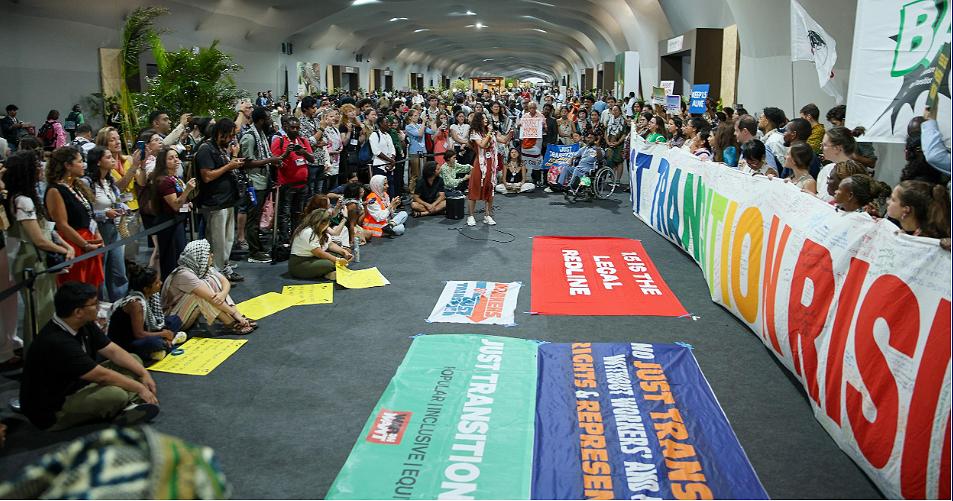
INDIGENOUS PEOPLES ORGANIZATIONS condemned the killing of land defenders, noting this is mirrored by the heavy militarization of COP 30. Indigenous groups and activists at the conference reported a heavy and intimidating military and police presence. This was described as a “militarized cordon” that limited interaction and access for local populations and activists, contrasting with the stated goal of hosting the COP in the Amazon to give visibility to affected communities.
Activists said that fossil fuel lobbyists had free entry, but Indigenous communities were shut out by police lines and military patrols.
Brazilian authorities deployed armed security forces to the venue in response to Indigenous-led peaceful protests.
Over 200 organizations condemned the enhanced security measures, warning they contributed to a global trend of “silencing of dissent, militarized responses to protest, and the marginalization of those defending land and the environment.”
They welcomed recognition of Indigenous Peoples’ rights in the JJust Transition Work Programme “to enhance international cooperation, technical assistance, capacity-building and knowledge-sharing, and enable equitable, inclusive just transitions.”
This marks the first time the Just Transition Work Programme, launched in 2022 and operationalized in 2023 – has been given a forward-looking institutional pathway, rather than a mandate centred primarily on dialogue and exchange. They stressed that the newly-launched Presidency roadmaps must ensure the full participation and credibility of Indigenous People to be truly effective.
LOCAL GOVERNMENTS AND MUNICIPAL AUTHORITIES welcomed increased reference to multi-level governance in the UNFCCC process, acknowledging reference in the “Mutirão” decision to the role of cities and other subnational authorities. They stressed this must go beyond recognition and references and be truly implemented.
RESEARCH AND INDEPENDENT NONGOVERNMENTAL ORGANIZATIONS, NGOs, lamented the lack of inclusivity, noting discussions were held behind closed doors and draft texts were not available. They said observers provide a key source of knowledge and expertise, stressing that as the implementation of commitments continues, researchers remain key to discovering, developing, and evaluating climate solutions.
TRADE UNION NGOs acknowledged the Peoples’ Summit and March as a call for justice and solidarity, but lamented that this did not transition to an ambitious agreement, noting that workers and the just transition of the workforce were completely excluded from the “Mutirão” decision.
The WOMEN AND GENDER group lamented that multilateralism is falling apart as decisions fail to meet peoples’ needs and to deliver the much-needed finance. While celebrating the just transition mechanism, they stressed justice requires real resources now and a rapid global phaseout of fossil fuels, calling for land titling and an Amazon free from oil.
YOUTH NGOs criticized disempowering comments toward children and called for shared responsibility to create the future, citing the International Court of Justice’s Advisory Opinion on the obligations of states regarding climate change. They welcomed the just transition mechanism, lamented that farmers are largely ignored in COP 30 outcomes, and objected to backtracking on gender. They objected to the admission to the conference of fossil fuel lobbyists and human rights abusers.
BUSINESS AND INDUSTRY NGOs stressed that the conference’s outcomes fall short of what the global economy requires and noted businesses want to deliver, but need clear guidance from governments. They stressed adaptation as imperative and that the relevant outcome does not match the urgency, also noting that mitigation ambition backtracked after COP 28. They called for clear plans and milestones, and stressed the importance of collaborative trade.
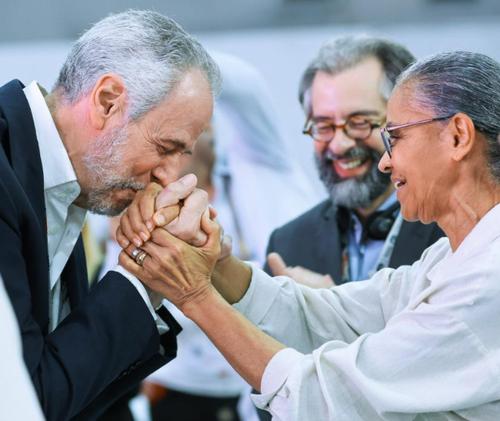
ENVIRONMENTAL NGOs welcomed the just transition mechanism, but expressed disappointment over weak outcomes on finance, adaptation, and energy transition. They rejected the commercialization of territories, including through the Tropical Forest Forever Facility, and asserted the urgent need for public, grant-based climate finance. They said COP 30 showed that the real direction of climate action comes from people-led, community-rooted solutions, stressing that “we will continue to fight under the UNFCCC, but it is the power of the peoples and movements that will deliver the transformation that is needed.”
COP 30 President Corrêa do Lago expressed gratitude to the people of Belém and everyone who organized and participated in this Conference of Parties. He said that although “we did not deliver everything, we delivered more than we imagined,” highlighting outcomes on adaptation, just transition, and the ability of the Climate Action Agenda to deliver a multitude of actions on all levels.
UN Chief Recognizes Progress at COP 30
Antonio Guterres, Secretary General of the United Nations, had encouraging words for everyone who participated in COP 30.
“At the gateway of the Amazon, Parties have reached an agreement. This shows that multilateralism is alive, and that nations can still come together to confront the defining challenges no country can solve alone,” the UN leader said.
Guterres listed the items of progress delivered by COP 30:
- – a call to triple adaptation finance by 2035 as a first step towards closing the adaptation gap;
- – A Just Transition Mechanism to support countries in protecting workers and communities as they shift to clean energy;
- – A new dialogue aimed at enhancing international cooperation on trade;
- – The recognition that we are now heading for a temporary overshoot above 1.5 degrees Celsius;
- – The launch of a Global Implementation Accelerator to close the ambition and implementation gaps and accelerate the delivery of Nationally Determined Contributions; and
- – A recognition to take forward the outcomes of the UAE Consensus, which includes a just, orderly, and equitable transition away from fossil fuels.
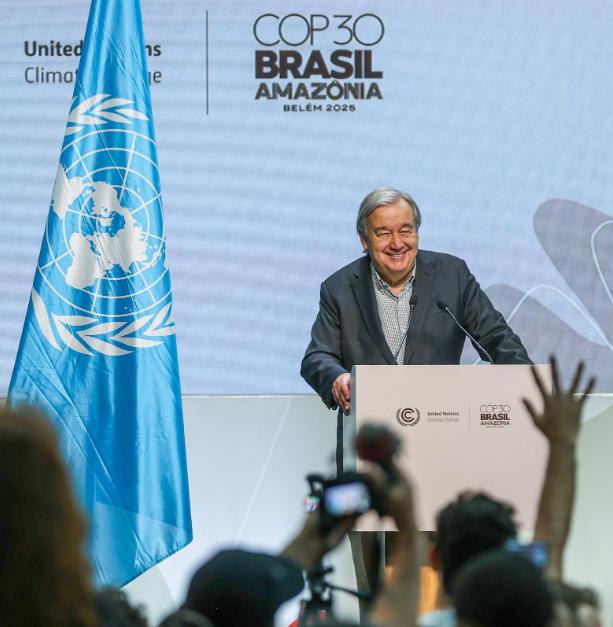
While recognizing these achievements, the UN chief told delegates that he “cannot pretend that COP30 has delivered everything that is needed. The gap between where we are and what science demands remains dangerously wide.”
Acknowledging the disappointment in the outcomes delivered by COP 30 felt by young people, Indigenous Peoples, and those living through climate chaos, Guterres cautioned, “The reality of overshoot is a stark warning: we are approaching dangerous and irreversible tipping points.”
“Staying below 1.5 degrees by the end of the century must remain humanity’s red line,” he urged.
Guterres called for “deep, rapid emission cuts – with clear and credible plans to transition away from fossil fuels and towards clean energy.” He spoke in favor of “climate justice and a massive surge in adaptation and resilience – so communities on the frontlines can survive and recover from the climate disasters to come.”
And he called for “far more climate finance for developing countries to reduce emissions, protect their people, and address loss and damage.”
“COP30 is over, but our work is not,” Guterres declared. “I will continue pushing for higher ambition and greater solidarity.”
Featured image: Delegates and climate officials celebrate the ending of COP 30 after many agreements were finalized. November 22, 2025, Belem, Brazil (Photo by IISD/ENB | Mike Muzurakis)
© 2025, Environment News Service. All rights reserved. Content may be quoted only with proper attribution and a direct link to the original article. Full reproduction is prohibited.