JOHANNESBURG, South Africa, December 11, 2025 (ENS) – Sub-Saharan Africa has lost 24 percent of its biodiversity since pre-industrial times, and large mammals have declined the most, finds new research from the 108-year-old School of Animal, Plant and Environmental Sciences, APES, at the University of the Witwatersrand, Johannesburg, a multi-campus public research university known as Wits University or simply, Wits.
On average, populations of plants and animals across the region south of the Sahara Desert have declined by nearly a quarter. Some species, such as large mammals, have declined much more.
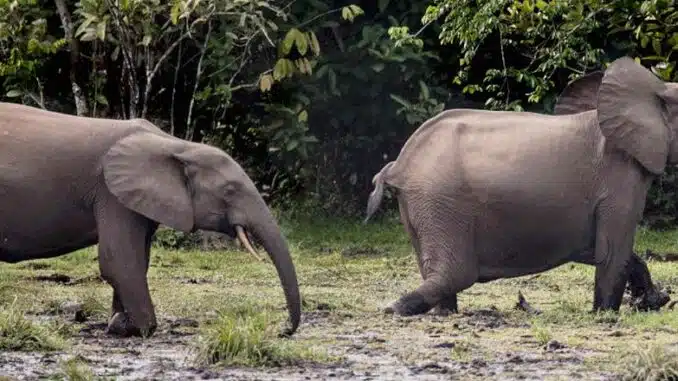
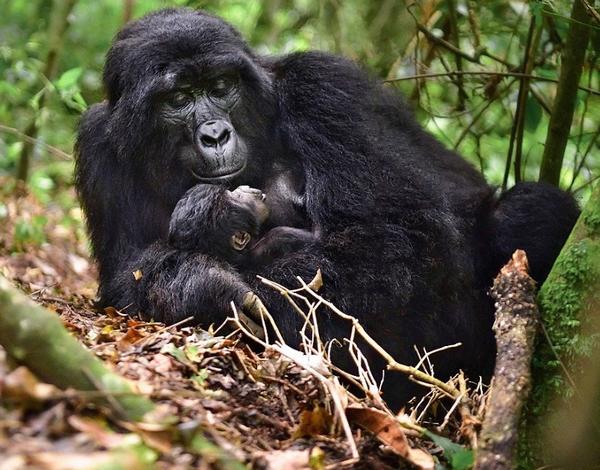
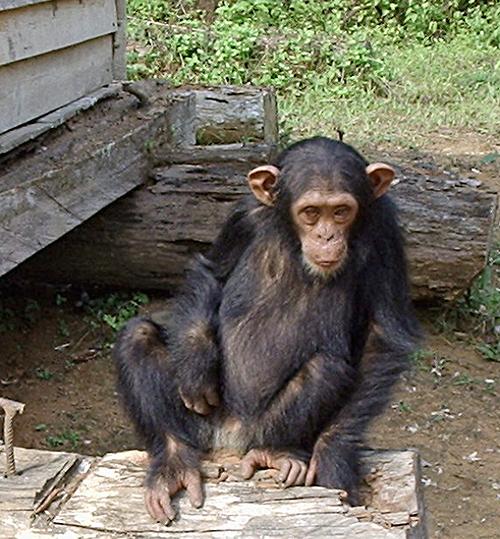
For instance, the Democratic Republic of the Congo has seen catastrophic declines, with population drops in Forest Elephants, Grauer’s Gorillas, Bonobos, Chimpanzees, and Okapi, due to poaching and civil unrest, pushing them towards extinction within the DRC’s borders and also globally.
The DRC’s vast forests host many iconic, endangered animals, but conflict and illegal wildlife trade have devastated populations, making these large species vulnerable to extinction.
- Forest Elephants: Populations were halved in some reserves, with massive overall declines from poaching for ivory and bushmeat, making them Critically Endangered.
- Grauer’s (Eastern Lowland) Gorillas: Numbers plummeted from 17,000 (mid-1990s) to around 3,800 (2016), losing most of their range due to war and poaching.
- Bonobos & Chimpanzees: Hit hard by bushmeat trade and habitat loss, driven by conflict and demand for wild meat.
- Okapi: Classified as Endangered, facing threats from poaching and habitat loss within the DRC.
- Pangolins: Both White-bellied and Giant Ground pangolins decimated by illegal trade for scales (used for medicines) and meat, notes the International Fund for Animal Welfare (IFAW).
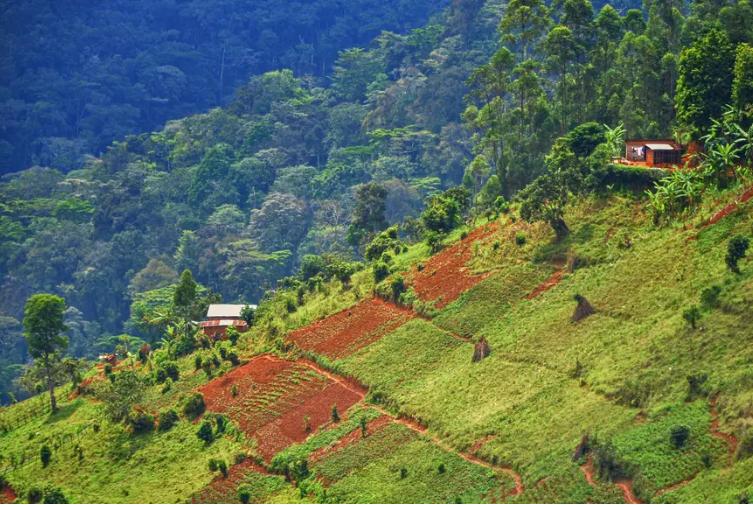
“Most remaining organisms occur in unprotected, relatively untransformed rangelands and natural forests. Losses in biodiversity intactness in the worst-affected biomes are driven by land transformation into cropland…”the study shows.
Protected areas are recognized as vital safeguards for these species, yet the research shows that more than 80 percent of the region’s remaining wild plants and animals live outside of formally protected lands.
The five-year-long study, titled, “A place-based assessment of biodiversity intactness in sub-Saharan Africa,” published Monday in the journal “Nature,” provides the most comprehensive assessment of biodiversity intactness yet produced for sub-Saharan Africa.
One limit to achieving conservation goals is the lack of information on the impacts of human activities on biodiversity and resulting ecosystem functions. “The assessment provides decision makers with multifaceted, contextually appropriate and policy-relevant information on the state of biodiversity in an understudied region of the world,” the study states.

A simple, practical method to measure biodiversity loss, the Biodiversity Intactness Index, BII, was created 20 years ago in India by CSIR Environmentek scientists Reinette Biggs, who also took part in the sub-Saharan research project, and the late Robert Scholes, distinguished professor, Global Change and Sustainability Research Institute, at Witwatersrand U, who passed away in 2021.
The Biodiversity Intactness Index tool quantifies how the average abundance of all native species in a particular region would compare to populations of those same species that had not experienced human impacts.
The BII aims to give each piece of land a score between zero and one. A score of one indicates that the diversity of species is fully intact on that land. A score of zero tells us that the biodiversity has been completely lost.
The sub-Saharan biodiversity research project gathered a wide range of ecological knowledge from 200 experts in Africa’s varied plants and animals: researchers, field ecologists, rangers, tour guides, and museum curators working in the region’s changing landscapes.
Taxonomic experts Chevonne Reynolds, a bird specialist; Nicola Stevens, who studies trees and shrubs; and Gareth Hempson, who focuses on large mammals and grass-like plants with narrow leaves and barely noticeable flower called graminoids) led the expert elicitation process for their taxonomic groups. Geethen Singh produced the underlying land cover and land use intensity dataset.
Many other APES researchers contributed their specialized knowledge of African biodiversity during the expert elicitation phase, representing one of the largest contributions from a single institution.
“The breadth of expertise at APES, built over decades of studying African vertebrates and vegetation, was fundamental to understanding and quantifying biodiversity across the continent,” Reynolds, associate professor in the School of Animal, Plant and Environmental Sciences at Wits.
This research shows that maintaining African biodiversity cannot be only about protected areas and fences. Most of our continent’s biodiversity still persists in landscapes where people live and work, and better supporting both communities and nature in these shared spaces is a real conservation challenge facing Africa,” Reynolds explained.
“Many global biodiversity assessments do not represent African conditions well because they rely on sparse local measurements and draw insights from more data-rich regions of the world, where contexts are very different,” lead author Dr. Hayley Clements, from the Centre for Sustainability Transitions at Stellenbosch University, said.
“By working directly with the people who study and manage African ecosystems, we were able to capture a much more realistic picture of where biodiversity is declining, where it is being sustained, and why,” she said.
Other South African researchers on the study are affiliated with: the University of Venda, SA; University of the Western Cape, SA; Mammal Research Institute, University of Pretoria, SA; North-West University, SA; South African National Biodiversity Institute, Cape Town; and the School of Life Sciences, University of KwaZulu-Natal, Durban, SA.
And from Europe: researchers were affiliated with the Environmental Change Institute, School of Geography and the Environment, University of Oxford, UK; the School of Biodiversity, One Health and Veterinary Medicine, University of Glasgow, Scotland, UK; the Helsinki Lab of Interdisciplinary Conservation Science, University of Helsinki, Finland; and the Centre for Geography and Environmental Science, University of Exeter, UK.
Using the Bottom-up Method
The biodiversity data underlying this assessment come from a structured expert-elicitation process. The result is a continent-wide map of the Biodiversity Intactness Index (BII), which measures the percentage of original abundances of all species that remain in an area relative to pre-industrial levels.
The bottom-up method incorporates an understanding of the regional context that is sometimes missing from global biodiversity models that rely on patchy data.
For the first time, national and regional decision-makers have access to an indicator built from in-country ecological expertise.
The researchers write, “Our bottom-up approach overcomes critical data gaps and limitations of top-down biodiversity models by quantifying biodiversity intactness using the Biodiversity Intactness Index for Africa (bii4africa), a dataset that we previously co-produced and published with 200 experts in African fauna and flora.”
Where Biodiversity is Gone, Where It Remains
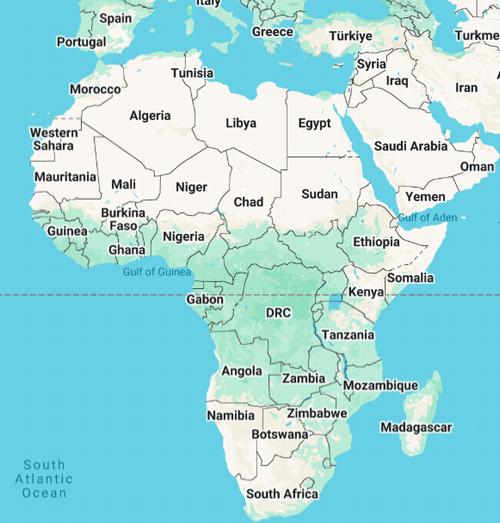
Twelve out of the 42 countries in sub-Saharan Africa are estimated to have retained more than 80 percent of their biodiversity intactness, with Namibia and Botswana having the highest BII – 87 percent.
Fifteen countries have retained less than 70 percent of their BII, with Rwanda at 48 percent and Nigeria at 53 percent having the lowest BII. The remaining 15 countries have retained intermediate levels of BII between 70–80 percent.
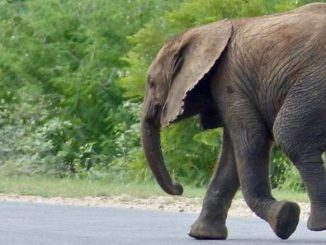
While plants that can withstand environmental disturbances have experienced declines as small as 10 percent, large mammals such as elephants, lions and some antelope species have lost more than 75 percent of their historical abundance.
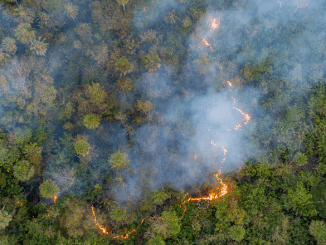
These declines are primarily due to habitat loss for croplands, and unsustainable levels of harvesting and livestock grazing, the researchers learned.
The study found large variations across ecosystems, countries and species groups. Large herbivore and carnivore species (>20 kg) have experienced the greatest declines in abundance, as much as half of their numbers, followed by primates, which have lost up to 65 percent of their former populations.
Central African countries retain some of the highest levels of intactness due to the persistence of humid forests. But West Africa shows low intactness due to severe degradation of forests and savannas from overharvesting and agricultural expansion.
Among the plants, intactness ranges from 55 to 91 percent. Suffering the greatest losses are shade-tolerant forest and swamp trees and shrubs, as well as plants called epiphytes that grow harmlessly on other plants.
More than 80 percent of remaining wild populations of plants and animals occur in working lands – forest and rangelands where people coexist with nature. These landscapes support more than 500 million people and underpin crucial ecosystem services such as clean water, pollination, building materials, grazing resources, wild foods and carbon storage.
“This fundamentally shifts where and how we think about biodiversity conservation in Africa,” said Dr. Clements. “Protected areas remain vital, especially for Africa’s large mammals, but alone they are insufficient to curb biodiversity loss. Sustainable management of shared working landscapes is key to maintaining biodiversity and supporting livelihoods.”
“We can learn from successful examples of landscape governance systems, such as sustainable pastoralism practices, community-led wildlife conservancies, and biodiversity-positive farming approaches, that support both conservation and sustainable development,” Clements said.
Pressure From Agriculture and Rangelands
Cropland expansion is one of the greatest pressures on biodiversity, with the lowest intactness recorded in Nigeria and Rwanda, the two countries with the highest cropland coverage. Intensive, high-yield agriculture reduces habitat diversity and increases chemical inputs, with effects on a wide range of species.
By contrast, traditional smallholder systems tend to maintain more ecological complexity and support higher levels of biodiversity.
With cropland projected to double and cereal demand expected to triple by 2050, the authors argue that biodiversity-positive farming practices will be critical to reconciling food security and ecosystem health.
The study shows that lower-intensity pastoralism on rangelands supports higher biodiversity than intensive livestock farming, although increasing restrictions on herd mobility are threatening this balance.
Assessment as a Policy Tool
This assessment addresses a major gap for African countries, which often lack the biodiversity information needed to inform policy, reporting and land-use planning. By integrating context-specific local knowledge into a regional measure, decision makers now have a tool that can be applied across multiple scales.
According to Clements, their findings can support national biodiversity planning and help correct global biodiversity assessments that misrepresent Africa.
“This study showcases the depth of ecological expertise across Africa. By grounding biodiversity measurement in local expertise, we now have a more credible evidence base to support development strategies that sustain both nature and people,” Professor Oonsie Biggs, co-director of the CST and co-author on the study, said.
This project was made possible by a Jennifer Ward Oppenheimer Research grant that supports African early career researchers to find and facilitate solutions to the continent’s challenges. Conserving biodiversity is one of them.
“Africa’s elephants play key roles in ecosystems, economies and in our collective imagination all over the world. We must urgently put an end to poaching and ensure that sufficient suitable habitat for both forest and savanna elephants is conserved,” Dr. Bruno Oberle of Switzerland, director general of the International Union for the Conservation of Nature from 2021 to 2023, urged.
© 2025, Environment News Service. All rights reserved. Content may be quoted only with proper attribution and a direct link to the original article. Full reproduction is prohibited.